Introduction:
The screen protector market is changing quickly. New smartphones, tablets, foldable devices, and smartwatches are launched every year, and each model may require a different screen protector size and shape. For retailers, distributors, and repair shops, keeping ready-made protectors for every device can mean high inventory costs, slow stock turnover, and products left unsold when demand shifts.
On-demand cutting offers a more flexible way to serve this market. Instead of storing large quantities of pre-cut protectors, a business can keep compatible film materials in stock and cut the required shape when a customer needs it. With a modern screen protector cutting machine, a suitable film applicator, and a reliable material supply, retailers can build a service that is faster, more flexible, and easier to scale.

What Is On-Demand Screen Protector Cutting?
On-demand cutting is a production method in which a screen protector is made to match a specific device only after an order is received. The operator selects the device model from the machine’s software or model database. The machine then uses the corresponding cutting pattern to produce the protector from a sheet or roll of compatible material.
This approach is different from traditional distribution, where a seller must purchase and store separate finished products for many phone and tablet models. With on-demand production, one cutting system can support a broad range of devices, depending on its model database, material compatibility, and cutting specifications.
For a retail store, the process can be completed at the point of sale. For a wholesaler or service center, it can help reduce the need to predict demand for every individual model. The business can focus on maintaining a practical selection of raw materials instead of holding deep inventory of finished protectors.
How Does a Screen Protector Cutting Machine Work?
A typical digital cutting workflow has several straightforward steps. The exact operation may vary by machine, film type, and software, but the basic process is similar.
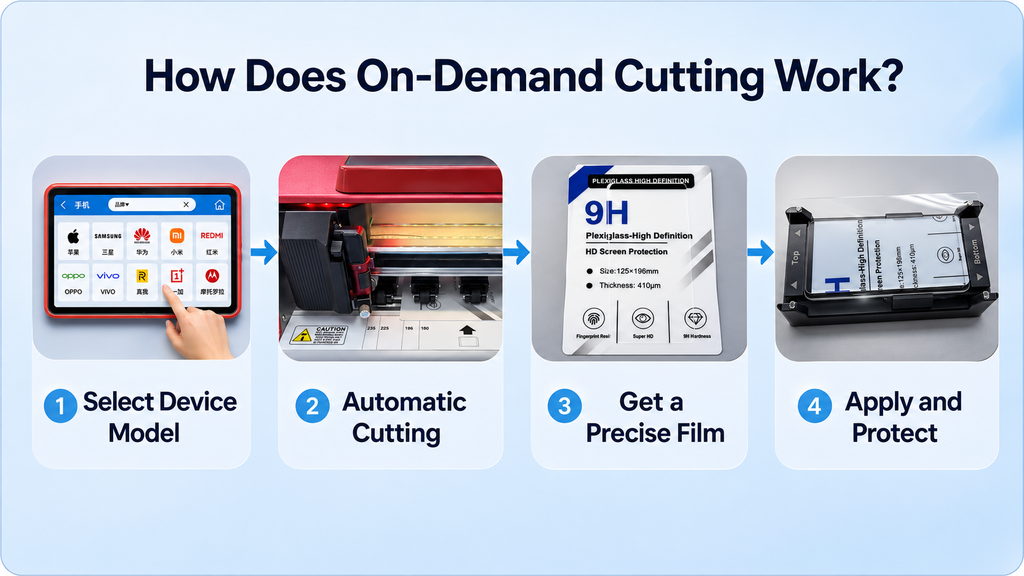
Step 1: Select the Device Model
First, the operator searches for the customer’s phone, tablet, or other device in the machine’s model database. The selected template defines the protector’s outline, dimensions, and relevant cutouts. A regularly updated database is especially useful because new devices and regional versions enter the market throughout the year.
Step 2: Choose the Right Film Material
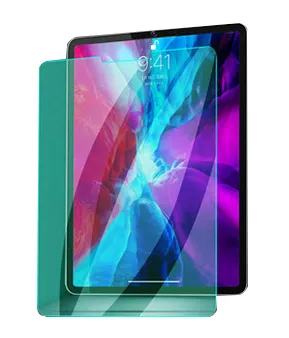
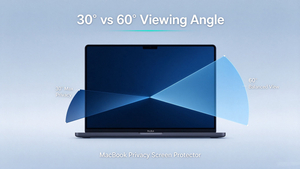
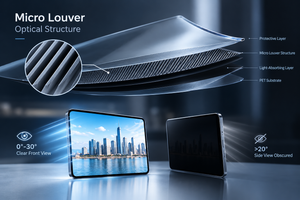
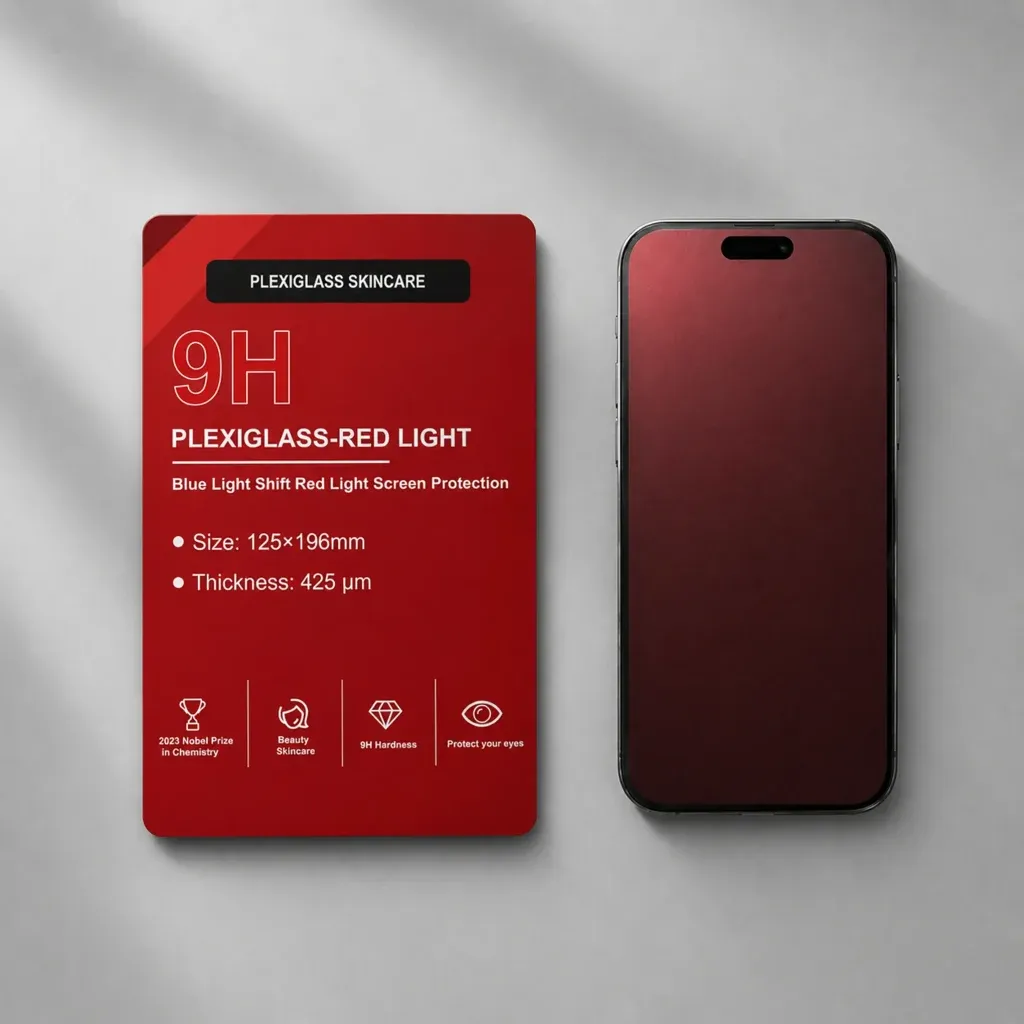
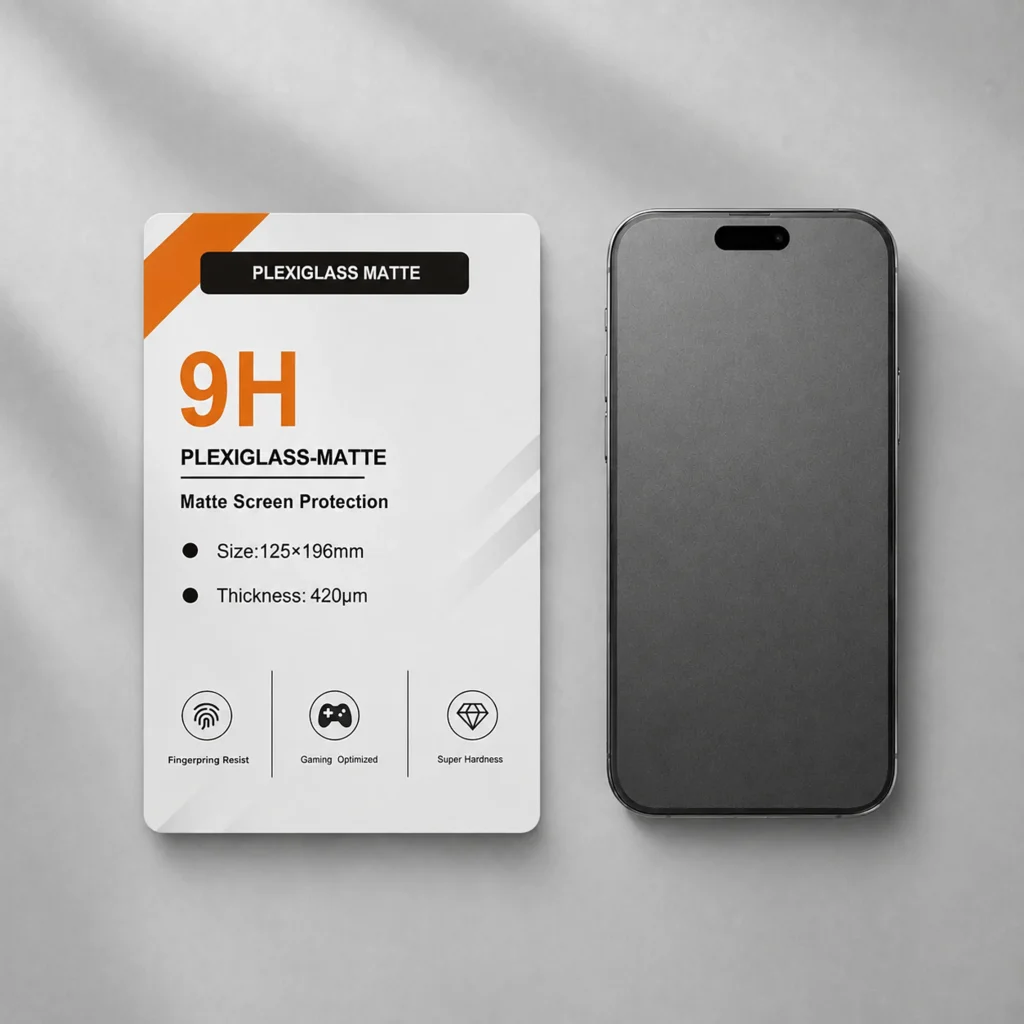
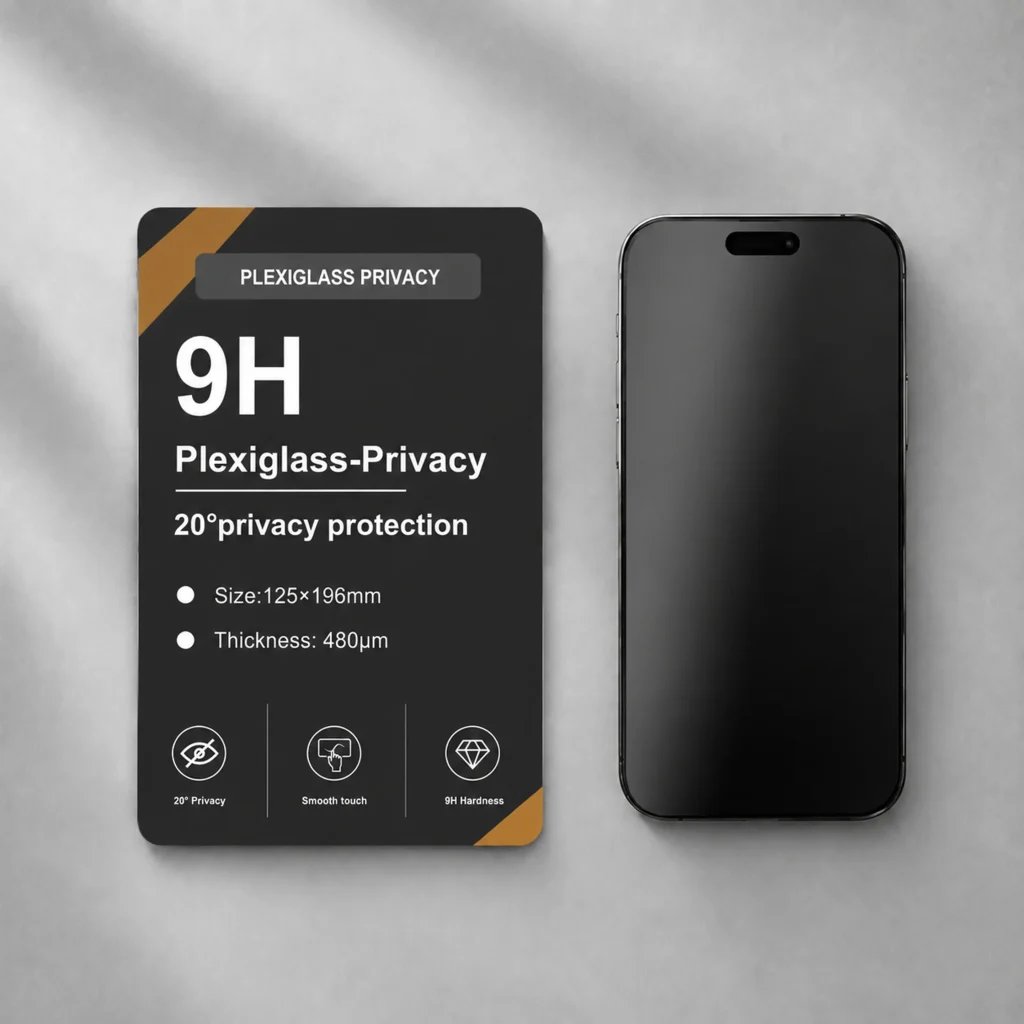
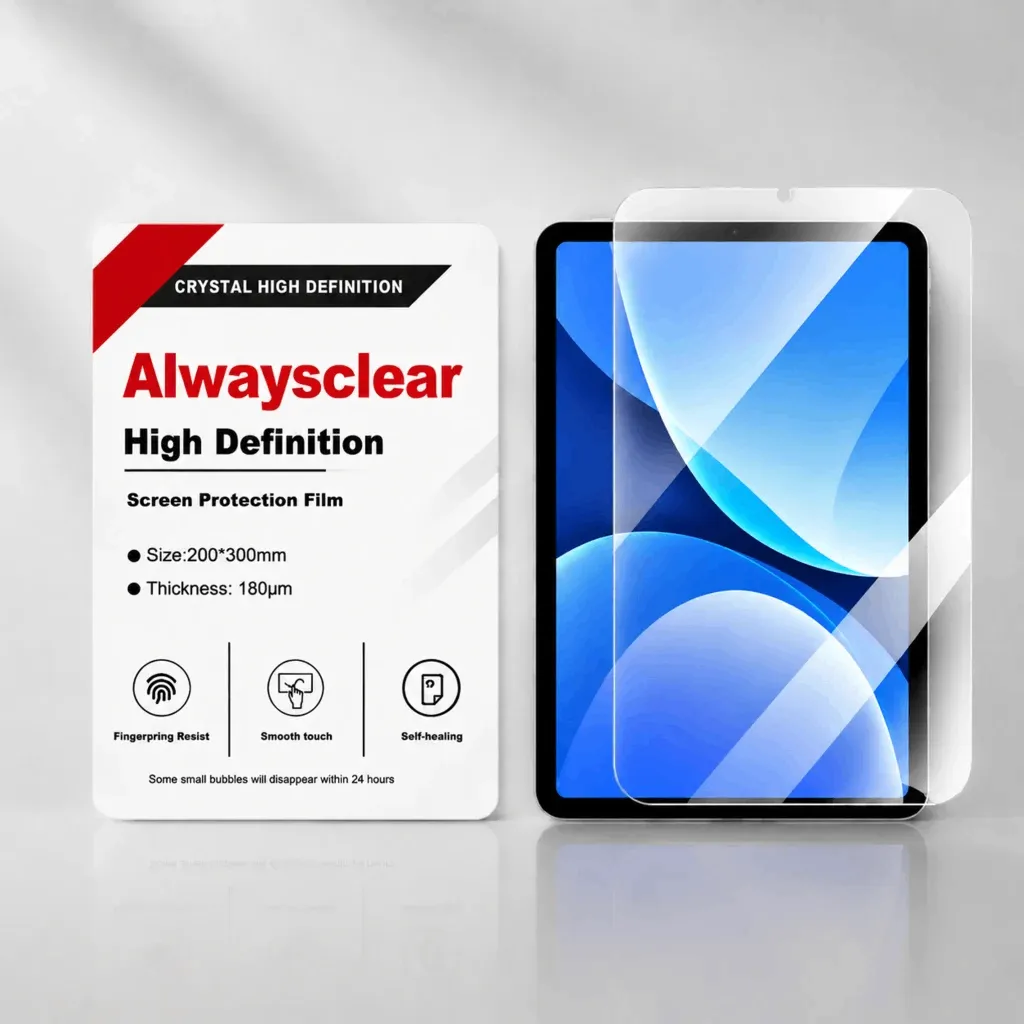
Next, the operator selects a material that suits the device and the customer’s needs. Options may include flexible hydrogel or TPU films, high-definition films, matte or privacy films, and compatible high-hardness materials such as 9H Plexiglass. Material thickness, surface coating, flexibility, and machine compatibility should all be considered before cutting.
Step 3: Load and Position the Film
The film is placed on the cutting platform or fed into the machine according to its operating instructions. Correct positioning helps the machine follow the cutting pattern accurately. Keeping the work surface clean and checking that the material is flat can also help prevent dust, wrinkles, and movement during processing.
Step 4: Set the Cutting Parameters
The machine applies the cutting settings required for the selected material. On systems with automatic blade adjustment, the operator does not need to make every blade-depth change manually. This can make switching between supported soft and hard film materials more convenient. However, the correct settings and material compatibility should always be confirmed for each application.
Step 5: Cut and Check the Finished Protector
After the cutting command is started, the machine follows the selected outline to produce the protector. The operator should check the edges, dimensions, cutouts, and overall appearance before handing the product to the customer. A clean, accurately cut protector is easier to align and apply.
Why Are Retailers Moving Toward On-Demand Cutting?
Lower Inventory Pressure
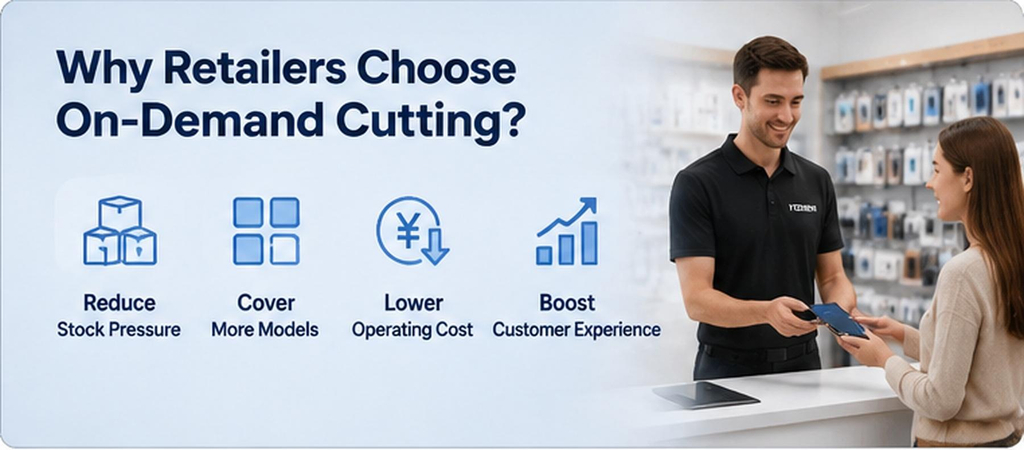
One of the biggest advantages is reduced dependence on pre-cut stock. Instead of purchasing many finished protectors for individual models, retailers can hold compatible raw film and make the required size when an order arrives. This can be especially helpful for less common devices, older models, tablets, and products with frequent model changes.
More Models, More Flexible Service
A broad device database can help a store respond to a wider range of customer requests without waiting for a specific pre-cut product to arrive. The actual model coverage depends on the machine’s database and supported cutting area, so buyers should check the devices they sell most often before choosing a system.
Less Waste from Slow-Moving Stock
Finished protectors for unpopular models may remain on shelves for a long time. On-demand production can reduce this type of stock risk because the retailer stores film materials and cuts individual pieces as needed. It does not eliminate all material waste, but it can make inventory planning more manageable.
Lower Inventory Pressure
Cutting on demand can turn screen protection into a service rather than just a packaged accessory sale. Retailers can offer customers a protector for a device that may be difficult to find in standard retail channels. They can also introduce different material choices, such as clear, matte, privacy, or high-hardness options, where supported.
Cutting Is Only Part of the Process: The Role of a Film Applicator
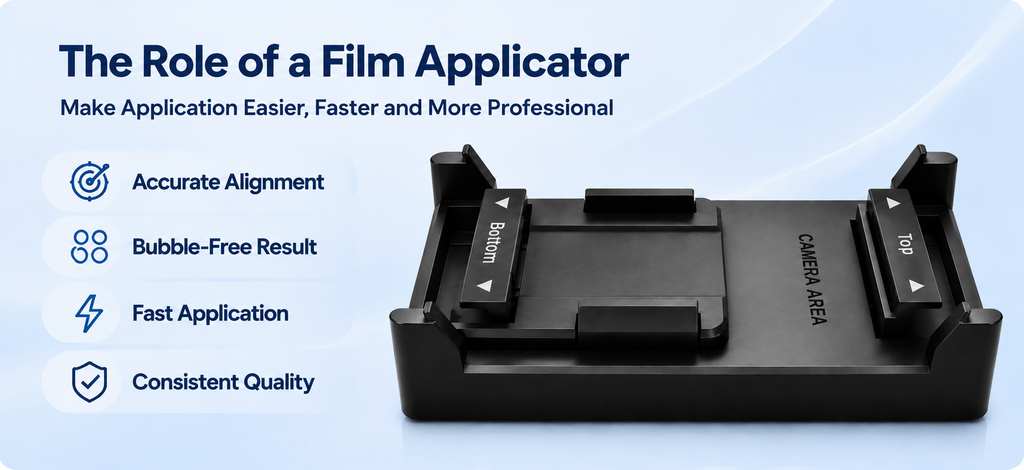
Accurate cutting is important, but the customer experience does not end when the protector leaves the machine. Installation quality also affects the final result. Dust, trapped air, uneven alignment, and wrinkles can reduce the appearance of a finished screen protector, even when the cut itself is accurate.
A film applicator helps guide the protector into position during installation. Depending on the design, it may use an alignment frame, positioning components, or an automated application process. A well-designed protective film applicator machine can make the application procedure more repeatable and reduce the amount of manual alignment required.
For stores with frequent installation work, an application system can help standardize staff operations. It may also shorten the learning curve for new employees. Still, the applicator must be matched to the device and film type, and the screen should be cleaned carefully before application. No machine can compensate for dust or incorrect preparation.
What Should Buyers Check Before Choosing a Cutting Machine?
Not every Cutting Machine is designed for the same materials or business requirements. Before investing, retailers and distributors should evaluate several practical points:
Material compatibility: Confirm whether the machine supports the soft films, high-hardness films, or other materials you plan to sell. Do not assume that every machine can cut every material.
Blade adjustment and cutting control: Ask whether blade depth is adjusted manually or automatically, and whether settings can be adapted to different material thicknesses.
Device database: Check the number and range of supported phone, tablet, and wearable models, how often the database is updated, and whether offline cutting is available.
Cutting accuracy: Request sample cuts and inspect edge quality, dimensions, camera openings, speaker cutouts, and consistency across repeated jobs.
Ease of operation: Consider the software interface, language options, training requirements, and how easily staff can select a model and complete a job.
After-sales support: Confirm software support, replacement parts, technical assistance, and the availability of compatible film materials.
YIZHEN Smart Cutting and Application Solutions
YIZHEN develops screen protection materials and smart equipment for the mobile device accessories market. Its product range includes hydrogel films, 9H high-hardness Plexiglass films, tempered glass, and screen protector cutting solutions. This combination allows retailers and distributors to consider both the material and the equipment needed for an on-demand service.
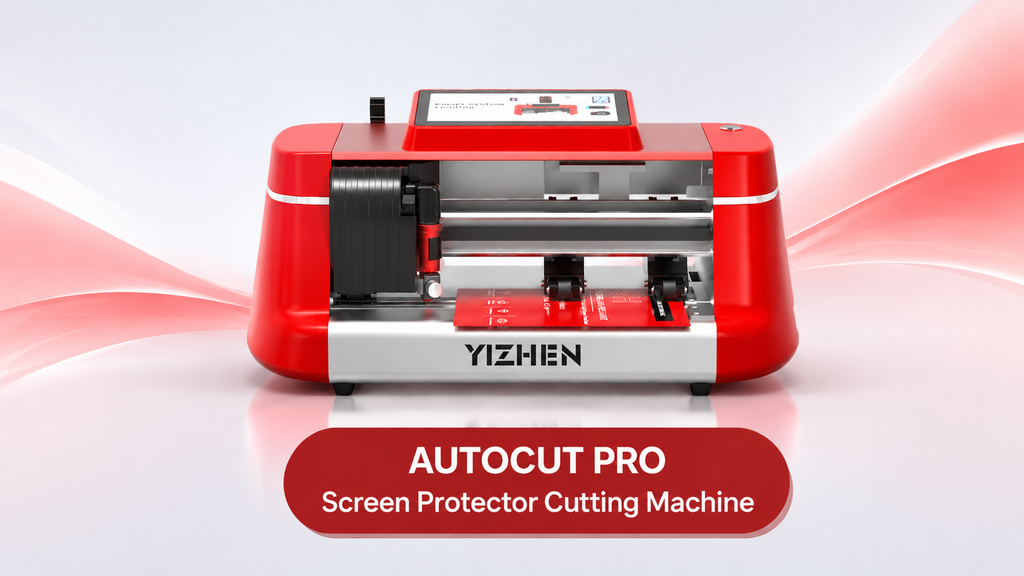
The YIZHEN AutoCut Pro is designed to support intelligent film cutting, including compatible soft-film and 9H high-hardness film applications. Its product features include scan-and-cut automation and automatic cutting adjustment, helping simplify the workflow when users switch between supported materials. As with any cutting system, users should confirm the applicable material specifications and device templates before production.
For the application stage, YIZHEN also offers an AI application solution designed to support accurate film positioning and a more consistent installation process. Pairing a suitable screen protector cutting machine with a compatible film applicator can help retailers manage both preparation and application in one service workflow.
Is On-Demand Cutting Right for Your Business?
On-demand cutting can be a practical choice for mobile phone accessory stores, repair shops, regional distributors, and businesses serving customers with a wide range of device models. It is particularly worth considering when pre-cut inventory is difficult to manage, customers regularly ask for less common models, or the business wants to add a customized screen protection service.
Before making a decision, estimate the number of protectors you expect to cut each day, identify your most common device models, and list the materials you want to offer. Then compare machine capacity, database coverage, material compatibility, application requirements, and after-sales service. A live demonstration using your preferred film materials is one of the best ways to evaluate the system.
Conclusion: A More Flexible Way to Serve the Screen Protection Market
On-demand cutting changes how screen protectors are stocked, prepared, and sold. By producing a protector when it is needed, retailers can reduce dependence on model-specific finished inventory, respond to more device requests, and create additional in-store service opportunities. The best results come from treating cutting and application as two connected steps: choose compatible materials, use a precise screen protector cutting machine, and finish the job with a suitable film applicator or protective film applicator machine.
As device designs continue to diversify, flexible equipment and dependable material support will become increasingly important. With its range of screen protection films and smart equipment, YIZHEN aims to help global partners build a more efficient and adaptable screen protection business.