
A hydrogel screen protector should let you enjoy your phone’s display without drawing attention to itself. When the film develops a yellow tint, white backgrounds can look warmer, photographs may appear less accurate, and the screen can seem older than it really is. The change is especially noticeable when you open a blank document or compare your phone with another display.
However, a yellow-looking screen does not automatically mean the protector has deteriorated. Display settings, surface residue, the adhesive layer, and the film itself can produce similar visual effects. Identifying the cause helps you decide whether gentle cleaning, a settings adjustment, or replacement is the right solution.
This guide explains the causes of hydrogel screen protector yellowing, what anti-yellowing claims actually mean, and how consumers and purchasing teams can evaluate clarity more reliably.
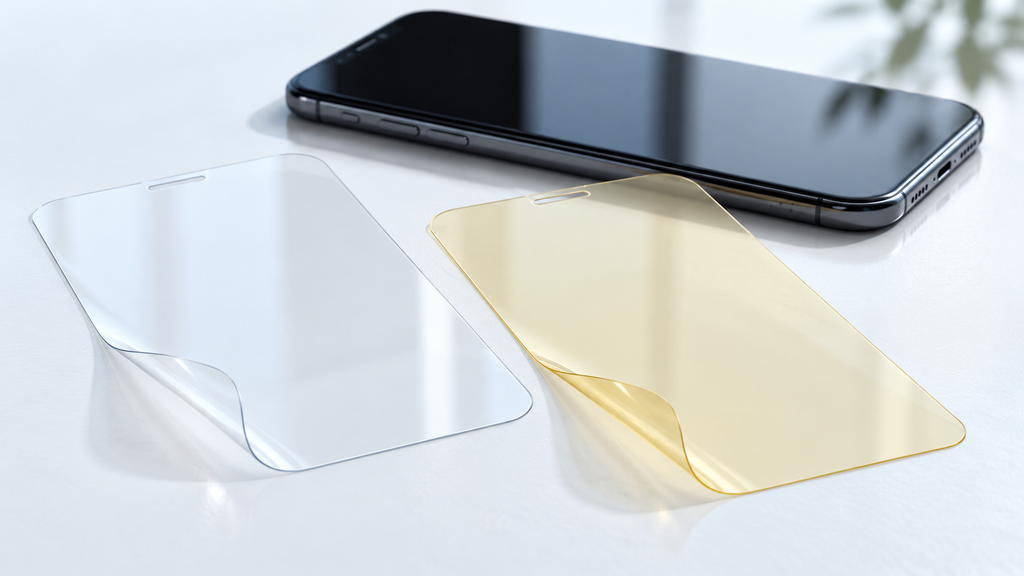
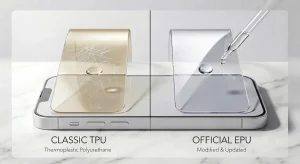
Illustrative comparison of clear and yellow-tinted flexible films.
What Is a Hydrogel Screen Protector Made Of?
In the phone-accessory market, “hydrogel” is often used as a product description for soft, flexible screen protection. It should not be treated as a complete material specification. The name alone does not establish the polymer chemistry, water content, coating composition, or adhesive quality of a particular product.
Some flexible protectors use thermoplastic polyurethane, commonly called TPU. Others use different polymers or multilayer constructions. A finished protector may combine a surface treatment, a flexible base film, and a pressure-sensitive adhesive. Temporary liners protect those layers during handling and installation and are removed according to the product instructions.
This construction matters because discoloration can originate in more than one place. A clear base film cannot compensate for an adhesive that becomes visibly tinted. Likewise, a color-stable adhesive will not prevent staining on a poorly resistant surface coating.
For shoppers, the practical question is whether the complete protector maintains acceptable appearance during use. For brands and distributors, evaluating the installed construction is more useful than relying only on a raw-material description.
Why Hydrogel Screen Protectors Turn Yellow
1. Sunlight Can Trigger Changes in Susceptible Polymers
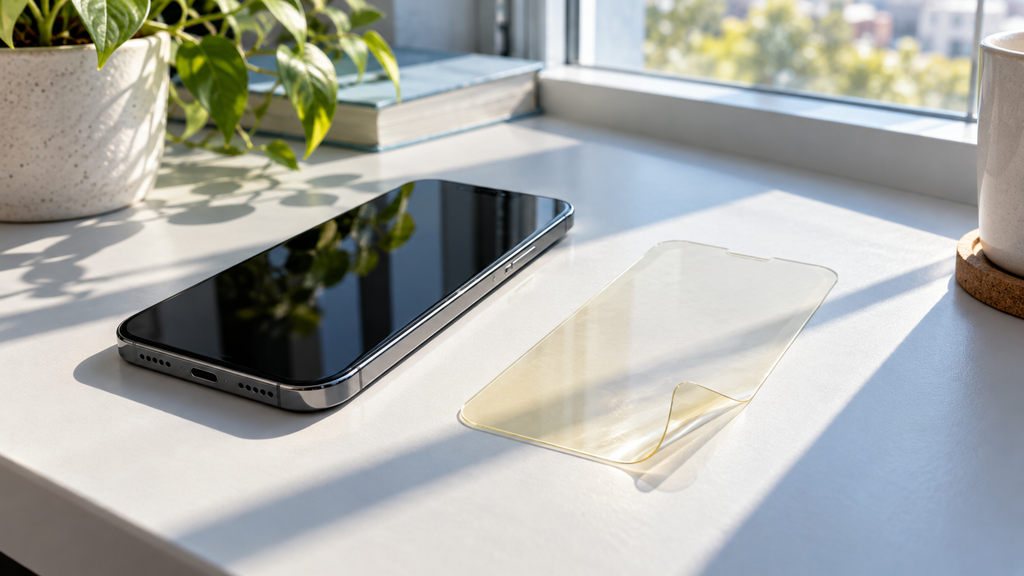
Sunlight exposure is a factor to consider when evaluating color stability.
Ultraviolet radiation can initiate chemical changes in susceptible polymers. In some polyurethane formulations, light exposure leads to the formation of structures that absorb visible light differently, producing a yellow appearance. The extent of the change depends on the formulation and the exposure conditions.
Aromatic and aliphatic polyurethane chemistries have different color-stability characteristics. Color-stable aliphatic TPU grades are available for transparent applications, while aromatic TPU can be more vulnerable to visible discoloration under light exposure. BASF’s TPU guidance discusses UV-related yellowing and stabilization; Lubrizol also offers aliphatic TPU grades designed for color and UV stability. [1, 2]
That distinction is useful when comparing materials, but it does not establish the durability of every finished screen protector. Coatings, adhesives, additives, and processing all require consideration.
If you frequently leave your phone on a sunny windowsill or use it outdoors for long periods, exposure becomes a relevant purchasing factor. Occasional outdoor use is not a reason to expect immediate yellowing, and there is no universal timeline that applies to every film.
2. Heat Can Contribute to Aging
Temperature is another factor worth investigating when discoloration develops. A parked vehicle, direct sunlight, or nearby heating equipment can create a much harsher environment than ordinary indoor use. Elevated temperatures may accelerate aging in susceptible parts of a protector’s construction.
This does not mean a phone that becomes slightly warm during normal charging will necessarily yellow its protector. The material, temperature, duration, and repeated exposure all matter. Without testing the actual product, it is inappropriate to assign a fixed temperature threshold or predict a precise replacement date.
A useful habit is to avoid leaving your phone in locations that become unnecessarily hot. Follow the phone manufacturer’s operating and storage guidance, and keep spare film away from heaters and hot vehicle interiors.
3. Surface Contamination Can Resemble Yellowing
Skin oils, makeup, sunscreen, food residue, and other substances can leave a tinted layer on the surface. These deposits can make a protector look discolored even when the underlying film has not changed chemically. Some contamination wipes away; some may stain a susceptible surface.
Localized discoloration around frequently touched areas suggests contamination is worth checking first. A tint concentrated near the edges can also involve dirt trapped beside the film or residue transferred from a case. Neither pattern proves the cause, but both provide useful clues.
Remove the case if the device instructions allow it, inspect the exposed edges, and clean gently using the protector supplier’s recommended method. If the appearance improves, at least part of the problem was probably on the surface. If the tint remains, repeated aggressive cleaning is unlikely to help.
4. Adhesives and Coatings May Affect Appearance
A screen protector is an optical system made from several components. If a coating or adhesive discolors, the whole protector may look yellow even when its base film remains relatively clear. This is why finished-product evaluation matters.
For troubleshooting, the important question is where the change occurs. Is it uniform across the viewing area, concentrated at an edge, or limited to a contact spot? Does it remain after approved cleaning? Does an unused sample from the same batch show a similar tint?
Manufacturers can investigate these questions by comparing individual layers with the complete construction. Consumers generally cannot isolate the adhesive from the base film without damaging the protector, so visual inspection should guide a replacement decision rather than become an attempt to separate its layers.
Is the Protector Yellow, or Is the Display Showing Warmer Colors?
Before replacing a protector, check the display. Night modes, eye-comfort settings, and adaptive color features can make whites appear warmer. A comparison between two phones is also affected by different brightness levels, display panels, and color settings.
Temporarily disable warm-color features and display a plain white image under neutral room lighting. Clean the protector gently and inspect it again. Avoid judging color under strongly yellow lamps or through a camera filter, since both can alter the apparent tint.
If the protector already needs replacement, inspecting the removed film against a neutral white background may help distinguish its discoloration from the display’s appearance. Do not remove a usable film simply to test it: removal can compromise adhesion, and the protector may not reinstall successfully.
A simple home comparison is useful for troubleshooting, but it is not a laboratory measurement. It cannot establish whether a product meets a supplier’s optical specification.
What Does Anti-Yellowing Hydrogel Film Really Mean?
When you search for anti yellowing hydrogel film, you will find products described as UV-resistant, color-stable, or non-yellowing. These terms should be interpreted through the supporting evidence, rather than as a promise that the product will stay unchanged indefinitely.
A stronger product specification identifies the tested construction, the exposure conditions, and the permitted color change. A weaker claim relies on a fresh product photograph or an unexplained statement such as “premium clarity.” Good initial appearance does not establish long-term stability.
Consider asking the supplier:
- What materials are used in the base film, surface coating, and adhesive?
- Was testing performed on the complete protector or only the base material?
- What exposure method, duration, and temperature were used?
- What were the initial and final optical measurements?
- Does the test sample match the thickness and construction being supplied?
These questions do not require a consumer to become a polymer specialist. They help distinguish a documented performance claim from a broad product description. A supplier should also explain recommended cleaning, storage, and any relevant warranty terms.
Understanding the Yellowness Index of a Screen Protector
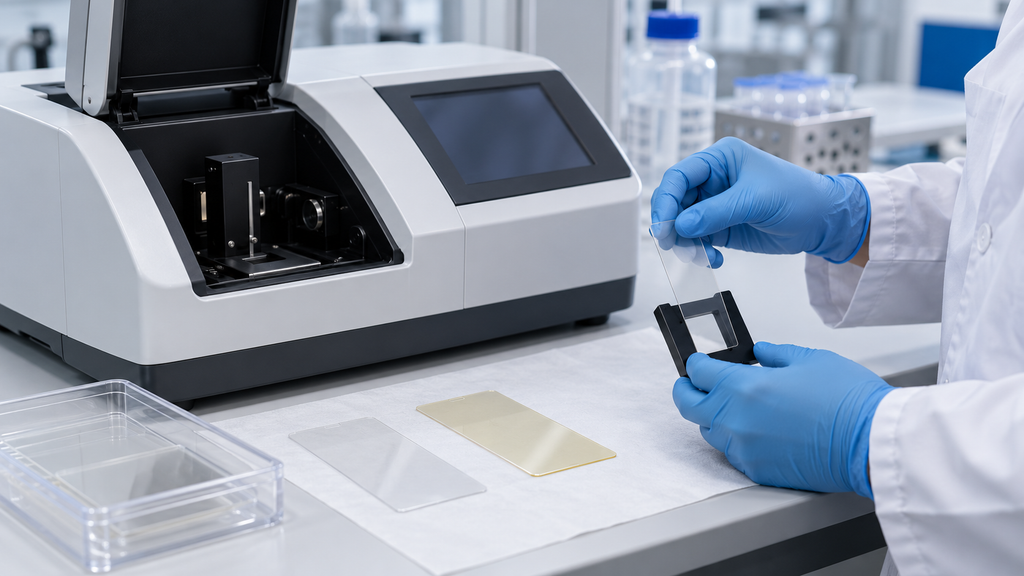
Conceptual illustration of optical film evaluation. No measured results are shown.
What the Measurement Tells You
The yellowness index, often abbreviated YI, is an instrumentally derived color metric. ASTM E313 describes calculating yellowness and whiteness indices from measured color coordinates. ISO 17223 addresses determining yellowness index and its change for clear, translucent, or opaque plastics. [3, 4]
For purchasing teams researching yellowness index screen protector testing, the key benefit is having a repeatable way to describe color rather than relying entirely on photographs. An initial measurement describes the sample before exposure. A later measurement helps characterize the change after a specified aging treatment.
The difference is commonly expressed as delta YI: the final index minus the initial index. A smaller increase under comparable conditions generally indicates less movement toward yellow. However, a small change does not automatically mean the final appearance is acceptable if the sample was already noticeably tinted.
Why Testing Conditions Must Match
A number is useful only when its measurement conditions are understood. ASTM E313 emphasizes comparing specimens with similar appearance and, for nonopaque materials, comparable thickness and translucency. [3] For thin protector films, the sample arrangement and optical measurement configuration also need to be documented.
Ask whether the laboratory measured a free film, film on a transparent support, or another prepared assembly. The report should identify the specimen construction, thickness, measurement mode, and relevant instrument settings. Comparing a multilayer finished protector with a different supplier’s bare film may create a misleading impression.
Do not assume there is a universal YI limit that every screen protector must meet. Brands should define acceptance criteria for the intended appearance and application. Suppliers should explain the basis of any claimed threshold instead of presenting a chosen number as an industry-wide rule.
Yellowing Is Different from Haze
A protector can look cloudy without becoming yellow, and it can develop a yellow tint while remaining relatively transparent. Those effects call for different measurements. ASTM D1003 addresses haze and luminous transmittance in transparent plastics. [5]
A practical optical evaluation can therefore include initial color, color change after exposure, haze, and luminous transmittance. Visual inspection on a display adds an application-level check. No single result should be treated as a complete description of optical quality.
How to Keep a Hydrogel Screen Protector Clear
Use Gentle, Compatible Cleaning
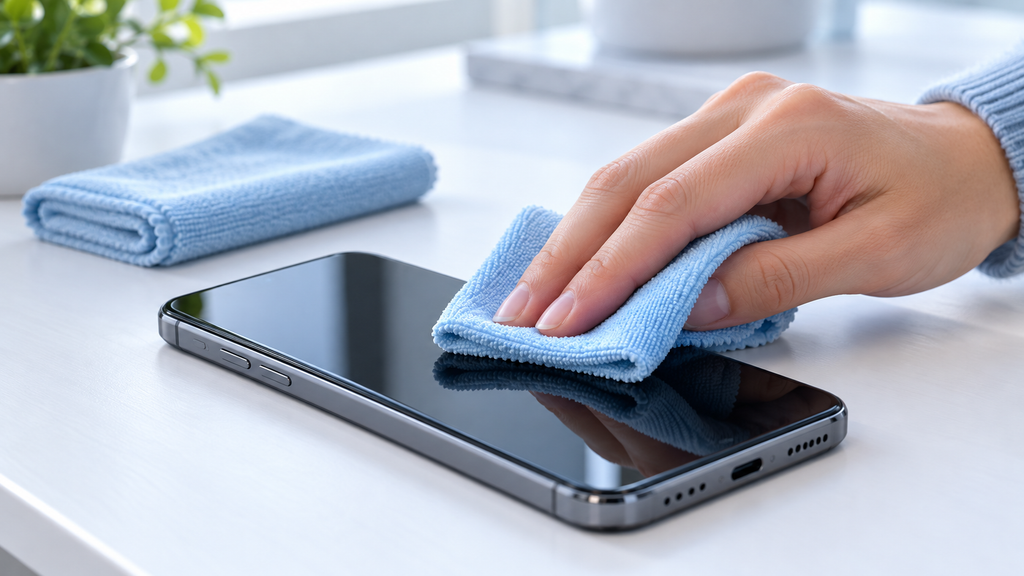
Use gentle cleaning methods recommended by the protector supplier.
Begin with a clean, soft microfiber cloth. Remove loose particles before wiping, and use light pressure rather than scrubbing. Follow the protector manufacturer’s instructions if a damp cloth or cleaning solution is needed. Keep liquid away from device openings and avoid spraying cleaner directly onto the phone.
Do not assume that a cleaner suitable for bare glass is suitable for a flexible polymer coating. BASF’s TPU guidance identifies formulation-dependent chemical resistance and describes swelling or damage from certain solvents. [1] That is a reason to check compatibility, not a reason to claim that every brief alcohol wipe damages every protector.
Avoid improvised treatments with acetone, bleach, abrasive powders, or unapproved solvents. If gentle approved cleaning does not remove the tint, increasing the strength of the treatment can create additional damage without resolving the original cause.
Limit Unnecessary Sun and Heat Exposure
Store your phone in the shade when practical, and avoid leaving it unattended on a hot dashboard or beside a heater. These habits reduce avoidable environmental stress without requiring you to keep the device indoors all day.
If outdoor use is central to your routine, choose a protector with documented color-stability performance. Good care and suitable materials work together; neither can turn an unsupported durability claim into a reliable guarantee.
Keep the Case and Edges Clean
Clean the case separately according to its manufacturer’s instructions. Allow it to dry before reinstalling it, and check whether its lip presses against the protector. A poor fit may lift the film and create areas where dirt accumulates.
After applying sunscreen, makeup, or other products, clean residue from your hands before extended phone use when convenient. Routine care is easier than trying to remove a stain after it has remained on the surface for a long time.
Store Spare Protectors Properly
Keep unused protectors in their original packaging with the protective liners in place. Store them in a clean, dry location away from direct sunlight and unnecessary heat. For commercial stock, follow the supplier’s storage conditions and shelf-life guidance rather than inventing a universal storage period.
Check packaging and appearance before installation. A protector that already looks tinted, has contaminated adhesive, or shows damaged liners should be assessed before it reaches the customer.
Can a Yellow Hydrogel Protector Be Made Clear Again?
Surface residue may be removable, but chemically discolored material generally cannot be restored through ordinary cleaning. If yellowing is inside the film or adhesive, polishing the outside does not reverse the underlying change.
Home remedies such as sunlight bleaching, strong chemical soaking, or heating are poor troubleshooting choices for an installed protector. They introduce additional exposure or compatibility risks without establishing that the original discoloration will be reversed.
Replace the film when the remaining tint interferes with viewing, when staining cannot be removed safely, or when yellowing accompanies lifting or an uncomfortable surface. A faint tint alone does not establish the protector’s mechanical condition. Assess its appearance and physical state separately.
How Brands Can Evaluate Anti-Yellowing Performance
For brands, retailers, and distributors, a useful evaluation begins with representative production samples and documented baseline measurements. Keep an unexposed control, test several specimens, and assess the same finished construction that customers will receive.
Select an exposure method relevant to the question being investigated. ASTM G154 provides a practice for operating fluorescent UV exposure apparatus, while other methods may be selected for different light sources or environmental stresses. [6] Naming a standard does not replace documenting the actual exposure cycle.
Record color and other relevant optical properties before and after exposure. Also inspect adhesion, surface condition, and appearance on a representative display. Establish acceptance criteria before comparing samples, so a preferred supplier does not influence the definition of a passing result.
Treat accelerated aging as comparative evidence, not a universal calendar. Laboratory hours should not be converted directly into months of phone use without a validated relationship for the material and use conditions. Real-world observations can help determine whether laboratory rankings match customer experience.
Product photographs should use consistent lighting and exposure. Illustrative images can explain what discoloration looks like, but they should not be presented as measured results or proof that one commercial product outperforms another.
Frequently Asked Questions
Do all hydrogel screen protectors turn yellow?
No uniform outcome can be inferred from the name alone. Materials, construction, exposure, and contamination differ. Evaluate the specific product and its supporting evidence.
Does self-healing mean anti-yellowing?
No. Recovery from minor surface marks and resistance to color change are different properties. A claim about one should not be used as evidence for the other.
How long should a clear protector last?
There is no reliable universal interval. Use the supplier’s guidance, your actual viewing experience, and the protector’s physical condition to decide when replacement is appropriate.
Is a yellow tint proof of poor quality?
Not by itself. First rule out warm display settings and removable contamination. Persistent film discoloration then needs to be judged against the product’s stated performance and exposure history.
Choosing Clarity That Lasts
Managing hydrogel screen protector yellowing starts with identifying the cause. Gentle cleaning can address surface residue, while suitable material selection and sensible care can reduce avoidable deterioration. Persistent internal discoloration usually calls for replacement.
When choosing anti yellowing hydrogel film, prioritize evidence about the complete product: documented construction, relevant aging conditions, and comparable optical results. For commercial buyers, yellowness index screen protector measurements are most useful alongside haze, transmittance, and practical inspection. Clear specifications make it easier to choose protection that meets real expectations.
References
1. BASF: Elastollan Material Properties (https://www.basf.com/dam/jcr:b36f0d83-b60b-35d8-8dab-35f7f0795b37/basf/www/kr/documents/ko/product/Elastollan_Material%20Properties.pdf)
2. Lubrizol: ESTANE 9000 Aliphatic TPU (https://www.lubrizol.com/solutions/products/estane/estane-9000)
3. ASTM E313: Yellowness and Whiteness Indices (https://store.astm.org/e0313-20r25.html)
4. ISO 17223:2026: Yellowness Index of Plastics (https://www.iso.org/standard/91100.html)
5. ASTM D1003: Haze and Luminous Transmittance (https://store.astm.org/d1003-21.html)
6. ASTM G154: Fluorescent UV Exposure Apparatus (https://store.astm.org/g0154-23.html)
Website Publishing Metadata
SEO title: Hydrogel Screen Protector Yellowing: Causes and Care
Meta description: Learn why hydrogel screen protectors turn yellow, how to keep them clear, and how anti-yellowing film and yellowness index testing help assess quality.
Suggested URL slug: hydrogel-screen-protector-yellowing
Image Alt Text
Image 1: Clear and yellow-tinted flexible screen protector films side by side on a neutral surface
Image 2: Smartphone and flexible screen protector film on a desk beside a sunny window
Image 3: Hand gently wiping a phone screen protector with a soft microfiber cloth
Image 4: Gloved technician preparing a thin film sample beside an optical testing instrument