
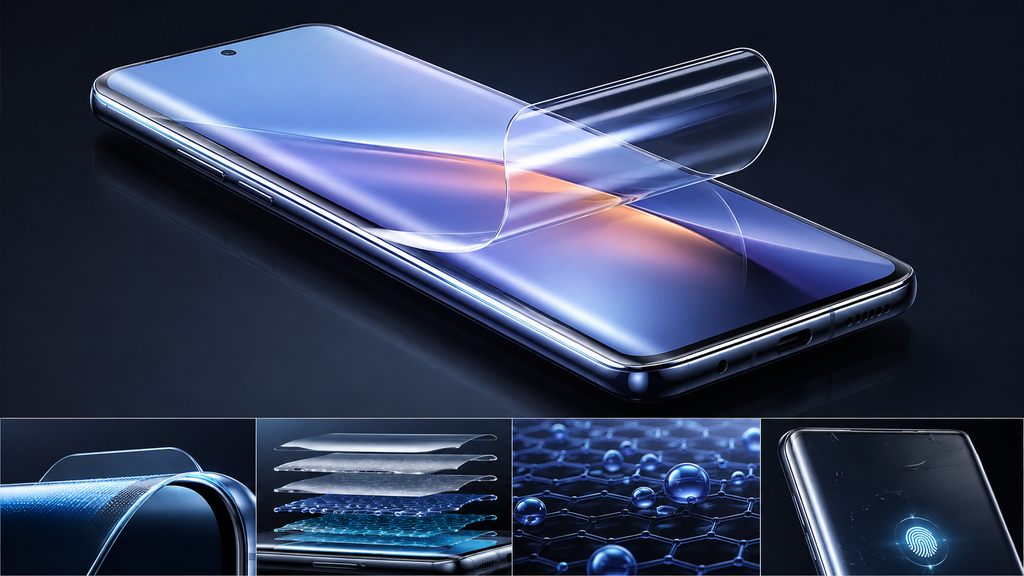
As smartphones continue to pursue higher screen-to-body ratios, thinner bodies, and more immersive visual experiences, curved screens have become an important design feature for many flagship phones.
The smooth edge curvature brings a better visual effect and grip experience, but it also brings new challenges to screen protection: how to protect the screen while maintaining a complete fit, sensitive touch and natural feel?
Traditional tempered glass screen protectors have good hardness and scratch resistance on flat screens, but when faced with curved screens, rigid materials have difficulty fully adapting to the complex curvature, which can easily lead to problems such as edge lifting, white edges, unresponsive touch, and interference with phone cases (lifting caused by case edges).
This is why Hydrogel is receiving increasing attention.
Why are curved screens harder to protect?
The challenge of protecting curved screens is not just whether the materials are hard enough, but whether the materials can accurately adapt to the screen’s geometry.
Rigid Glass Struggles with Complex Curvatures
Tempered glass itself has high rigidity. Even when using a hot bending process to create a curved glass film, it is still necessary to precisely match the curvature of the phone screen.
Even slight deviations in size or curvature can lead to:
Edges not fitting perfectly
White edges or air gaps
Reduced edge touch experience
Film lifting caused by case pressure.
For flat screens, rigidity is an advantage; however, for curved screens, flexibility and fit are equally important.
Complex adhesive structure increases installation difficulty
Some curved glass screen protectors use edge adhesive, full adhesive, or UV adhesive to improve adhesion.
These technologies can solve some problems, but they may also increase installation complexity and bring challenges in optical performance, fingerprint recognition, and after-sales operation.
For professional screen protector shops, complex installations may be acceptable; however, for overseas retailers and distributors, products and installation methods that are easier to standardize are often more commercially valuable.
Why is Hydrogel suitable for curved screens?
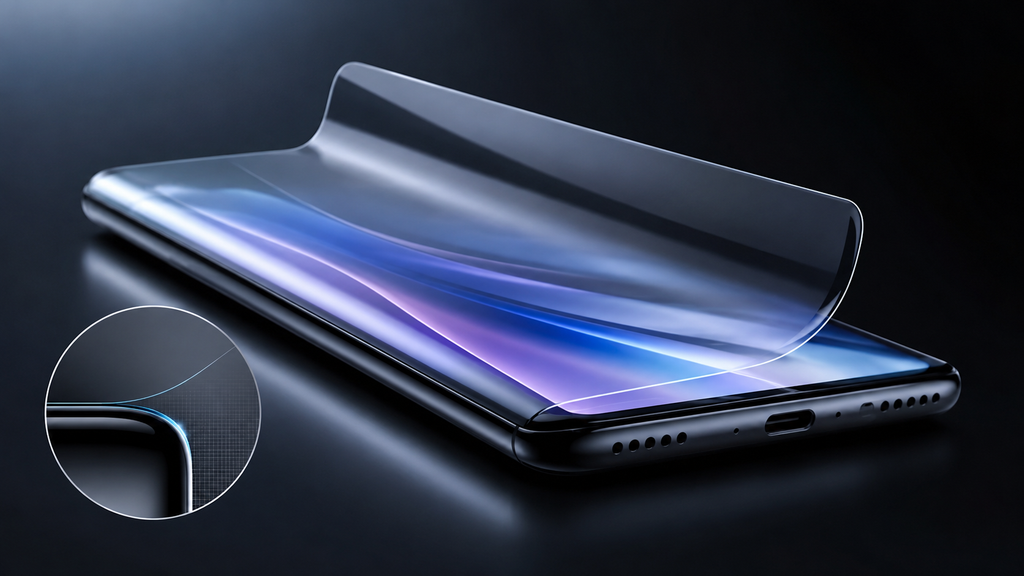
Hydrogel is not simply a “soft film” in the conventional sense.
It uses a flexible polymer material that can be bent and stretched according to the curvature of the screen during installation, thus better adapting to complex curved screens.
Flexible Fit
Flexible bonding is Hydrogel’s core advantage.
Unlike rigid glass, Hydrogel can conform to the curvature of the screen edges, achieving more complete edge coverage and reducing white edges and curling issues when well-matched in design and die-cutting precision.
This flexible structure is particularly valuable for 2.5D, slightly curved, and highly curved screens.
Self-Healing
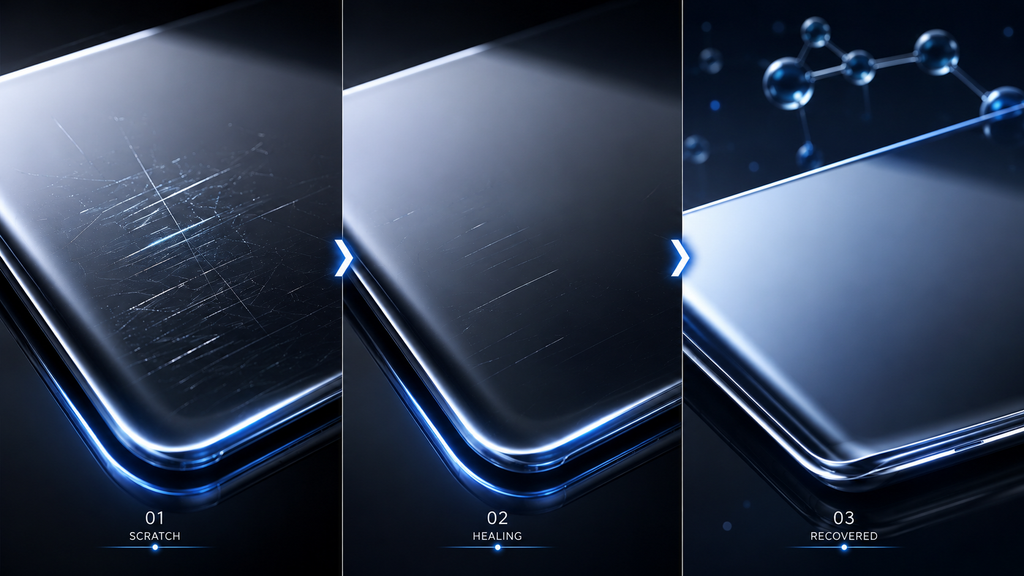
High-quality hydrogels typically possess a certain degree of self-healing ability.
When the film surface has minor scratches or small indentations from daily use, the polymer material can gradually recover its surface state under certain conditions.
The specific repair speed and effect are affected by factors such as material formulation, coating, scratch depth and ambient temperature, but this characteristic can reduce the long-term impact of minor scratches on the appearance of the film.
Lightweight and natural touch
Flagship phones are increasingly relying on high refresh rate displays, in-display fingerprint sensors, and highly sensitive touch controls.
Hydrogel’s flexible and thin structure reduces the impact of the protective film on the original screen’s touch sensitivity, providing users with an experience closer to that of a bare screen.
Of course, the specific fingerprint recognition performance still depends on the phone model, film thickness, adhesive layer, and installation quality; therefore, compatibility testing for the target model remains crucial.
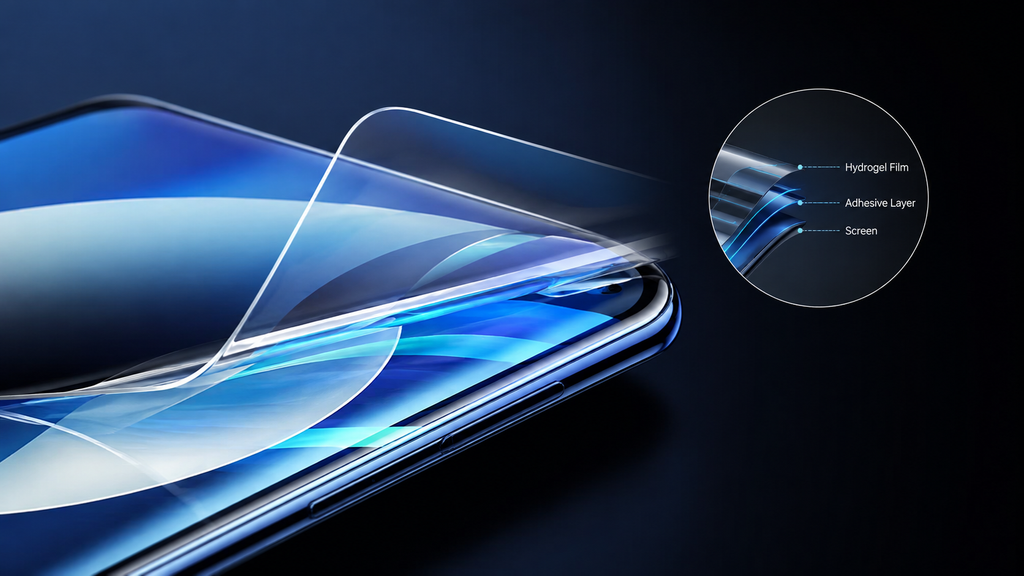
TPU vs EPU: Material Selection for Hydrogel
Not all hydrogels have the same properties.
The final performance depends not only on the material name, but also closely on the formulation, thickness, adhesive layer, and surface coating.
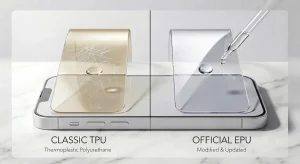
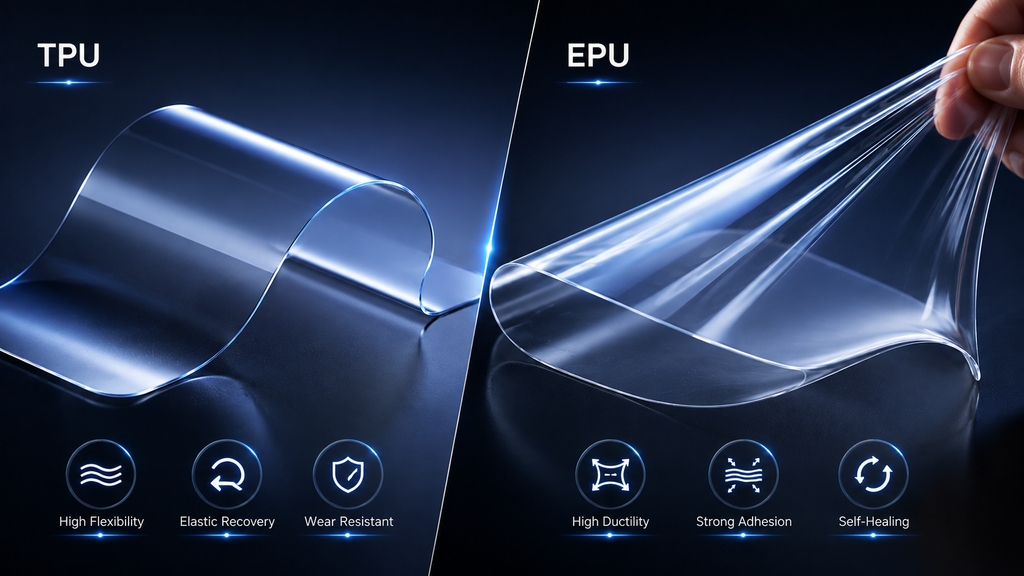
TPU (Thermoplastic Polyurethane) is a widely used material in flexible protective films, possessing excellent elasticity, flexibility, and abrasion resistance. Depending on the formulation, TPU can achieve good transparency, elastic recovery, and self-healing ability for minor scratches.
EPU can be customized to improve performance based on different formulations, resulting in different application characteristics in terms of flexibility, extensibility, and resilience.
Therefore, for B2B buyers, instead of simply comparing TPU and EPU, it’s more important to focus on:
Fit + Transparency + Tactile Feel + Self-Healing + Scratch/Abrasion Resistance + Adhesion
What truly determines the value of Hydrogel products is their overall performance.
YIZHEN: Develop a complete Hydrogel protection solution
For brand owners, distributors, and retailers, choosing a Hydrogel supplier is about more than just buying a protector.
Material stability, product development, production capacity, model coverage, and inventory efficiency all directly impact long-term business.
YIZHEN Technology focuses on screen protection solutions, with products covering Hydrogel, hydrogel films, special function films, and intelligent film cutting systems.
AlwaysClear™: Improve surface user experience
Hydrogel users often share two main concerns: susceptibility to fingerprints and a lack of smooth touch.
YIZHEN’s AlwaysClear™ surface technology focuses on improving the film’s oleophobicity, fingerprint resistance, and touch feel, helping to reduce fingerprint, oil, and sweat residue.
For consumers who use their phones for extended periods every day, a good screen protector should not only protect the screen but also maintain a good touch experience.
YIZHEN Hydrogel Series
YIZHEN offers a variety of Hydrogel solutions to meet different market demands.
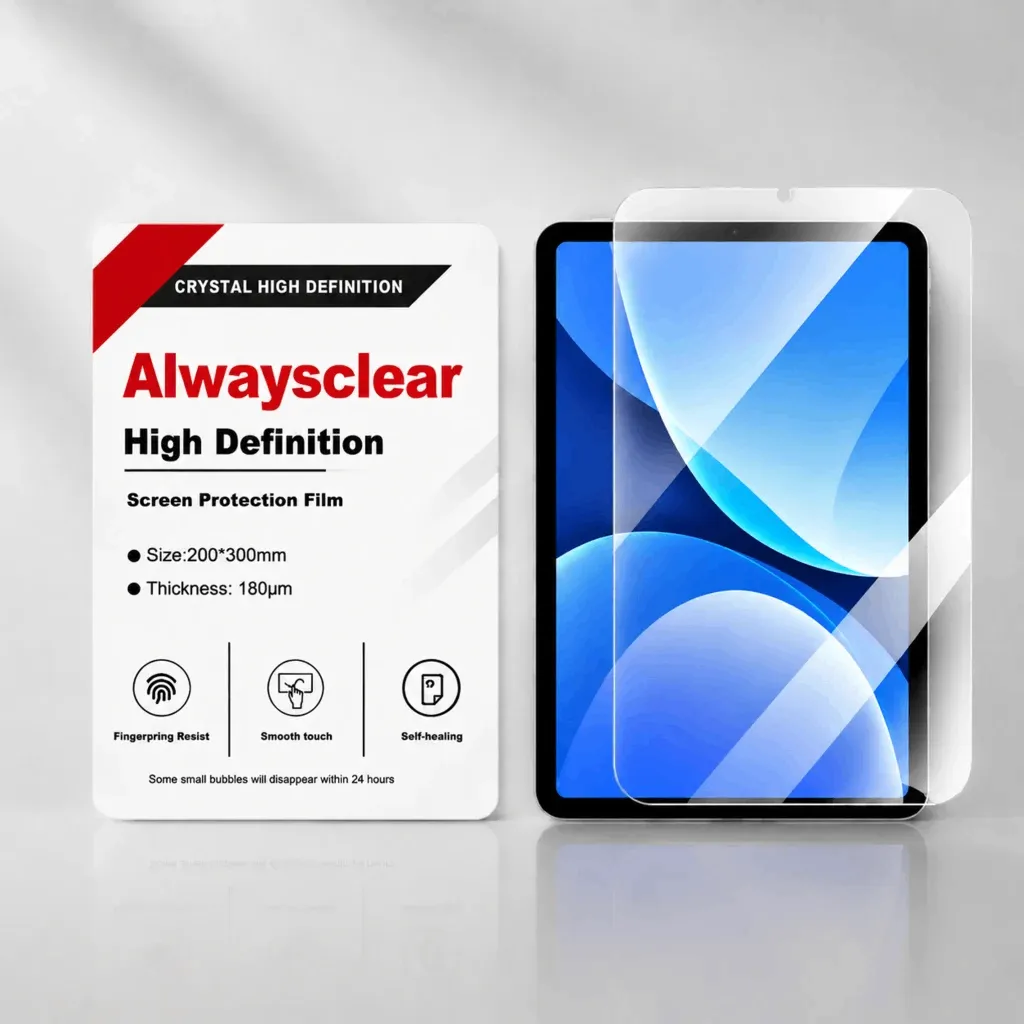
Alwaysclear HD
Emphasizes high-definition display and a natural visual experience, making it suitable for flagship phone users who prefer the original screen look.
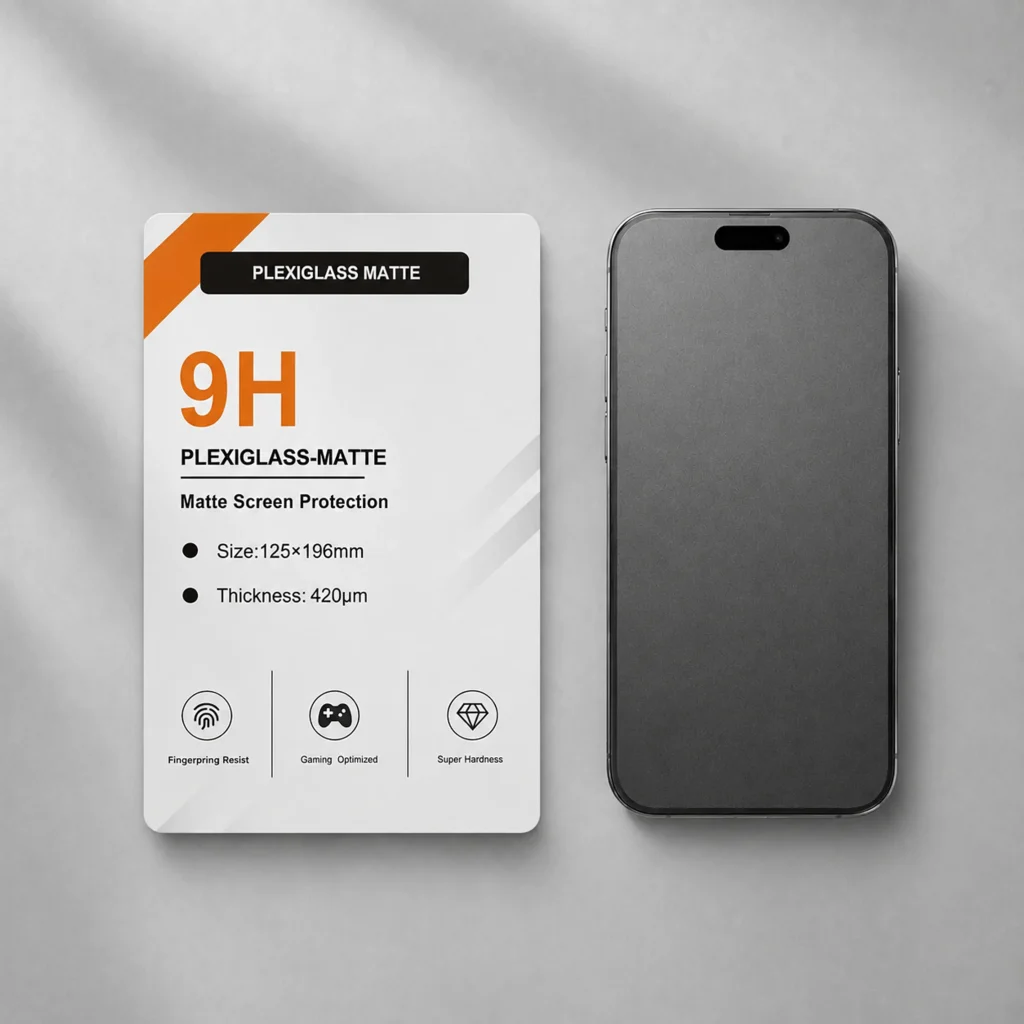
Alwaysclear Matte
Reduces some environmental reflections and minimizes the visual impact of fingerprints and oil stains, making it suitable for mobile gamers and heavy mobile phone users.
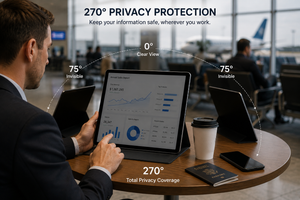
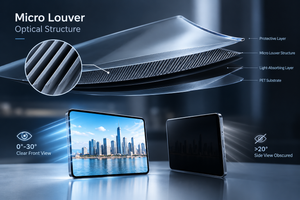
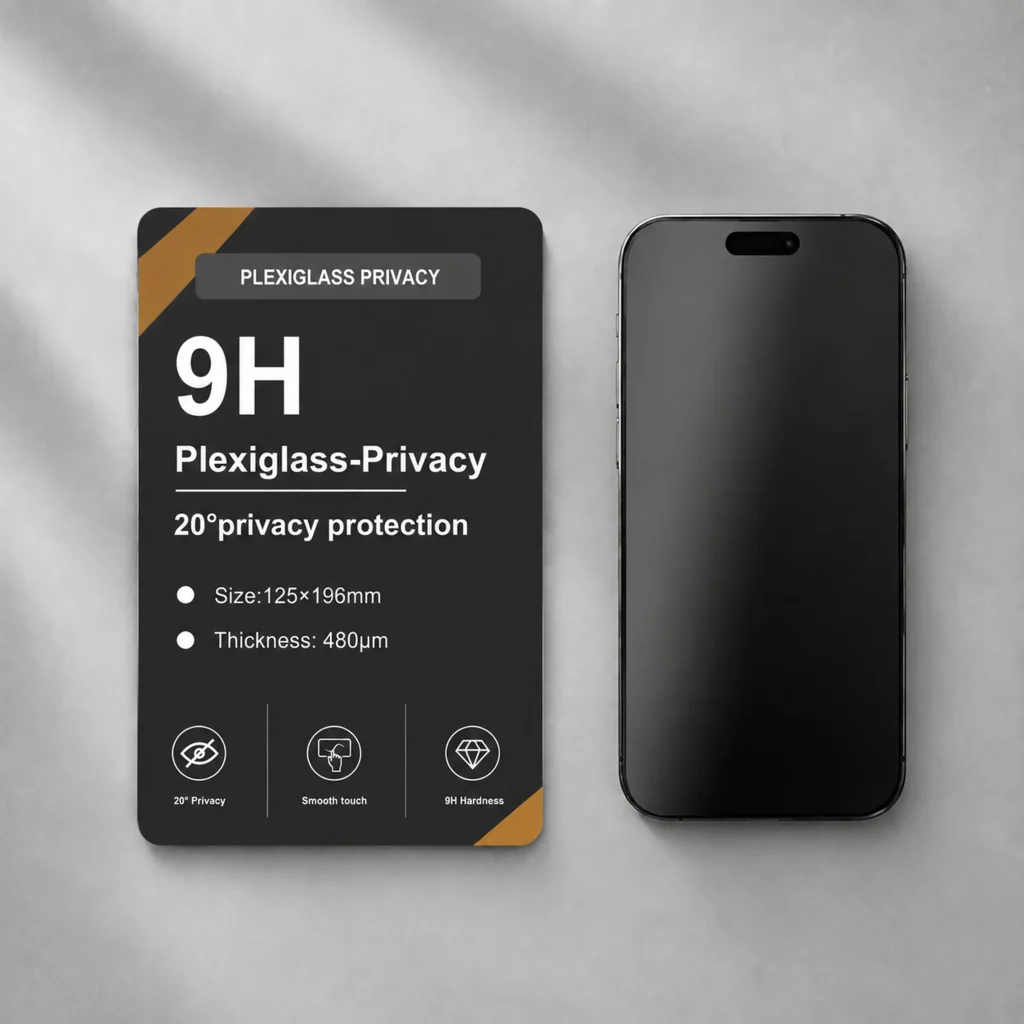
Alwaysclear Privacy
The lateral visibility is reduced through an optical privacy structure, while maintaining the flexibility of the flexible material to accommodate the Curved Screen.
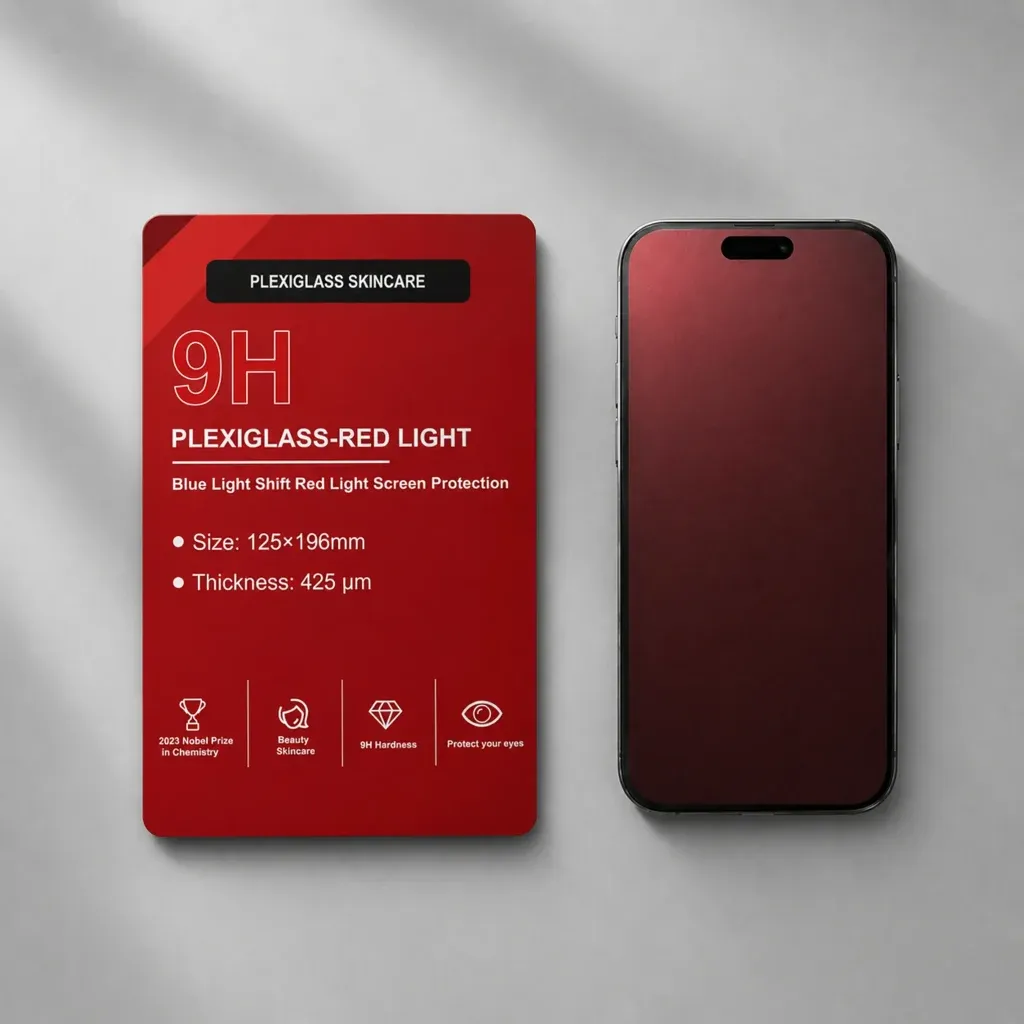
9H Plexiglass Series
For users who want higher surface hardness while maintaining a certain degree of toughness, 9H Plexiglass offers an alternative that differs from traditional tempered glass and Hydrogel.
AutoCut Pro: Reduce inventory and make sales more flexible
For global mobile phone accessory distributors, in addition to product quality, inventory pressure is also a significant issue.
With mobile phone models being updated at an increasingly rapid pace, procuring individual screen protectors for each model in advance can easily lead to excessive inventory, tied-up capital, and the risk of unsold stock.
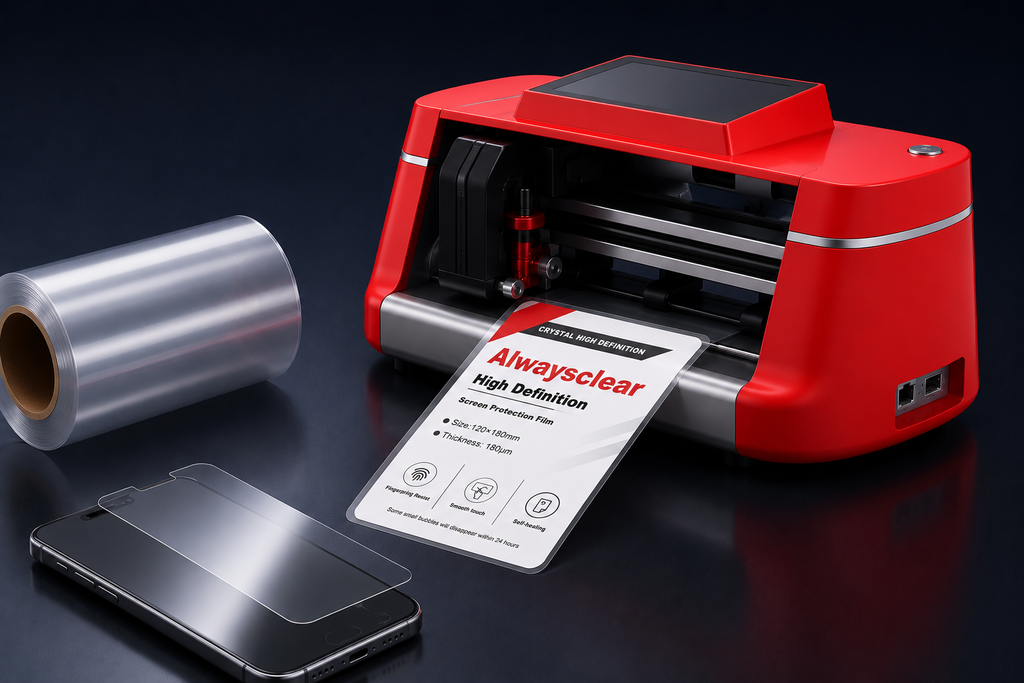
YIZHEN’s AutoCut Pro intelligent film cutting system offers another solution.
With the help of a digital equipment library and precise film cutting technology, stores can stock large-size film materials and cut them to the corresponding models on-site according to the actual needs of customers.
Simply put:
Traditional model:
Pre-stocking → Store massive SKUs → High inventory risk
AutoCut Pro model:
Stock raw film rolls → Cut on demand → Instant sales → Low inventory burden
This not only helps retailers reduce model inventory but also allows distributors to respond more quickly to new phone launches and cover more device models.
For B2B customers, the value of AutoCut Pro goes beyond simply “cutting films”; it helps establish a more flexible, on-demand production and sales model.
Hydrogel is becoming an important choice in the era of curved screens.
As smartphones evolve towards curved screens, foldable screens, and more complex display structures, the evaluation criteria for screen protectors are also changing.
Future screen protectors should not only be compared in terms of hardness, but also consider:
Flexibility
Surface Durability
Optical Clarity
Touch Sensitivity
Adhesion
Manufacturing Efficiency
This is precisely where Hydrogel’s value lies.
For Curved Screens, it offers better flexible fit; for consumers, it balances thinness, tactile feel, and everyday surface protection; for B2B customers, it can also be combined with AutoCut Pro to reduce operational pressure from model inventory.
Conclusion
Curved screens have changed the design of smartphones and also the technical requirements for screen protectors.
Tempered glass remains a popular choice for many flat screens, but as screens become more complex in curvature, flexibility, fit, and adaptation efficiency become increasingly important.
Hydrogel offers a more flexible protection solution for modern curved screens with its flexible structure, self-healing, thin and light feel, and multi-functional coatings.
For brand owners, distributors, and retailers, it’s not just a protective film that’s truly worth paying attention to.