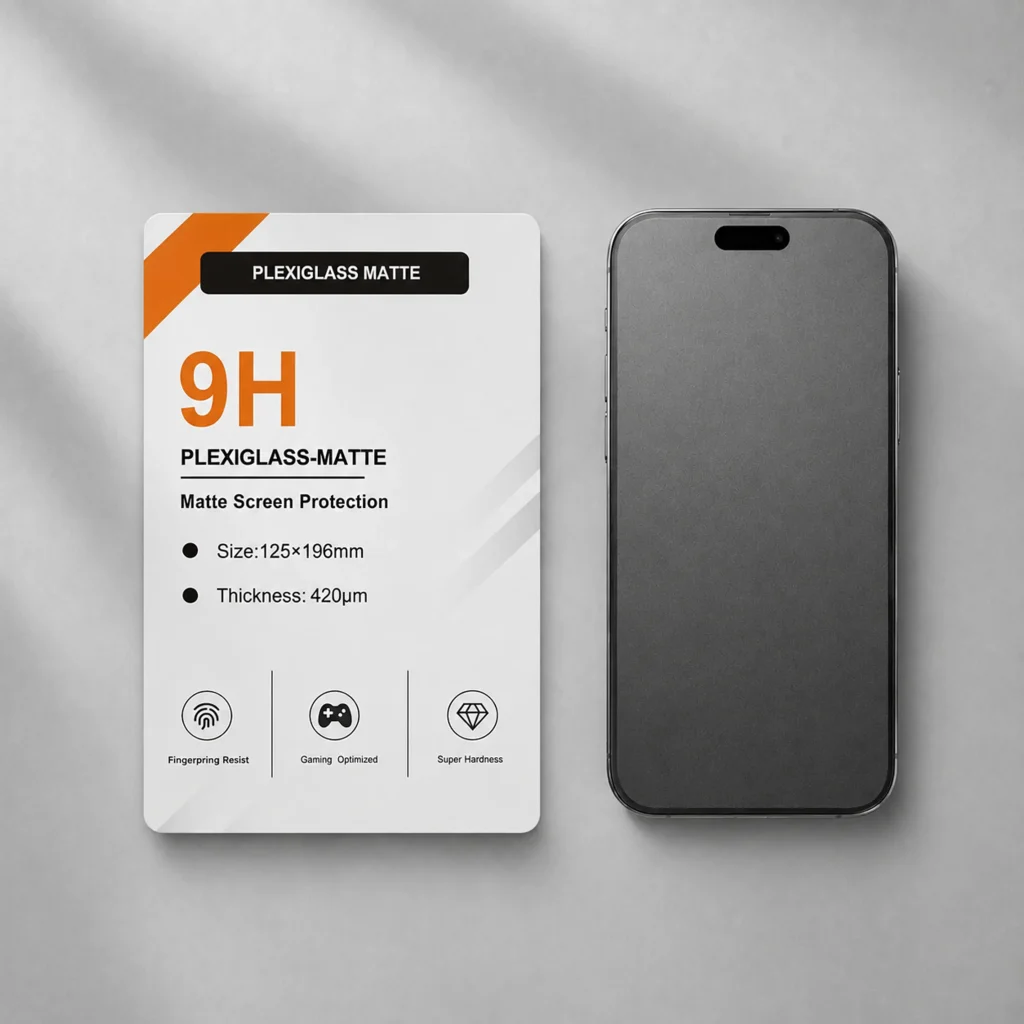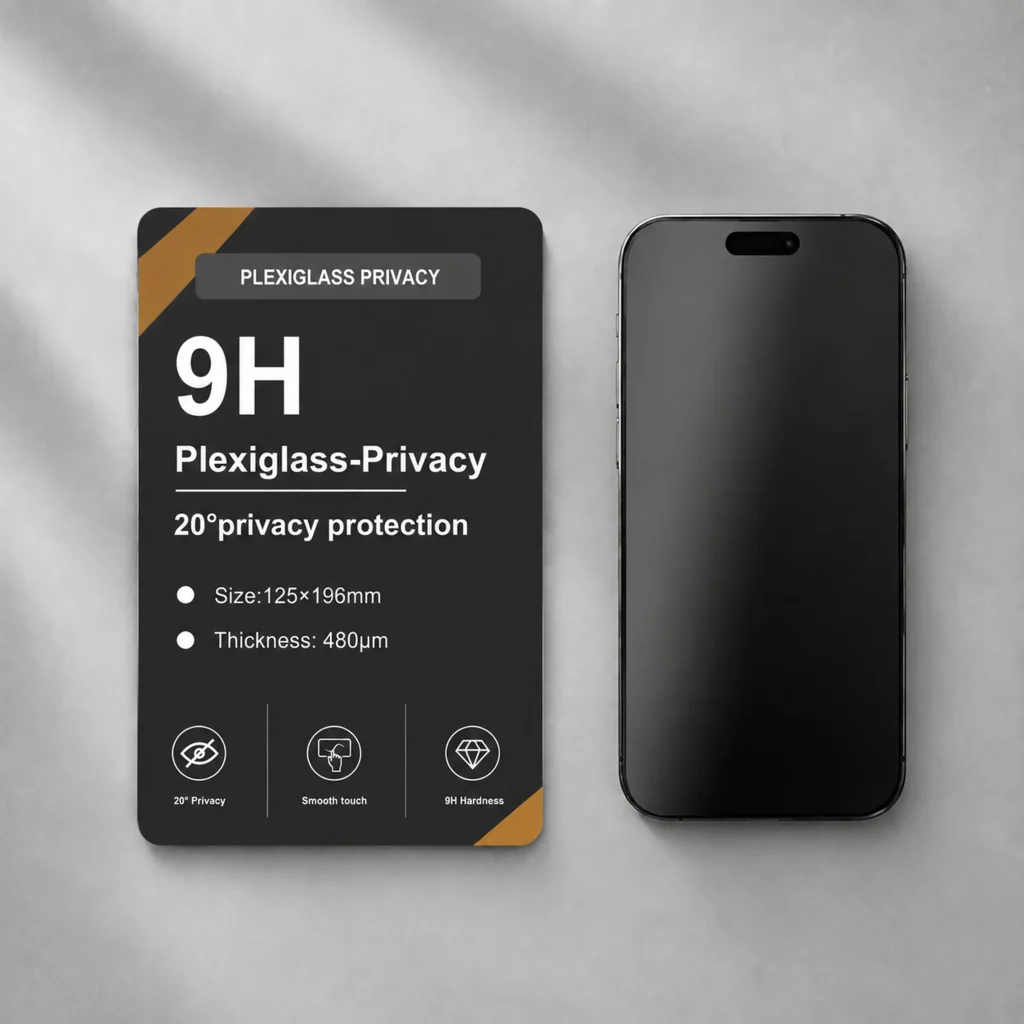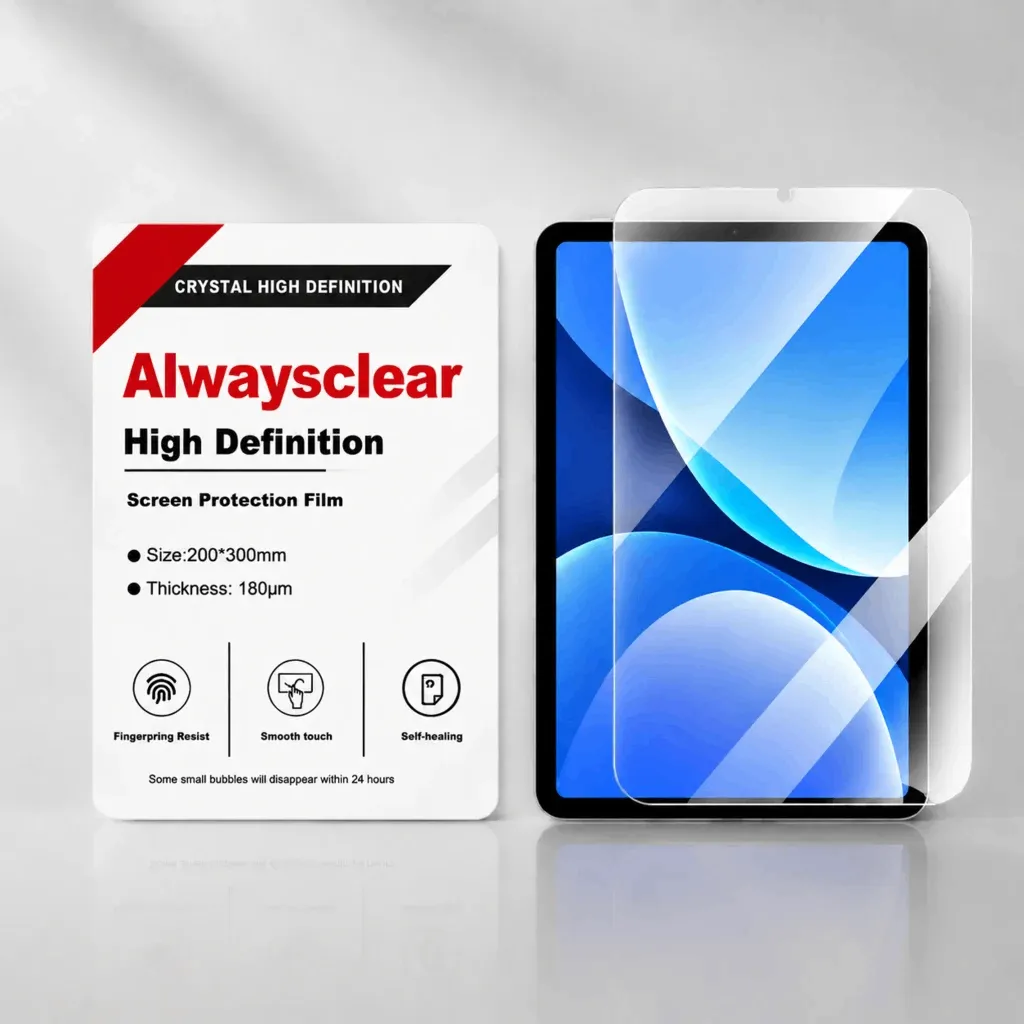

How long have you been misled by “anti-fingerprint” claims?
You see every product advertising an “anti-fingerprint coating”, so you buy it. Three days later, your screen looks greasy and smudged. How much of those bold promises actually hold up? Let’s break this down once and for all.
Why Your Screen Always Looks Greasy?
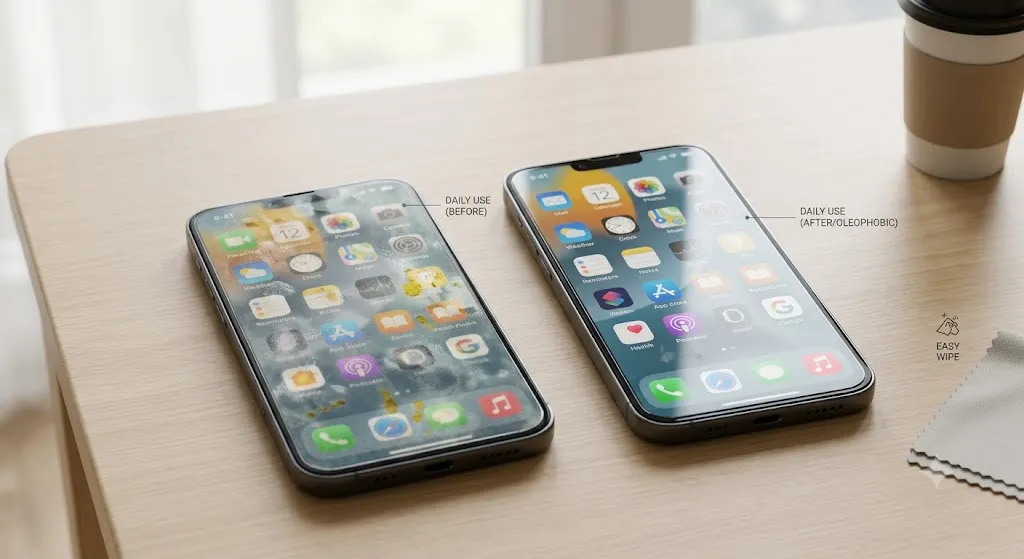
Before we fix the problem, we need to understand it. Fingerprints aren’t just regular dirt — they’re a mix of chemicals. Oils, sweat, and lactic acid from your skin stick to the glass. They don’t just leave marks; they alter the optical properties of the surface, making your screen look dull and blurry, and no amount of wiping brings it back to its original clarity.
So real anti-fingerprint performance has to solve two problems at once: first, reduce how strongly oil adheres to the surface, and second, make existing smudges less visible. A coating that only does one of these doesn’t truly solve the problem.
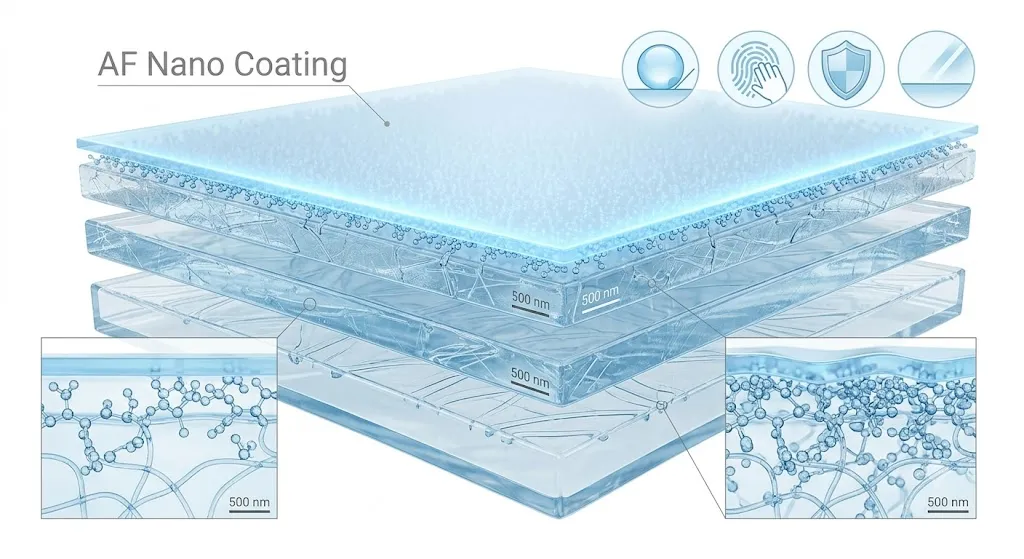
Three Types of “Anti-Fingerprint” Products on the Market
1. Native AF Oleophobic Coating (The only long-lasting effective solution in the industry)
AF stands for hydrophobic and oleophobic coating. It uses nanoscale silane compounds to create a lotus-effect structure on the film surface, with a water contact angle of 110°–120°, compared to only 20°–30° for regular uncoated films. Oil beads up on the surface and wipes away easily with a light cloth, and the touch feel is smooth and drag-free. This is a proven technology used in high-end hydrogel films, tempered glass protectors, and original factory phone screens.
However, the coating has a natural wear cycle. With daily heavy use, anti-fingerprint performance gradually fades over 6–12 months. This is normal material aging, not a product defect. Informing end consumers upfront can greatly reduce after-sales disputes.
2. Blue-light Blocking + Anti-Fingerprint Composite Coating (Mid-range mainstream option with clear drawbacks)
Many manufacturers add a blue-light filter layer on top of the AF coating, marketing it as a dual-function eye-care and anti-fingerprint product for the budget mass market. Its basic anti-fingerprint performance matches standard AF coatings, but the blue-light filter lowers overall light transmittance, often causing the screen to look yellowish and dimmer.
The industry standard is clear: if light transmittance drops below 92%, optical performance suffers noticeably with severe color shift. Some cheap composite films have barely any blue-light blocking effect — it’s just marketing copy. Always request a light transmittance test report when sourcing.
3. Pure Marketing Gimmicks (Key pitfall for buyers, damages store reputation)
These products stack over a dozen features in their titles — waterproof, oil-proof, anti-fingerprint, antibacterial, scratch-resistant, eye-care — but have no effective oleophobic coating at all. The telltale signs are obvious: they never mention coating technology or provide water contact angle data, relying only on vague claims to attract customers. Their cost is extremely low, with per-unit wholesale prices far below industry standards.
A quality AF coating costs 15–40 yuan just in materials and processing. Cheap multi-pack protectors are almost always basic PET film. They seem fine at first, but after a week fingerprints and oil build up badly, leading to high return rates and long-term damage to store reputation and repeat business.
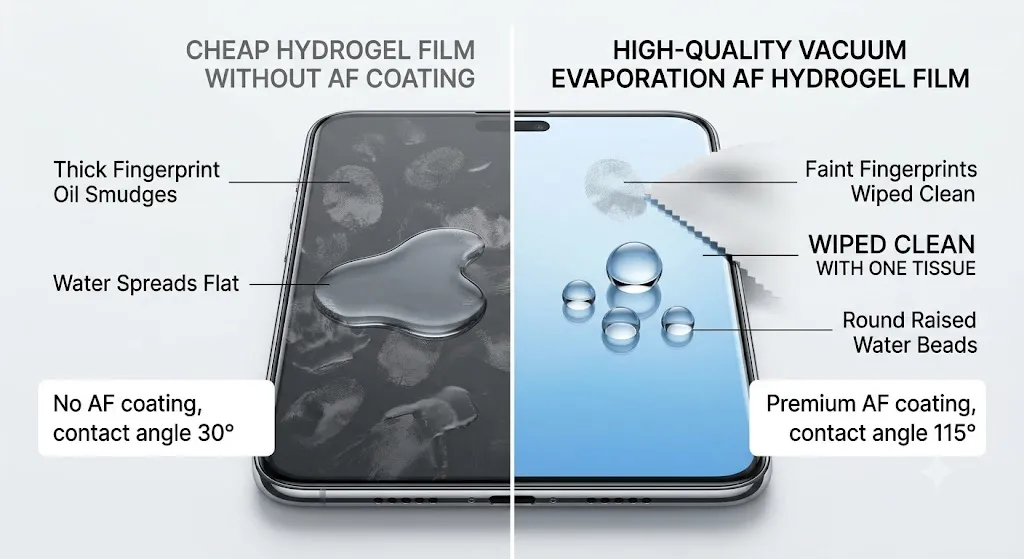
Three Steps to Verify Real Anti-Fingerprint Performance
Step 1: Check the core parameter — water contact angle
Contact angle is a hard, unforgeable standard for coating performance:
Above 110°: High-quality vacuum-evaporated AF coating, stable and long-lasting anti-fingerprint performance
90°–110°: Basic spray-coated AF coating, works short-term but has poor abrasion resistance
Below 90°: No effective oleophobic layer, only temporary surface treatment — pure marketing gimmick
Reputable factories provide test data proactively. We do not recommend bulk sourcing from suppliers that cannot show parameter reports.
Step 2: Simple on-site water drop test
You can verify this on-site with no special equipment: drop clean water on the film surface. If the water forms a full, rounded bead that doesn’t spread or run down the surface, the film has a complete AF coating. If the water spreads out flat, there’s no hydrophobic structure — and the anti-fingerprint claim is completely false.
Step 3: Confirm the coating raw material supplier
Coating raw materials directly determine abrasion resistance and service life. The tier of reliable mainstream suppliers is clear:
- Daikin (Japan): Standard for high-end flagship products, top-tier hydrophobic/oleophobic and abrasion performance in the industry
- Dow Corning (USA): Industrial-grade stable coating, ideal for long-term, high-frequency use
- Kolon (Korea): Mainstream mid-to-high end choice, balanced cost-performance and stable supply
- Unbranded domestic coatings: High batch-to-batch variation, inconsistent wear life, high sourcing risk
If a supplier cannot clearly state the coating material brand, it’s safe to assume their quality control is inadequate.
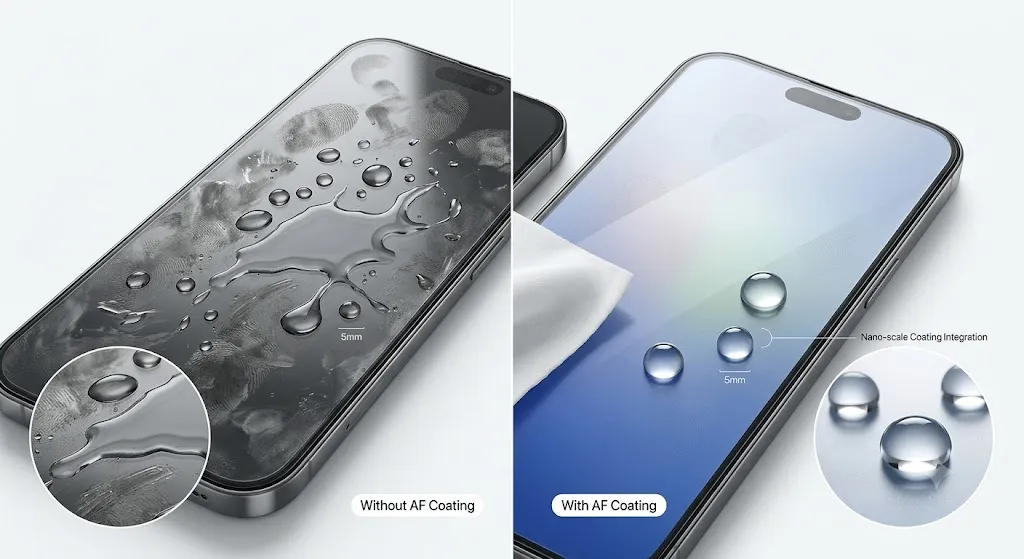
Why Vacuum Evaporation and Spray Coating Are So Different?
How the coating bonds to the glass makes a huge difference in performance and durability. Almost all high-quality screen protectors use vacuum evaporation technology. The coating material is heated and vaporized in a vacuum chamber, then condenses evenly onto the glass surface. This molecular-level bond truly fuses the coating with the glass.
Coatings made this way can pass 500 cycles of steel wool abrasion testing without peeling off. In contrast, spray coating simply sprays the material on like paint, with much weaker adhesion — performance usually drops noticeably after 200–300 abrasion cycles. Dip coating doesn’t even last 100 cycles.
So before you buy, just ask the seller if the coating is evaporated or sprayed. If they can’t answer that question, the product is probably not worth considering.
Some premium products now feature self-healing AF coatings, claiming to automatically repair minor scratches. This technology does work for light surface scratches, usually recovering within 24 hours, but it cannot fix deep scratches. Currently, only a tiny handful of suppliers — like Japanese material firms and Covestro in Germany — can mass-produce this coating reliably, and the price reflects that. Any so-called self-healing coating under 50 yuan is almost certainly fake.
What to Actually Look for When Buying?
When stocking in bulk, judging only by price is an easy way to fall into traps. A complete set of screening criteria can avoid most low-quality sources:
- Performance parameters: Require test reports for water contact angle, light transmittance, and steel wool abrasion. Reject any supplier without data to back up claims.
- Material credentials: Confirm the coating supplier brand. Prioritize partnerships with top-tier materials like Daikin, Dow Corning, and Kolon.
- Process specification: Confirm vacuum-evaporated AF coating is used. Reject simple spray or dip coating processes.
Three key numbers make the screening standard easy to remember: 110° is the threshold for a quality AF coating; 500 abrasion cycles is the baseline for vacuum evaporation; 6 months is the natural performance fade cycle for standard coatings. Master these three metrics, and you can quickly spot most fake anti-fingerprint products on the market.
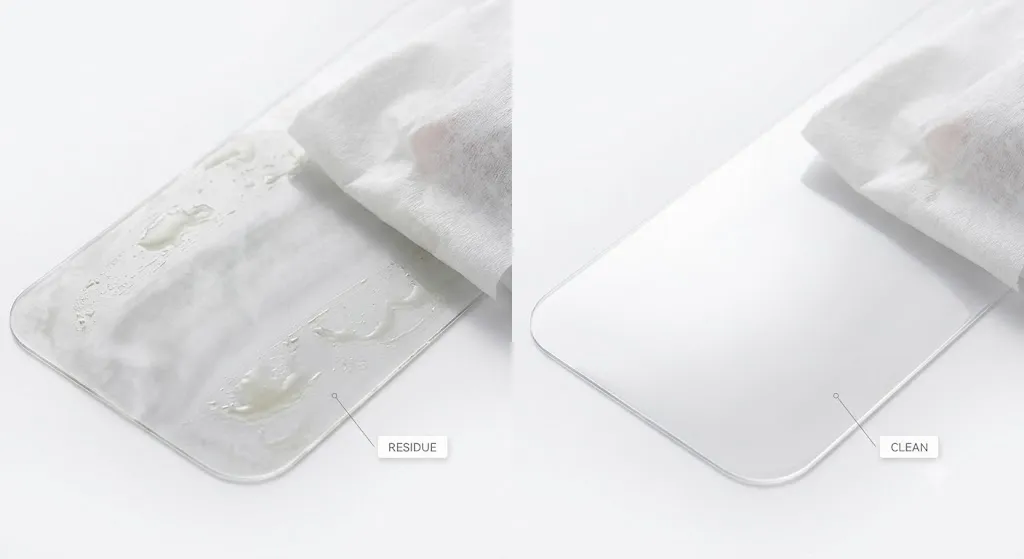
YIZHEN Anti-Fingerprint Screen Protectors
If you’re looking for a screen protector manufacturing partner focused on R&D, transparent processes, and international export quality standards, YIZHEN is a professional brand and manufacturer worth paying close attention to.
YIZHEN’s core manufacturing advantages and product features:
1. High-standard vacuum evaporation process
YIZHEN uses fully automated vacuum evaporation to deposit a nanoscale AF hydrophobic/oleophobic coating evenly onto high-aluminum tempered glass substrates. Compared to ordinary spray-coated products, the coating has stronger molecular bonding and higher abrasion resistance. The water contact angle stays consistently between 110° and 120°, greatly extending service life and improving anti-fingerprint experience.
2. High light transmittance and precision mold development
We use premium high-transmittance substrates with multi-layer optical coatings, keeping light transmittance above 92% — no color shift, no yellowing, perfectly reproducing the color and clarity of flagship phone screens. We develop 1:1 precision molds based on real devices for all popular overseas models, with smooth, well-fitting edge curves that ensure no white borders, no bubbles, and no sensor blockage after application.
3. 9H surface hardness and shatter-resistant toughness
The surface reaches industrial 9H hardness, effectively resisting scratches from everyday hard objects like keys and coins. It also has excellent impact toughness — it won’t easily shatter and scatter when struck hard, keeping end users safe.
4. Full coverage of popular global models
Our product line fully covers all iPhone series, Samsung Galaxy S series and foldable (Fold/Flip) series, plus flagship models from all major brands. We also have fast mold development capabilities to keep up with new device launches, and can quickly respond to bulk OEM/ODM customization requests from overseas customers.
Conclusion
There are no cheap shortcuts for anti-fingerprint coatings — the screen protector industry strictly follows the rule of “you get what you pay for.” Cheap, uncoated protectors may seem more profitable in the short term, but hidden losses from returns, bad reviews, and customer churn will seriously eat into your overall profits. When sourcing and stocking, prioritize products with complete test parameters, top-tier coating materials, and vacuum evaporation technology. This will not only stabilize repeat purchases from end users, but also protect your channel reputation in the long run.