
Introduction: Why Material Innovation Matters
Screen protectors have moved far beyond simple sheets of transparent plastic. Today’s smartphone and tablet users expect a protector to do several things at once: help resist everyday scratches, preserve display clarity, feel comfortable under the finger, and fit the device accurately. For distributors and accessory brands, the challenge is equally practical. They need products with a clear performance story, repeatable quality, and enough differentiation to compete in a crowded market.
This is where 9H Plexiglass enters the conversation. It is a high-hardness screen-protection material developed for applications that call for a balance of surface durability, optical performance, and a slim profile. The term combines a material description used in the product category with a familiar hardness rating. However, it is important to understand what the rating actually measures, what it does not prove, and how buyers should assess the finished protector.
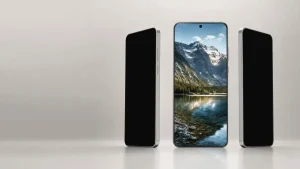
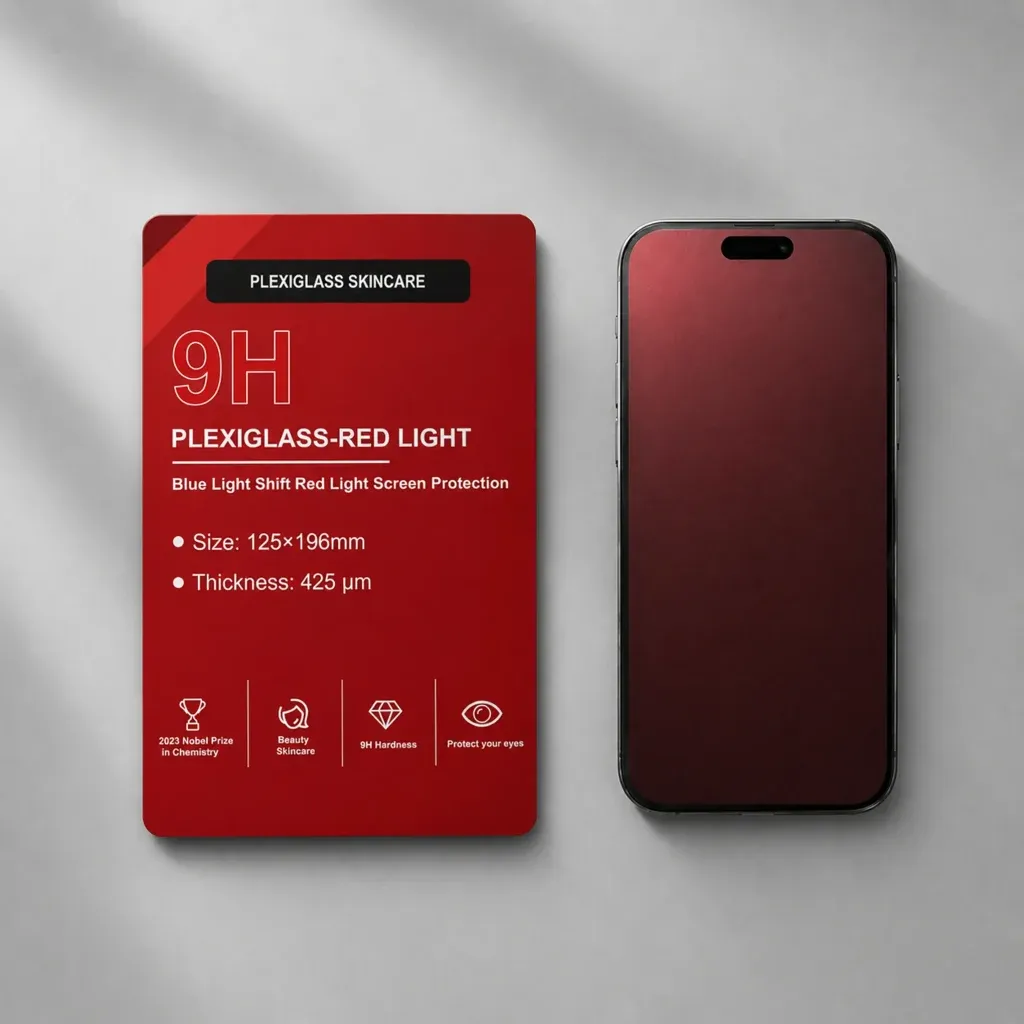
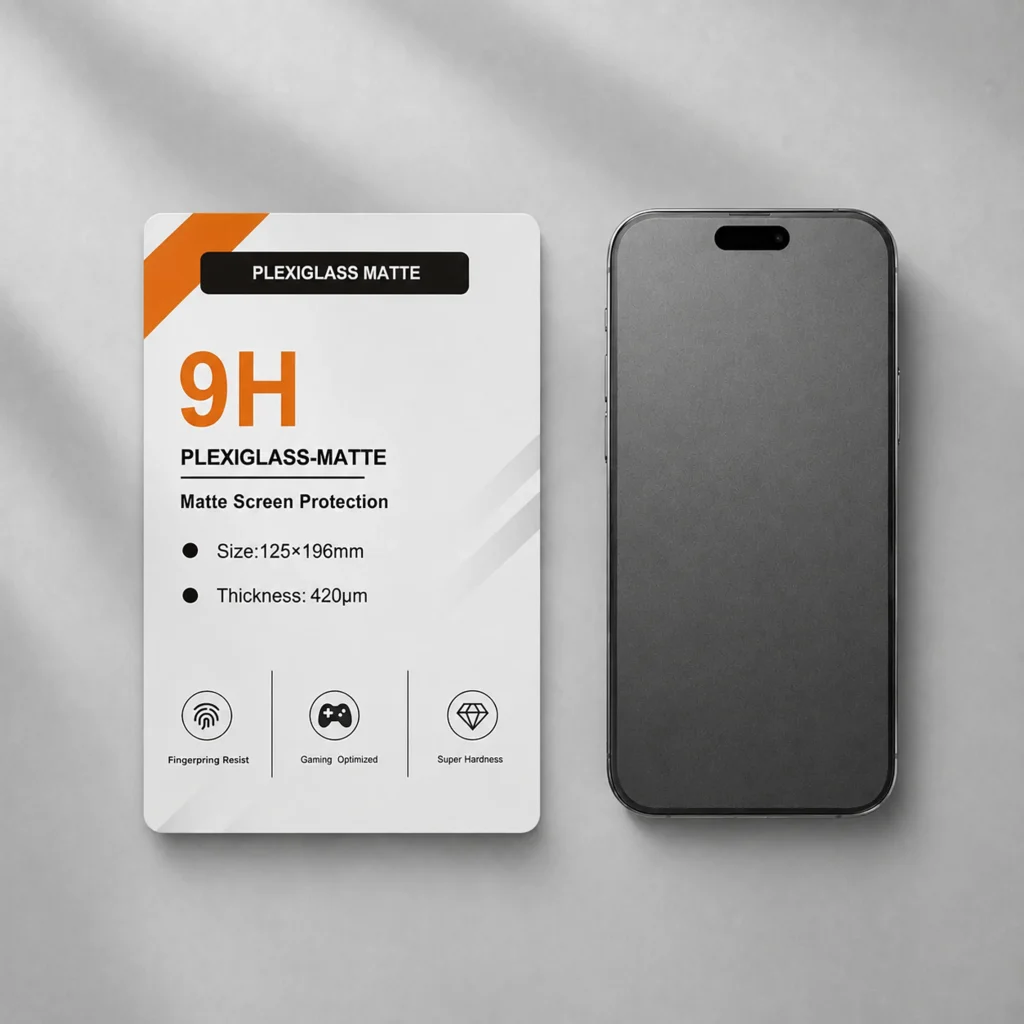
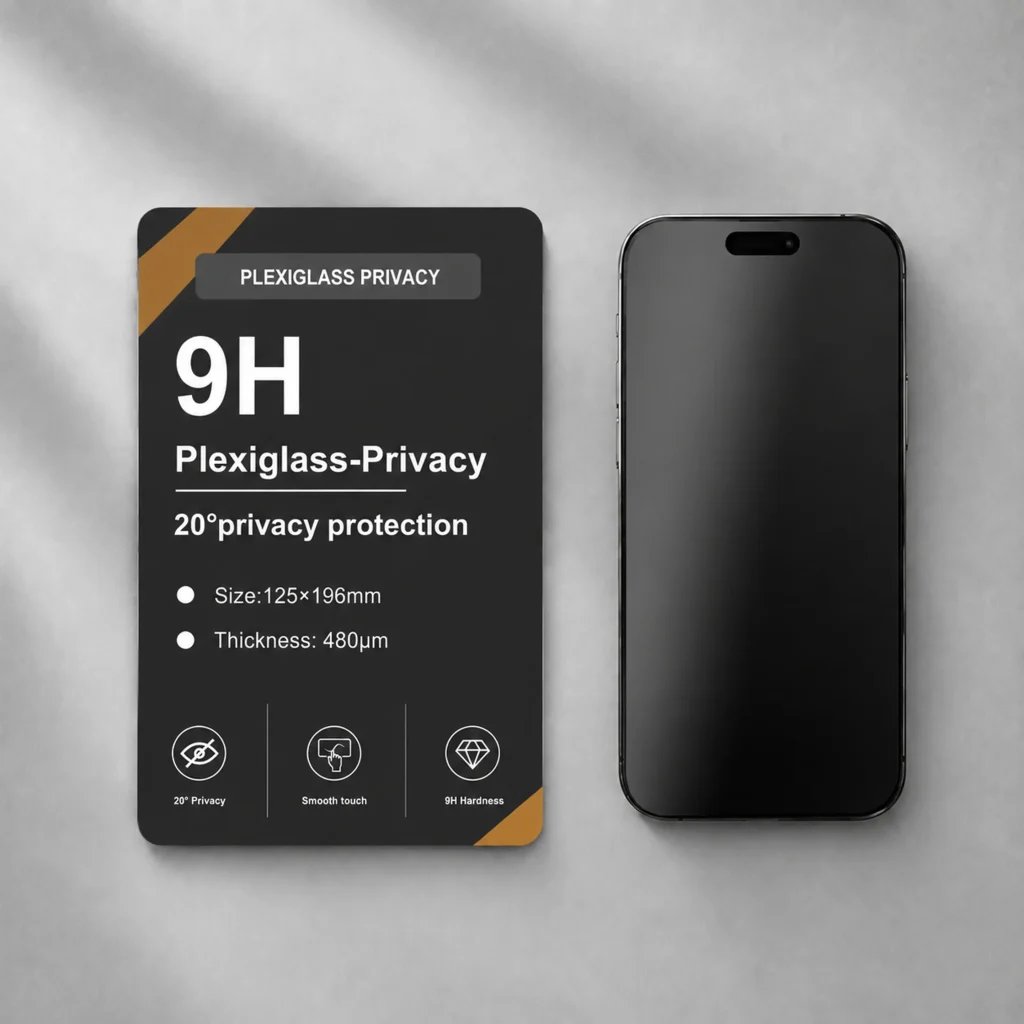
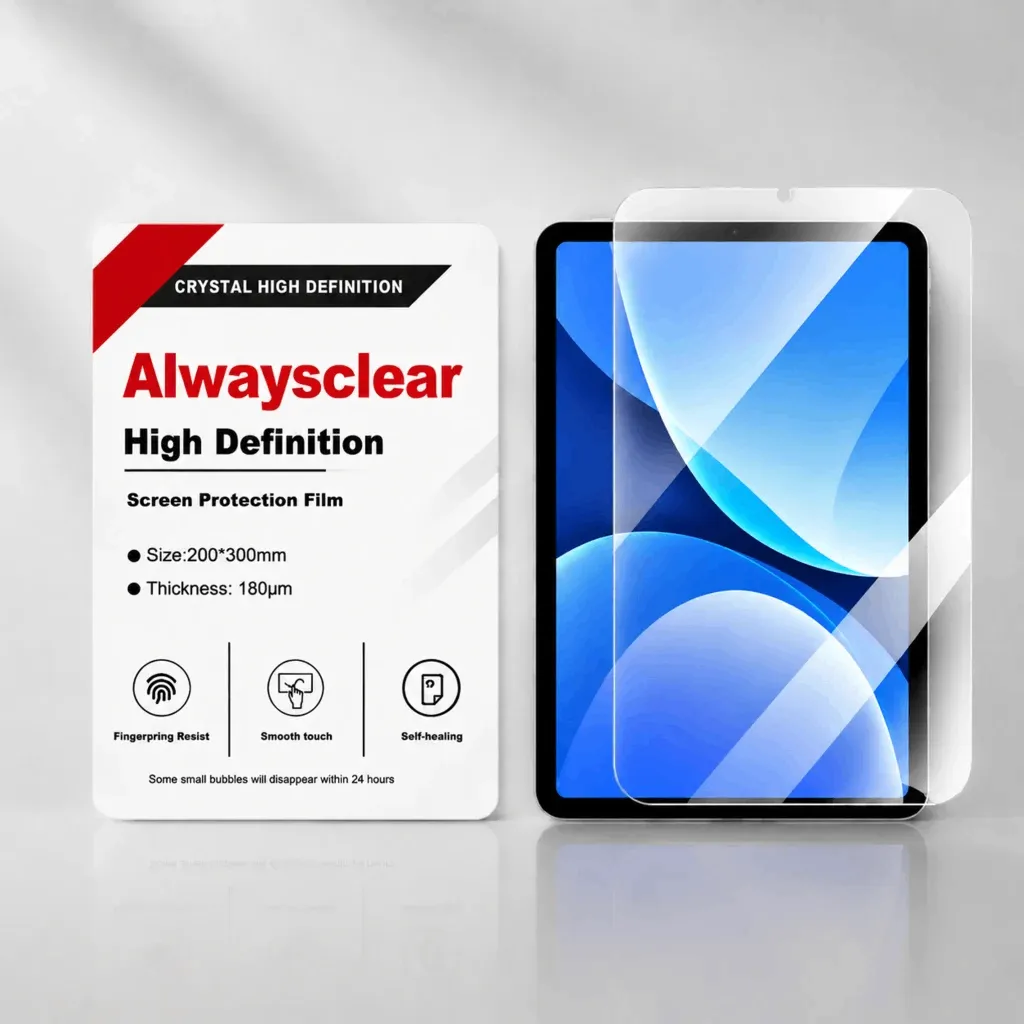
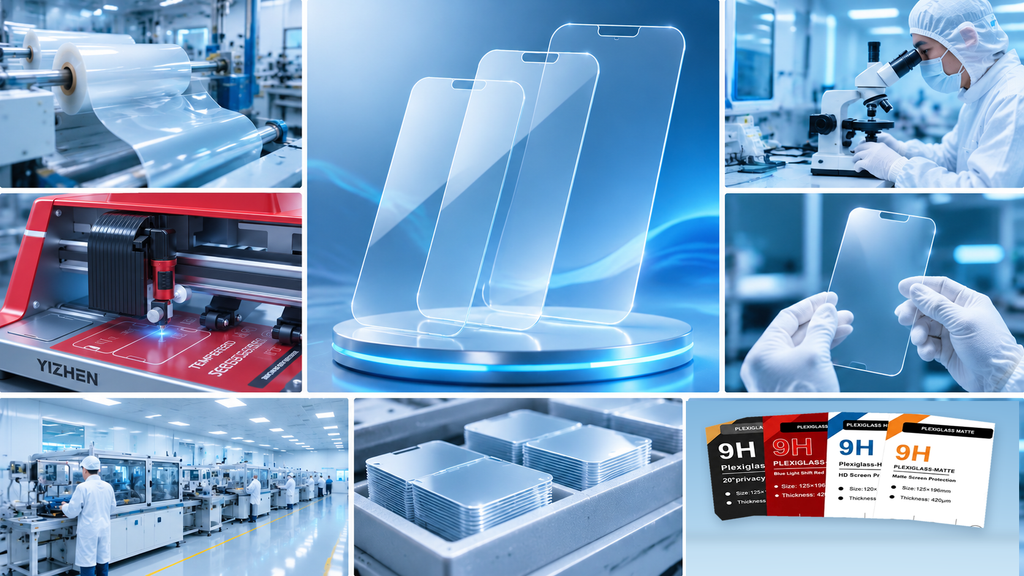
YIZHEN’s Plexiglass Series reflects this move toward more specialized protection. The range includes HD, Matte, Privacy, and Red Light options, showing how a high-hardness platform can be developed for different user needs rather than treated as a one-feature product.
What Does 9H Plexiglass Mean?
The phrase 9H Plexiglass is commonly used in the screen-protector market to describe a high-hardness protective material or finished protector. “Plexiglass” is widely recognized as a name associated with acrylic materials, but product names in this category do not, by themselves, disclose a complete chemical formulation. Buyers should therefore ask manufacturers for the actual material specification, layer construction, and relevant test documentation instead of assuming that every product carrying the same label has an identical composition.
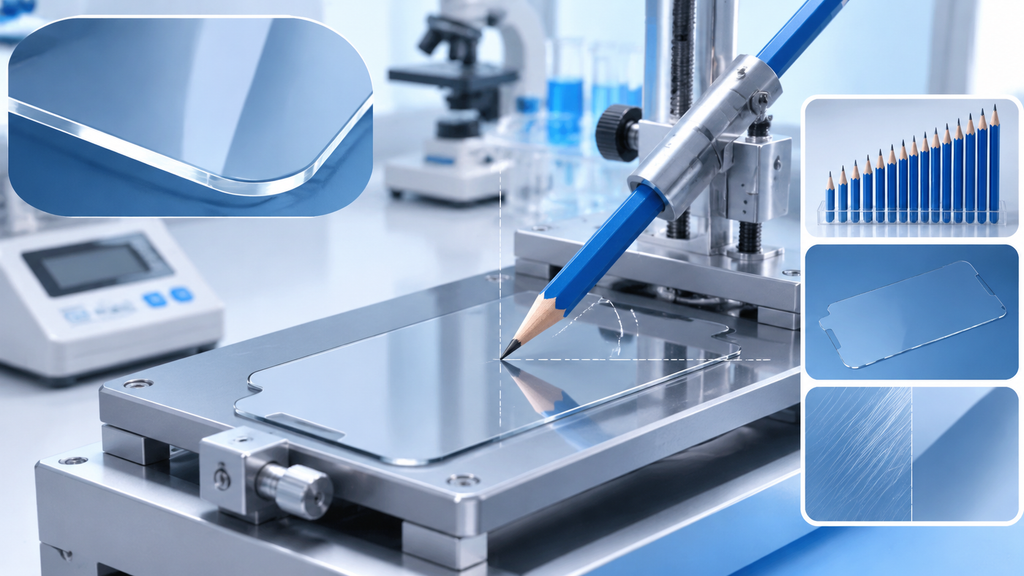
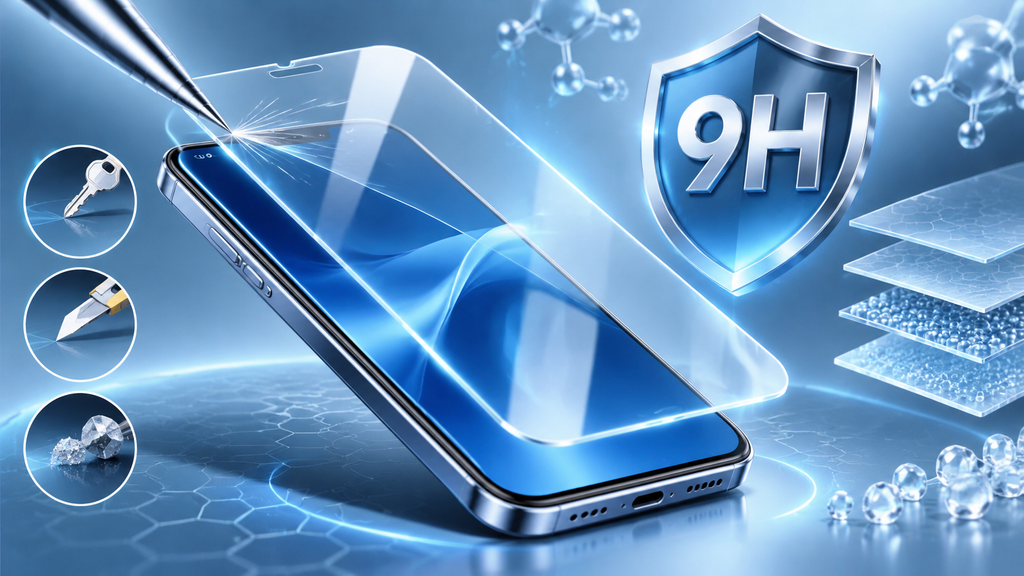
The “9H” part usually refers to pencil hardness, a test method used to evaluate resistance to surface marking by pencils of different hardness grades. In the pencil scale, grades progress from softer B grades through HB and H grades to the harder H grades, ending at 9H. A result of 9H is the top grade on this commonly used pencil scale.
This is not the same as Mohs mineral hardness, which ranks minerals according to their ability to scratch one another. It is also not a guarantee that a screen protector cannot be scratched by every real-world object. Pencil hardness is one controlled measure of surface resistance; keys, sand, grit, sharp particles, impact, and repeated abrasion involve different conditions.
For that reason, 9H should be treated as a specific test result, not a universal promise of indestructibility.
Understanding the Patented 9H Material Concept
In advanced screen protection, a material platform may be developed through proprietary formulation, surface treatment, lamination, or a combination of manufacturing processes. The goal is to create a finished film that offers a useful combination of hardness, flexibility, adhesion, clarity, and processability. A product described by a supplier as a patented 9H material should be evaluated through two separate questions: what performance does the finished product deliver, and what intellectual-property protection applies to the material or process?
A patent is a legal right granted for a defined invention in a particular jurisdiction. It is not a performance certificate, and the word “patented” should not be used as a substitute for test data. When a supplier makes a patent claim, professional buyers can request the patent number, publication or grant document, applicant or owner details, and the countries in which protection applies. They should also clarify whether the patent covers a material composition, a manufacturing method, a structural design, or another technical feature.
From a product-development perspective, the important point is that a high-hardness material must work as part of a complete screen protector. A very hard surface alone is not enough if the product is too brittle, difficult to install, optically distorted, or poorly matched to the curved edges of a device. Material engineering is about balancing these properties for the intended application.
YIZHEN presents its 9H Plexiglass range as a high-hardness screen-protection solution. For distributors evaluating the product, the most useful approach is to review its technical specification, sample performance, and available independent test reports together. Any patent-related marketing statement should be supported by the relevant patent documentation before it is used in sales materials.
How Is 9H Pencil Hardness Tested?
Pencil-hardness testing provides a standardized way to compare the resistance of a coating or surface to scratching under controlled conditions. In a typical test, pencils of specified hardness are prepared to a consistent shape and moved across the test surface at a defined angle and load. The operator checks whether the pencil causes a visible scratch or mark. The result depends on the test standard, pencil brand and preparation, applied load, test surface, and evaluation method.
For screen-protector buyers, the test report matters as much as the headline result. A credible report should identify the test method, sample description, conditioning environment, applied load, pencil specification, number of specimens, and observations. It should also make clear whether the tested sample was the finished protector or a particular layer or substrate. Testing only a coating or a temporary protective liner may not represent the product consumers install.
YIZHEN’s published 9H pencil-hardness report identifies ASTM D3363-22 and an SGS Guangzhou test. The page states that the sample achieved 9H on the Mitsubishi Uni pencil scale under a 500 g load, with no visible marking reported for the tested specimens. Buyers can use the report details to understand the scope of the claim and request the original report when conducting supplier qualification.
A useful purchasing habit is to compare like with like. Two suppliers’ “9H” claims are not directly comparable if one uses a different method, load, sample preparation, or reporting basis. Ask for the full test conditions rather than relying only on a badge or product-box statement.
Hardness Is Only One Part of Screen Protection
A screen protector is a multi-performance product. Surface hardness is important, but consumers also notice display quality, touch response, fingerprint visibility, edge fit, installation, and long-term adhesion. A high-hardness protector that reduces brightness or creates distracting reflections may not satisfy users who value a clear display. Likewise, a clear protector that scratches easily may disappoint customers who use their phones in demanding environments.
Optical performance is commonly assessed through properties such as light transmittance and haze. Transmittance indicates how much light passes through the material, while haze describes the scattering of transmitted light that can make an image look less sharp or less clear. These measurements should be interpreted alongside real-device viewing tests, because display brightness, pixel density, coating, and viewing conditions also influence the user experience.
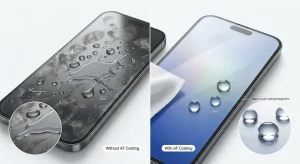
Surface treatments can add further value. An oleophobic treatment can help reduce the visibility and persistence of fingerprints and make the surface easier to wipe. A matte finish can reduce reflections and change the tactile feel, although it may also affect image sharpness. A privacy structure can limit side-angle visibility, while a functional optical layer can modify selected parts of the light spectrum. Each feature introduces its own design trade-offs.
YIZHEN’s Plexiglass product family illustrates this approach through HD, Matte, Privacy, and Red Light versions. These options are intended for different market positions: users who prioritize clarity, users who prefer a low-glare texture, customers seeking visual privacy, and buyers interested in a functional light-filtering concept. The appropriate choice depends on the target device, customer expectations, and the performance evidence available for each version.
9H Plexiglass Compared with Hydrogel Film and Tempered Glass
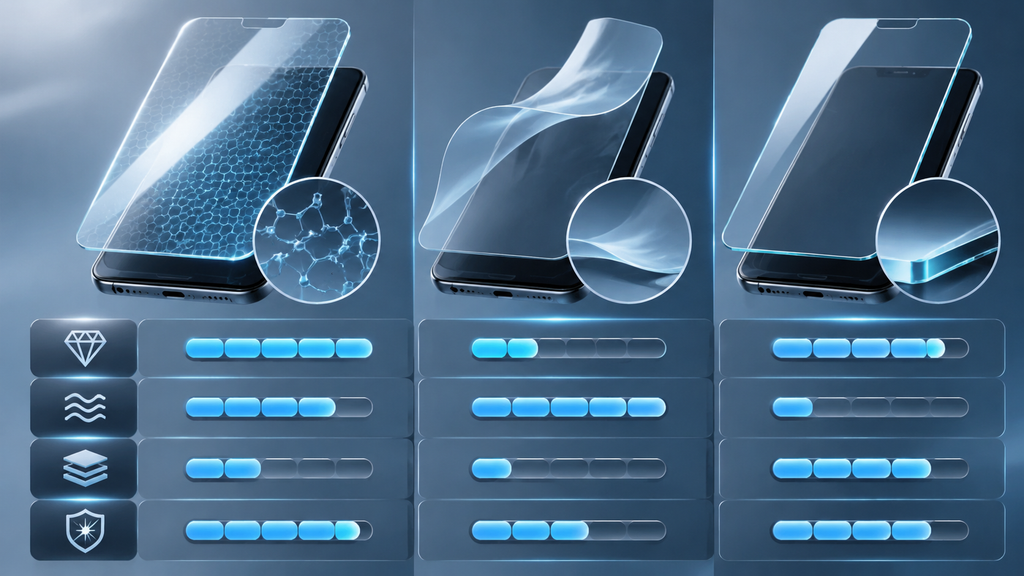
Hydrogel films, tempered glass, and high-hardness Plexiglass protectors serve overlapping but not identical needs. Hydrogel products are flexible and can be useful for curved screens, broad model coverage, and roll-form or on-demand cutting programs. Their flexibility can make installation and edge coverage easier on certain devices, although the surface feel and scratch resistance vary by formulation and coating.
Tempered glass protectors are rigid and familiar to consumers. They can provide a glass-like feel and are available in many device-specific formats. Their limitations may include edge compatibility on some curved displays, breakage of the protector itself, thickness, and the need to stock multiple pre-cut models.
9H Plexiglass products are positioned as a high-hardness alternative within the protective-film category. Depending on the actual construction, they may offer a combination of a slim form, a hard surface, and a different balance of weight and handling from conventional glass. Buyers should not assume that every Plexiglass product is thinner, stronger, or more impact-resistant than every glass protector; those comparisons require matched specifications and tests.
The right product is determined by the device and sales channel. A repair shop may value easy fitting and broad model coverage. A premium accessory brand may prioritize tactile feel, optical quality, and a differentiated feature set. A wholesaler may focus on supply consistency, model coverage, packaging, and margin. A manufacturer should help each buyer match the material to the intended market instead of presenting one technology as the answer for every device.
Drop Resistance, Scratch Resistance, and Real-World Use
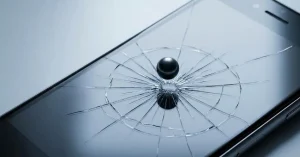
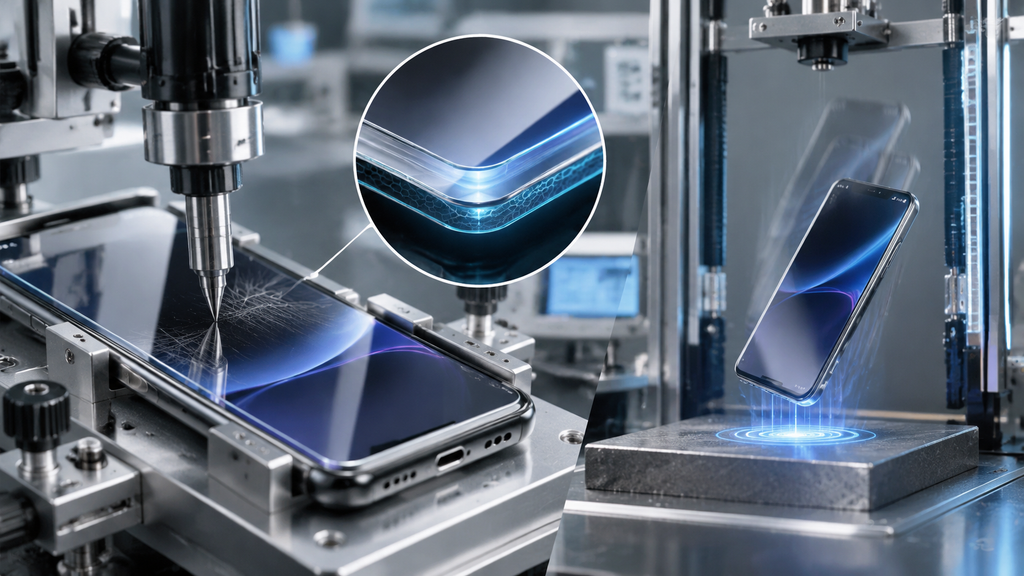
Scratch resistance and impact protection are different performance categories. Pencil-hardness testing evaluates surface marking under a defined contact condition. A drop test evaluates how a finished device or assembly behaves when subjected to a specified impact event. Neither test can replace the other, and neither can guarantee that a phone will remain undamaged in every accident.
When reviewing a drop-test claim, check the device or test specimen, installation method, drop height, impact surface, orientation, number of drops, inspection criteria, and final observations. A result should be described in the exact context in which it was obtained. For example, a test showing no visible screen damage after a defined sequence of drops is evidence for that test configuration, not proof that all drops or impact angles are harmless.
YIZHEN’s published 9H drop-test page describes an SGS test in which a finished protector was installed on a mobile phone and the specimen was dropped screen-side down from 1.22 metres onto a solid wood board ten consecutive times. The page reports no visible damage to the phone screen and an intact protector after the test. Buyers should consult the original report for the full test record and should keep the stated conditions with any marketing claim.
In daily use, a protector may encounter pocket debris, grit, keys, bags, desk surfaces, repeated wiping, and accidental knocks. The most useful product evaluation combines laboratory evidence with practical trials: inspect the surface after controlled abrasion, check the edges after installation, test touch response, and observe whether the protector remains clear and firmly attached over time.
What Should Distributors Check Before Buying?
For wholesalers, importers, repair chains, and private-label brands, product selection should go beyond a sample that looks good under showroom lighting. A structured supplier review can reduce returns and make product claims easier to support.
First, request a complete technical data sheet. It should describe the product construction, thickness, dimensions, compatible device range, surface finish, adhesive or attachment method, and recommended installation procedure. If the product includes a functional layer or coating, ask for the relevant performance specification.
Second, verify test documentation. Check that the report identifies the tested sample and a recognized method, and that the result is relevant to the finished product being purchased. For key claims such as 9H pencil hardness, light transmittance, haze, or drop performance, ask for the original report and confirm that the tested model matches the production item.
Third, evaluate production consistency. Ask how raw materials are controlled, how batches are inspected, and how defects such as dust, bubbles, edge lifting, uneven coating, or dimensional variation are managed. Request samples from more than one batch where order volume justifies it.
Fourth, confirm device fit and installation. A technically strong material can still create a poor customer experience if cut dimensions are inaccurate or installation is difficult. Check alignment, speaker and camera openings, edge coverage, compatibility with cases, and performance on the actual device models you sell.Finally, discuss commercial support: OEM and ODM options, packaging, barcode and language requirements, lead times, minimum order quantities, sample availability, and after-sales procedures. A reliable supplier should be able to explain both the product’s strengths and the limits of its test claims.
Why Product Customization Matters
The screen-protector market is increasingly segmented. Some consumers want maximum clarity, others prefer matte handling, and others look for privacy or functional optical properties. A shared high-hardness material platform can support several product directions when its structure and surface treatment are engineered for each purpose.
For example, an HD version should be evaluated for clarity, transmittance, haze, and touch experience. A matte version should be checked for glare reduction, texture, display grain, and fingerprint visibility. A privacy version requires viewing-angle evaluation as well as brightness and clarity checks. A Red Light version needs clear documentation of its optical function and the specific test method used to substantiate any light-shifting or filtering claim.
This is also where flexible production tools become relevant. On-demand cutting can help distributors and repair businesses serve a wide range of device models without holding large quantities of pre-cut stock. A suitable cutting system, accurate model database, and controlled blade settings are important when working with different materials and thicknesses. The cutter must be validated for the specific film or high-hardness sheet being processed; compatibility should never be assumed from the machine name alone.
For buyers, customization is most valuable when it is supported by stable production, repeatable specifications, and clear quality-control procedures. The goal is not simply to add more product names, but to offer a portfolio that addresses distinct customer needs while remaining manageable to stock and sell.
YIZHEN’s Approach to Advanced Screen Protection
YIZHEN is a screen-protection manufacturer focused on product development, manufacturing, and supply for the global mobile-accessory market. Its product portfolio includes hydrogel films, 9H Plexiglass protectors, functional screen-protection films, tempered glass, and smart screen-protector cutting equipment.
Within the 9H Plexiglass Series, YIZHEN offers HD, Matte, Privacy, and Red Light options. This range gives distributors and brands a way to build a differentiated product selection around a high-hardness platform, while matching the finish or functional feature to their target customers.
The company’s online technical resources include published information on 9H pencil-hardness testing and drop testing. These resources are useful starting points for buyers who want to understand how performance claims are evaluated. For a commercial decision, purchasers should review the original reports, confirm the exact sample and production specification, and request current documentation for the product and batch they intend to order.
YIZHEN also supports OEM and ODM cooperation for customers developing their own screen-protection lines. For distributors, repair shops, and accessory brands, the next step is to compare product samples, confirm device coverage, and discuss packaging and supply requirements directly with the manufacturer.
Conclusion: Look Beyond the 9H Label
9H Plexiglass represents the wider shift from basic screen covering toward engineered screen-protection materials. Its appeal lies in the potential combination of a hard surface, optical options, and a slim protective format. But the 9H label alone does not tell the whole story. Buyers need to understand the test method, confirm the material specification, evaluate clarity and installation, and distinguish scratch resistance from impact protection.
The phrase patented 9H material can be a useful part of a product story only when the relevant patent documentation is available and the scope of protection is accurately described. Strong technical communication connects material innovation with verifiable test results and realistic expectations.
For businesses sourcing advanced screen protectors, the best decision is based on evidence: inspect the sample, read the test report, confirm production consistency, and choose the version that fits the needs of your market. To explore YIZHEN’s 9H Plexiglass range or discuss OEM and ODM requirements, visit the official website and contact the team for product details and samples.