
Foldable phones used to feel like a bold tech experiment.
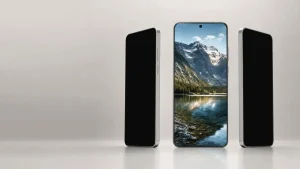
Fitting a full phone screen that can fold over? It sounds a little like shoving a laptop into your wallet. But years later, foldable screens have stepped out of the “futuristic gadget” zone and become mainstream consumer electronics. Big brands including Samsung, Huawei, Google, OPPO and vivo keep rolling out new foldable models, and the user experience just keeps getting better and more polished.
Still, one real headache keeps popping up: What screen protector should you actually put on a foldable phone?
If you’re used to regular tempered glass film, the answer might seem obvious at first. Glass is hard, resists scratches and bumps, and looks premium too.
Unfortunately, foldable screens don’t work well with that logic.
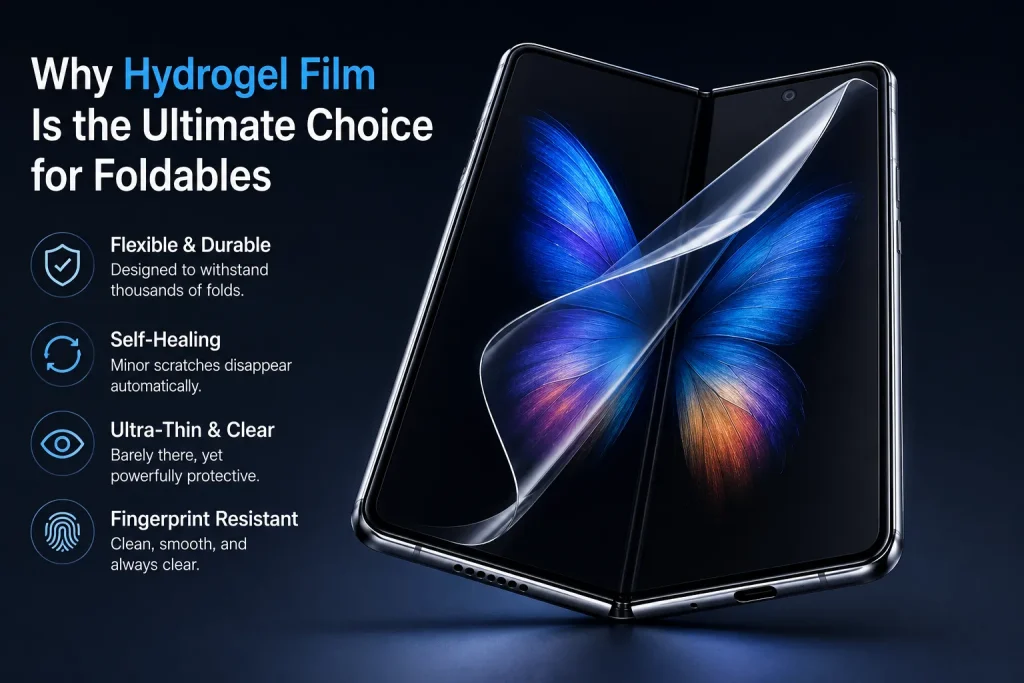
Foldable Screens Need More Than Just a Hard Protector
Standard smartphone screens are completely flat. For flat displays, hard glass protectors deliver solid scratch and drop protection. But the biggest feature of foldable screens is that they bend constantly.
That means screen protectors for foldables can’t only focus on hardness. They have to be super flexible, stretchable and able to bounce back into shape smoothly.
Think about bending a sheet of glass over and over. It might hold up once or twice, but opening and closing your phone dozens of times every single day will break it down fast.
Foldable devices don’t need an ultra-hard film—they need one that moves along with the screen. That’s exactly why hydrogel film is growing more and more popular.
What Makes Hydrogel Film Perfect for Foldable Screens?
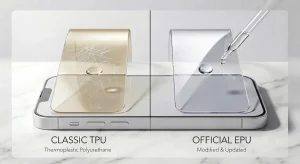
Hydrogel film is a flexible screen protector built from soft polymer materials, with TPU (Thermoplastic Polyurethane) being the most widely used material for flexible display protection.
Its biggest selling point is outstanding flexibility. Compared with rigid glass, high-quality TPU film bends seamlessly together with your screen while staying perfectly stuck in place—an absolute must-have for foldable phones.
People open and close foldable phones dozens, even hundreds of times daily. Every open is a bend, every close is another fold. If you spot an unread message and flip it open again? That’s one more bend cycle for your screen.
So any protector made for foldables has to stand up to constant, repeated bending movement long-term.
Unbeatable Flexibility – Moves With Your Screen
For regular flat phones, whether a film bends or not barely matters. For foldables, flexibility is the basic requirement to even qualify as a usable protector.
Hydrogel film covers all curved screen areas, fitting inward-folding, outward-folding and phones with complex curved edges. Its soft structure shifts together with the display, cutting down all the issues rigid films get from repeated folding.
To put it simply: regular hard films force your phone to adapt to them, but hydrogel film adapts itself to your foldable phone.
It sounds simple, but this is a total shift in design thinking for foldable device accessories.
Self-Healing Feature – Hide Minor Daily Scratches
Most hydrogel film products come with self-healing performance. It won’t instantly fix deep knife cuts, but it works great for tiny daily scratches, shallow indentations and light surface wear.
Keys, rough tabletops, loose items in your pocket and endless screen swipes all leave faint marks over time. The soft polymer material slowly smooths out minor abrasions under regular use, making light scratches barely visible.
For anyone who uses their phone nonstop, this feature is way more practical than some fancy “hardness rating” printed on product packaging.
Ultra-Thin Design – Feels Like Bare Screen
Phone makers keep working to make foldables slimmer and lighter. A thick bulky protector would completely waste all the brand’s hard work on thin lightweight body design.
Top-tier TPU film offers reliable protection while staying ultra-thin, without ruining smooth touch response. Take YIZHEN’s TPU film lineup as an example: we offer three thickness options – 0.15 mm, 0.18 mm and 0.23 mm. Our films deliver bare-screen touch feeling, full curved edge coverage, fast self-repair and strong yellowing resistance.
For foldable screens, this slim profile isn’t just a number on a spec sheet—it directly improves touch sensitivity, folding smoothness and visual clarity. The best screen protector is one you barely notice is there.
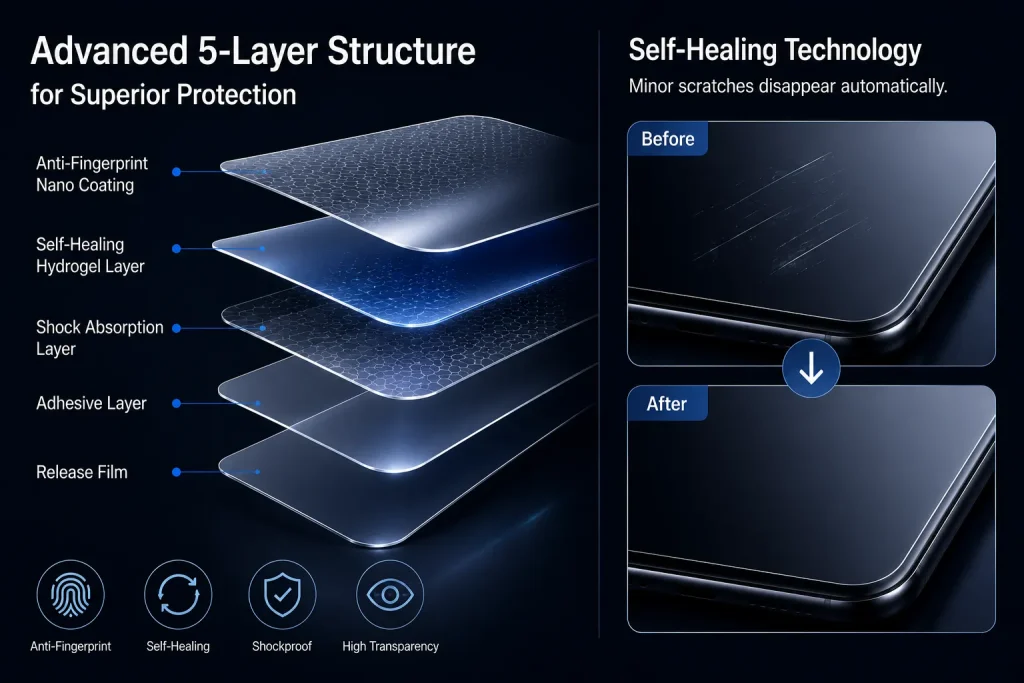
The Real Test: Stay Crystal Clear After Months of Use
Flexibility is only half the battle. A film might look flawless right after application, but that doesn’t mean it will stay that way half a year later.
Long-term use brings common problems: yellowing, heavy surface scuffs, stubborn oil stains and laggy touch response. That’s why premium hydrogel film has to strike a perfect balance between flexibility, light transmittance, wear resistance, anti-yellow performance and surface coating quality.
YIZHEN runs an in-house R&D lab focused on polymer chemistry and optical engineering. We conduct strict tests including high-low temperature stress cycling, light transmittance, surface hardness and abrasion resistance. Our test data shows our films pass over 3,000 friction cycles and hit a lab light transmittance rate above 95%.
All these technical specs translate directly to better daily user experience: brighter, clearer display visuals, ultra-smooth sliding, fewer fingerprint smudges and consistent performance for months on end.
So when shopping for hydrogel film, don’t only ask “how hard is it?” Instead, ask these key questions:
- How many folding cycles can it survive without damage?
- Will it turn yellow after long-time use?
- Can minor scratches fade away automatically?
- Does it feel identical to bare glass when swiping?
- Will edges lift or peel off curved areas over time?
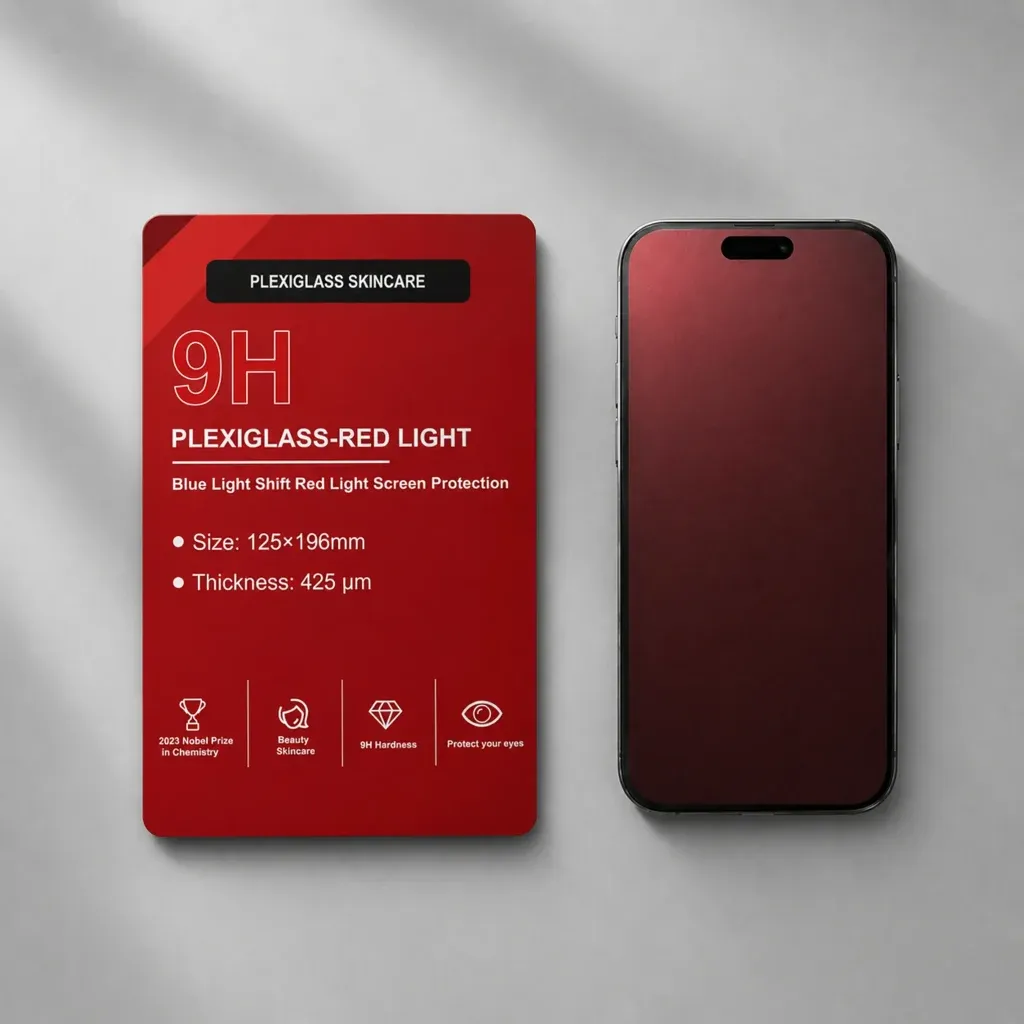
These points matter far more than a flashy “9H hardness” label.
Why YIZHEN Hydrogel Film Is Made for the Foldable Era
Foldable phones have reshaped smartphone body designs—and completely rewritten the standard for screen protectors.
In the old days, we judged protectors purely by hardness. Now the core question we should ask is: Can this film work in sync with my foldable screen?
This core idea drives all flexible protection solution R&D at Shenzhen Yizhen Technology Co., Ltd., or YIZHEN for short.
Founded back in 2009, YIZHEN has built a full integrated system covering independent R&D, mass production and global product supply. We launched our professional R&D laboratory in 2015, focusing nonstop on flexible film and screen protector upgrades.
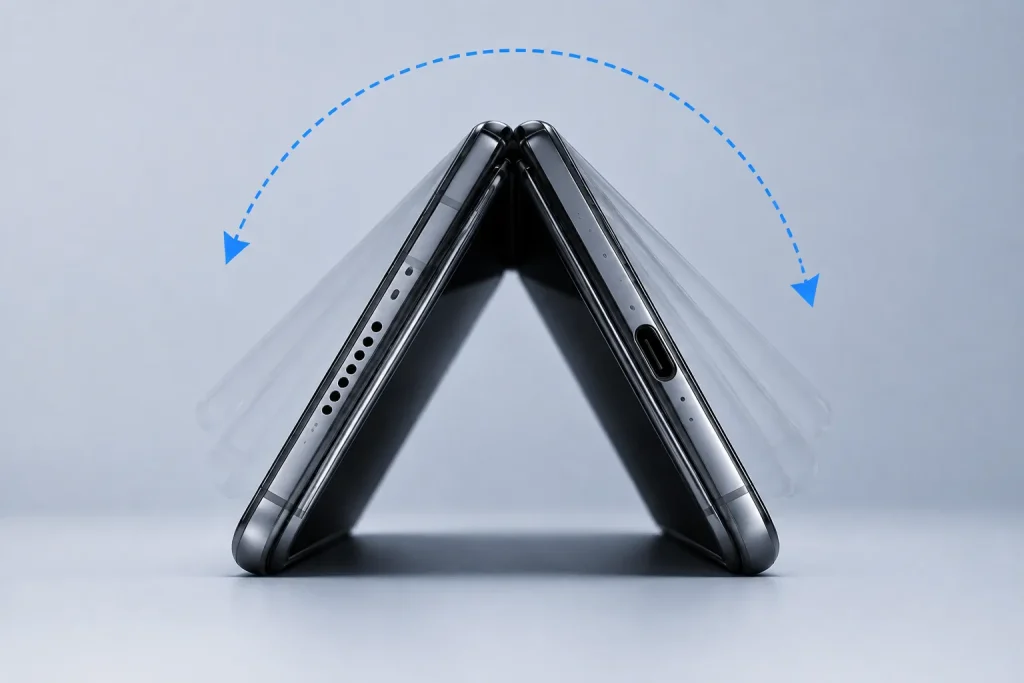
For our TPU film series, we prioritize true bare-screen touch, 100% full curved coverage, fast self-healing and powerful anti-yellow performance, with customizable thickness choices of 0.15 mm, 0.18 mm and 0.23 mm.
For overseas accessory brands, distributors and retail sellers, good film material is only the starting point. The biggest pain point always lies in covering thousands of phone models while keeping inventory and supply chain costs under control.
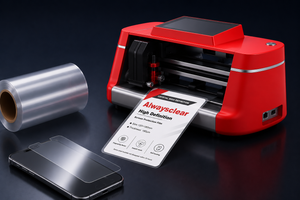
That’s where our exclusive AutoCut Pro intelligent cutting system comes in. It stores more than 10,000 device templates, supporting precise cutting for smartphones, smartwatches and all other display gadgets. It works perfectly with flexible materials including TPU and EPU.
For distributors, this means you don’t need to stock pre-cut finished protectors for every single phone model out there. The smartphone lineup updates constantly. Stocking full finished films for every model would turn your warehouse into an expensive, slow-moving “screen protector museum.”
YIZHEN owns a 4,000 sq.m standardized production plant, and we provide full OEM & ODM customization services. You can tailor film dimensions, thickness, printed logos, raw material formulas, outer packaging and private brand labels to match your market needs. Our daily production capacity tops 300,000 pieces, with multiple parallel production lines supporting bulk orders for global markets.
Besides core film materials, surface coating treatment makes a huge difference to end-user experience. Our proprietary AlwaysClear tech paired with oil-repellent nano-coating cuts down fingerprint marks and greasy smudges, while keeping ultra-smooth sliding all day long.
This might sound like a tiny detail on paper, but every phone user feels the difference instantly. A great protector proves its worth when you’re scrolling social media for the 37th time that day. If your finger glides effortlessly, the screen stays sharp and clear without messy fingerprints, and the film stays fully stuck when folding your phone—then it’s doing its job perfectly.
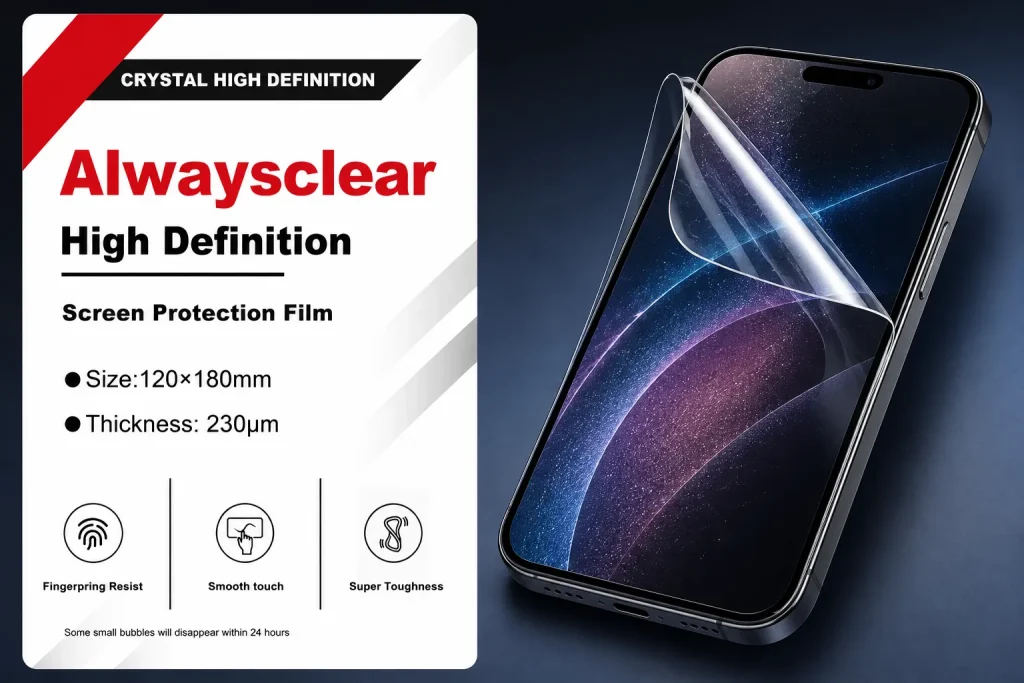
The Future Belongs to Flexible Screen Protection
Foldable phones taught the entire consumer electronics industry one key lesson: screens don’t have to stay flat forever.
Once displays start bending and folding, the materials protecting them have to change too. That’s the core value of hydrogel film.
It doesn’t fight against foldable screens—it bends along with them. It doesn’t chase extreme hardness blindly; instead, it balances flexibility, transparency, self-healing, wear resistance and smooth touch to fit real daily use.
For regular consumers: A top-tier hydrogel film lets you fold and unfold your phone without stress, no more worrying about ugly creases or peeling protectors. For accessory brands and distributors: It opens up a huge growing market opportunity.
As phones grow more flexible, screen protection has to follow suit. This is the real reason hydrogel film has evolved from basic soft phone film into the next-generation standard protector for all foldable screens.