Screen protectors may look easy to make, but they’re actually precision accessories that have high requirements for supply chains, material processes and precision manufacturing. Right now, smartphone screens keep evolving to be ultra-thin, curved and high-refresh-rate. The quality of screen protectors directly affects end users’ experience, and also has a huge impact on the reputation and profits of distributors, cross-border sellers and brands. For the two core needs of wholesale screen protector quality standards and screen protector OEM quality control, cross-border buyers and brand OEMs are getting stricter with factory qualifications and quality control systems.
Right now the market is full of low-end processing factories, most of which compete with low prices and sell shoddy products as good ones. If you pick the wrong supplier, your business will face high return rates, mass customer complaints, and even damage to your brand reputation. This article lists 5 major quality red flags you must watch out for in the screen protector custom OEM industry, to help industry players identify high-quality custom mobile accessories factories and pick reliable supply chains accurately.
Quality Red Flag 1: Poor-quality AB Glue Causes White Edges, Bubbles and Lifting Edges
AB glue is the core material for screen protector application. Its quality directly decides the application result and stability during use, and it’s also the main area where low-end manufacturers cut costs. Low-grade silicone is a common material used by small factories. This kind of glue has unstable initial adhesion and very poor air release. When customers apply the protector, the air escapes slowly and bubbles are hard to get rid of. Even if you push and smooth it repeatedly, permanent bubbles may stay because the glue layer is uneven. What’s more, after a few days of use, the edges of the protector tend to lift up, forming unfixable white edges — this is one of the top causes of end-user complaints.
Good manufacturers will customize genuine imported AB glue from brands like Toray (Japan) or Korean suppliers to match the curve of phone screens, with even glue layer thickness and strong chemical stability. Poor-quality AB glue, on the other hand, has very poor heat resistance. When the phone heats up during use or in hot summer weather, it easily leaks or breaks down. Not only will it leave lots of glue residue when you peel the protector off, it can also corrode the original anti-fingerprint coating on the screen and damage the display. Any manufacturer that can’t clearly state the AB glue brand and weight specifications has major quality risks.
Quality Red Flag 2: Faked Light Transmittance Causes Color Shift and Eye Strain
Many low-end factories falsely advertise “99% ultra-high light transmittance” or “crystal clear, lossless picture quality”. But from an optical perspective, regular glass without special optical processing can barely reach over 90% transmittance — these claims are just marketing gimmicks. Unscrupulous manufacturers usually melt waste industrial glass to make the base material. The glass has impurities, tiny bubbles and streaks inside, which cause uneven light refraction and much lower transmittance, seriously hurting the screen display effect.
Poor base material paired with low-end AB glue will cause obvious screen color shift, usually making the screen look yellow, blue or with mixed colors. It directly lowers screen brightness and distorts color saturation. Long-term use of this kind of protector will cause eye strain or even vision damage from light distortion and color deviation. Formal high-quality manufacturers all have professional optical spectrometers, and can provide accurate transmittance test data before and after applying the protector, instead of just verbally promising crystal clear quality.
Quality Red Flag 3: Inflated Hardness Claims and Poor Coatings Lead to Substandard Wear Resistance
Most tempered glass screen protectors on the market are labeled “9H hardness”, which makes customers think all products meet the same scratch resistance standard. But this is actually a big industry misunderstanding. The 9H hardness marked on protectors is the pencil scratch test standard, not the mineral Mohs hardness. The original phone screen and regular tempered glass only have a Mohs hardness of 6-7, which can’t resist daily scratches from sand and dust. The scratch resistance of a protector mainly relies on nano-coating modification technology.
Coating technology is the key to quality differences, and also the core standard to judge the strength of an anti-fingerprint oleophobic coating supplier. High-quality protectors use vacuum plating technology, which lets oleophobic and hydrophobic factors penetrate deep into the glass lattice, so the coating has strong adhesion and lasts a long time. Low-end factories, to save costs on equipment and production time, use manual brushing or simple spraying processes. They may pass basic water drop angle tests when leaving the factory, but the coating wears off completely after two weeks of use. This makes the protector easily pick up fingerprints and oil, causes laggy touch response, ruins the smooth user experience, and totally fails to meet international wholesale and OEM quality standards.
Quality Red Flag 4: Excessive Cutting Tolerance Leads to Poor Screen Fit
Smartphone earpieces, front cameras, sensors and 2.5D/3D curved edges have strict requirements for screen protector cutting precision. This precision gap is the core difference between high-end factories and low-end workshops. Low-end manufacturers mostly use old engraving equipment, and keep using cutting dies way past their service life without replacement. This makes the cutting tolerance of their products generally exceed ±0.2mm, with very poor precision.
Excessive tolerance causes a series of fit problems: wrong size can block the earpiece or sensors, leading to lower call volume or disabled palm rejection features; if the protector is too big, the phone case will push up the edges and make them lift; if it’s too small, there will be visible gaps on the screen edges and sharp edges that cut your fingers. Good supply chains can control the tolerance precisely at the micron level, within ±0.05mm, to make sure the protector fits the phone perfectly and avoids all kinds of usage issues.
Quality Red Flag 5: Missing Quality Inspection System Causes Big Quality Fluctuations in Bulk Orders
No quantitative quality inspection reports and no standardized quality control processes are typical features of small workshop factories, and they’re also a major gap in screen protector OEM quality control systems. Most low-end manufacturers don’t have professional quality testing equipment like drop ball testers, hardness testers or abrasion testers. They only rely on workers to check for appearance flaws with the naked eye, and can’t test core indicators like impact resistance, coating lifespan or application stability. Their quality control has no standards at all, and can barely meet the standardized quality requirements of cross-border wholesale.
Products from these factories vary a lot between batches. The samples may pass quality checks, but bulk shipments often have problems like insufficient tempering, easy breakage or peeling coatings. At the same time, they can’t provide authoritative certifications like ISO9001 quality management system, SGS or RoHS. Their products can’t meet cross-border import and export compliance requirements, and are very likely to be detained by customs, bringing huge operational risks to distributors.
Benchmark High-Quality Supply Chain: Yizhen Technology’s Industry Solution
To address the many quality issues in the screen protector industry, Yizhen Technology, which has been in the industry for over 15 years, has built high-quality screen protector solutions with its mature R&D and production system and standardized quality control processes. It has become a high-quality custom mobile accessories factory and a supply chain benchmark in the industry. Founded in 2009, the company is a large-scale enterprise integrating R&D, production and cross-border trade. It focuses on building wholesale screen protector quality standards systems, and has built a 4,000㎡ modern dust-free production base in Dongguan. All its production lines are ISO quality management system certified, and it’s equipped with intelligent production lines with a daily capacity of 300,000 pieces. It can stably handle large-volume cross-border orders and OEM custom orders, ensuring delivery efficiency and consistent quality.
Targeting the five major quality pain points in the industry, Yizhen Technology has fully upgraded its production hardware and built a complete screen protector OEM quality control system: it has introduced 330 five-station precision rotary die-cutting machines to achieve micron-level cutting precision, with tolerance strictly controlled within ±0.05mm; it is equipped with constant temperature and humidity dust-free lamination equipment to eliminate bubbles and white edges on protectors; it focuses on core anti-fingerprint oleophobic coating supplier technology, and is equipped with vacuum magnetron sputtering coating equipment to ensure the wear resistance and stability of the anti-fingerprint coating from the source. At the same time, relying on self-developed technology, it has launched two core product series to fully solve industry pain points and operational problems for cross-border sellers.
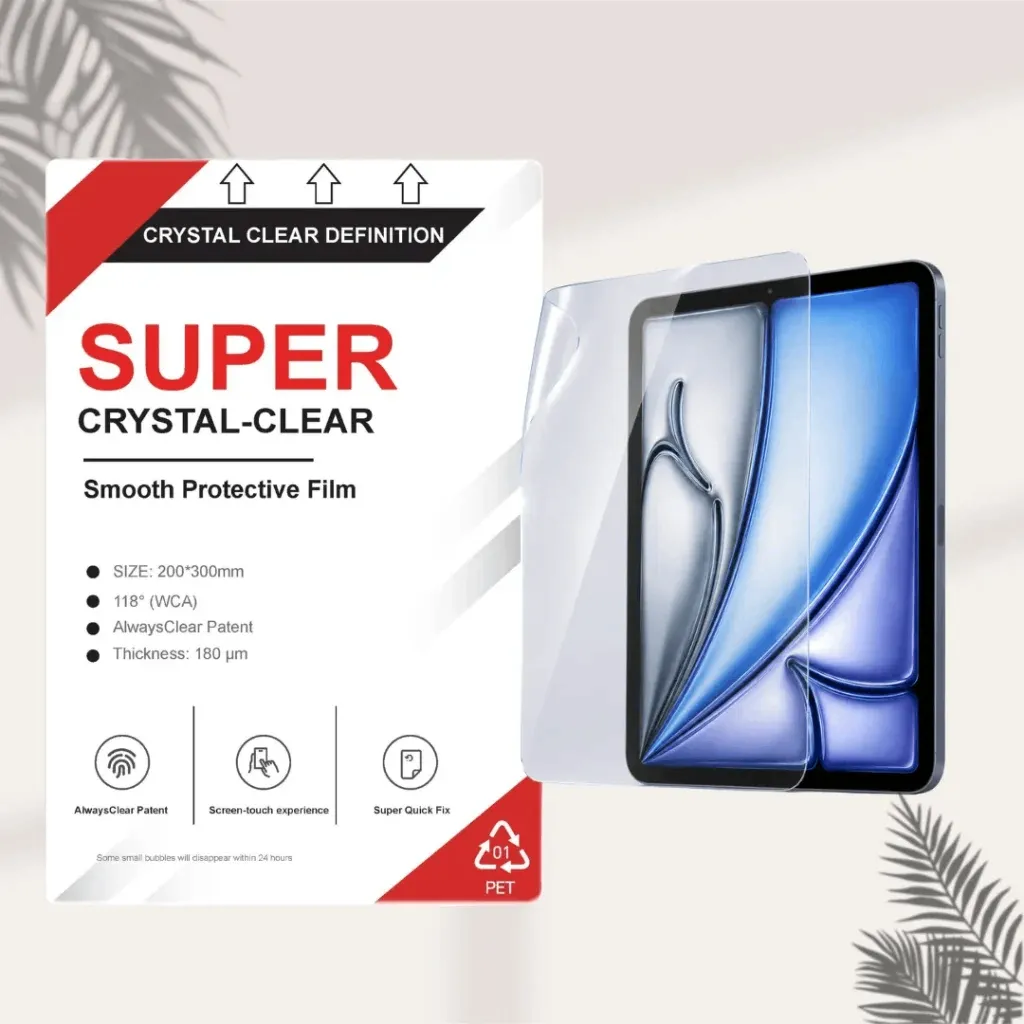
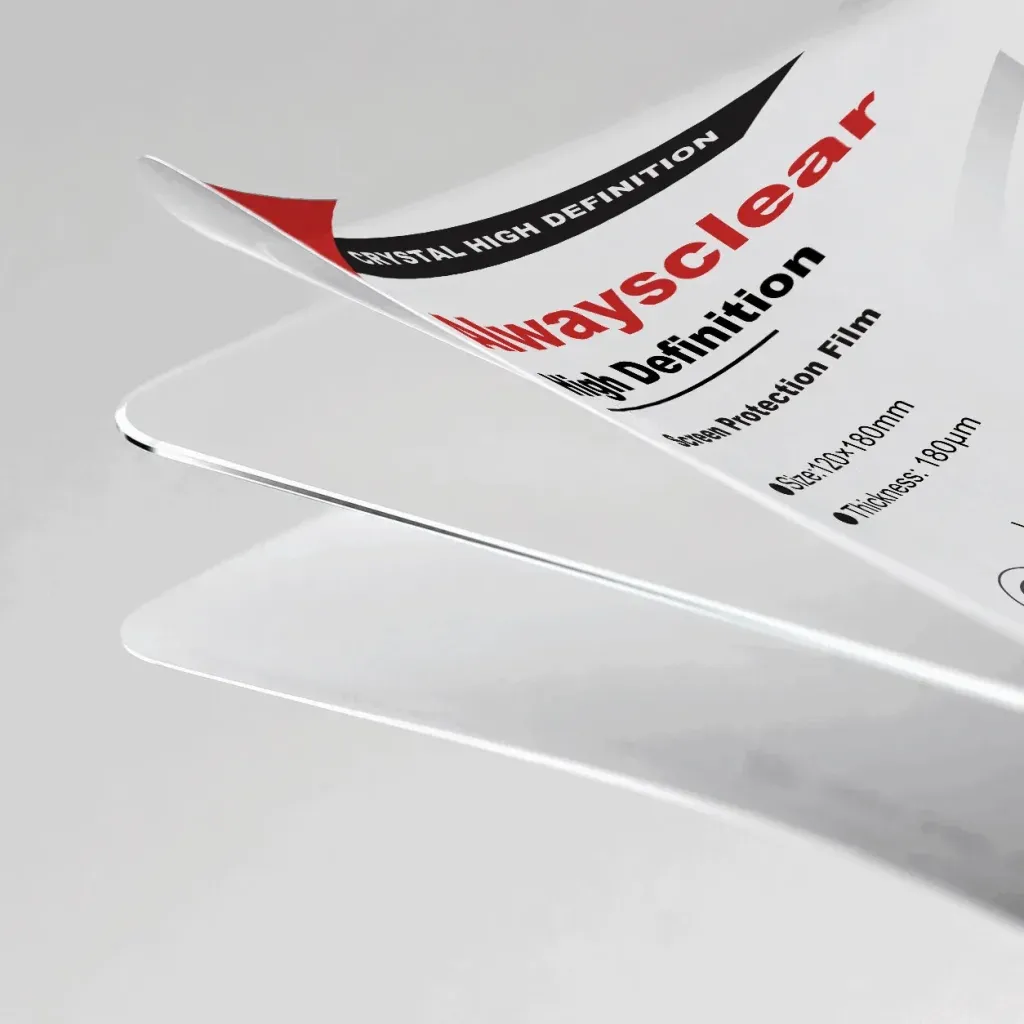
The first is the AlwaysClear patented technology series, focusing on long-lasting clarity and premium touch experience. The products use patented nano-coating technology, which embeds oleophobic factors into the glass lattice through a vacuum process. The coating can withstand tens of thousands of rubs without failing, keeping the touch smooth for a long time. It also uses high-purity optical base material and stable imported glue layer, achieving almost zero color shift, accurately restoring the original screen colors and reducing eye strain. It also has fast air release during application, completely eliminating white edges and bubbles.
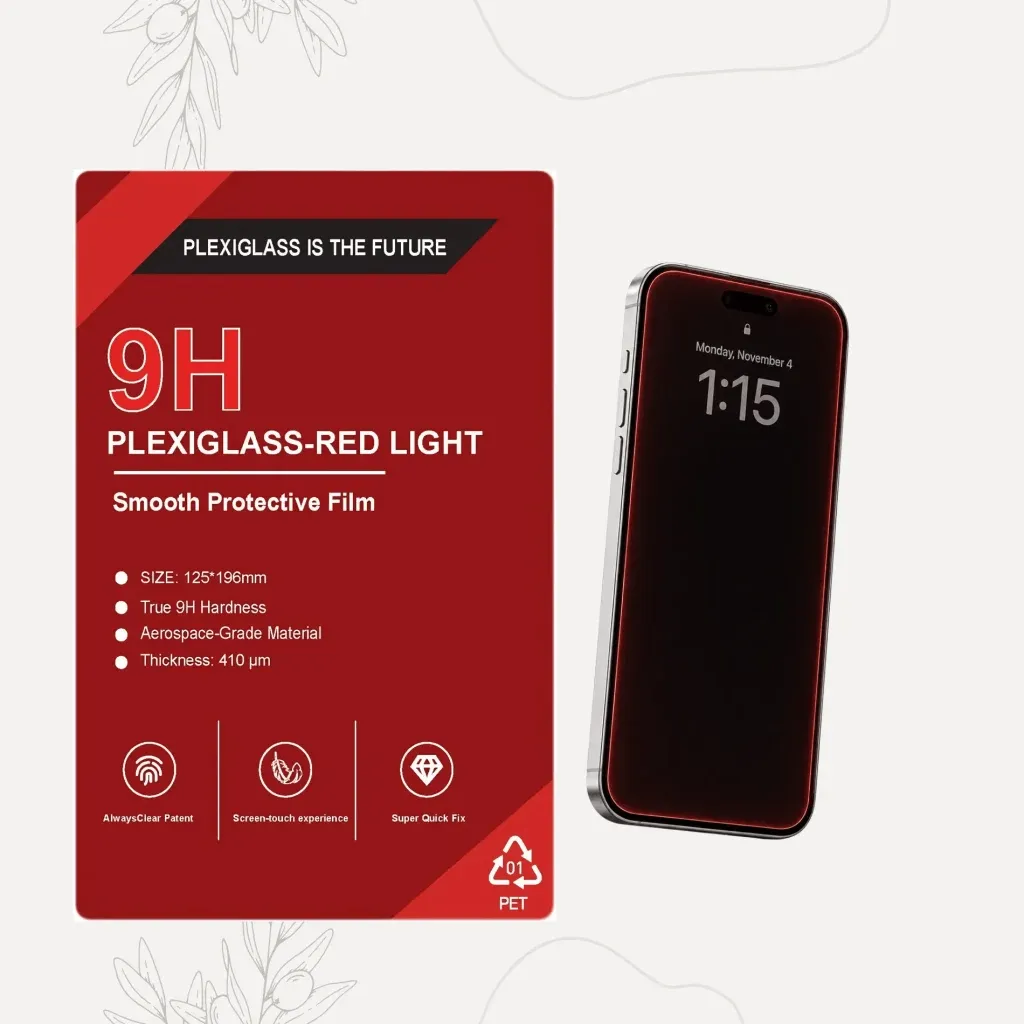
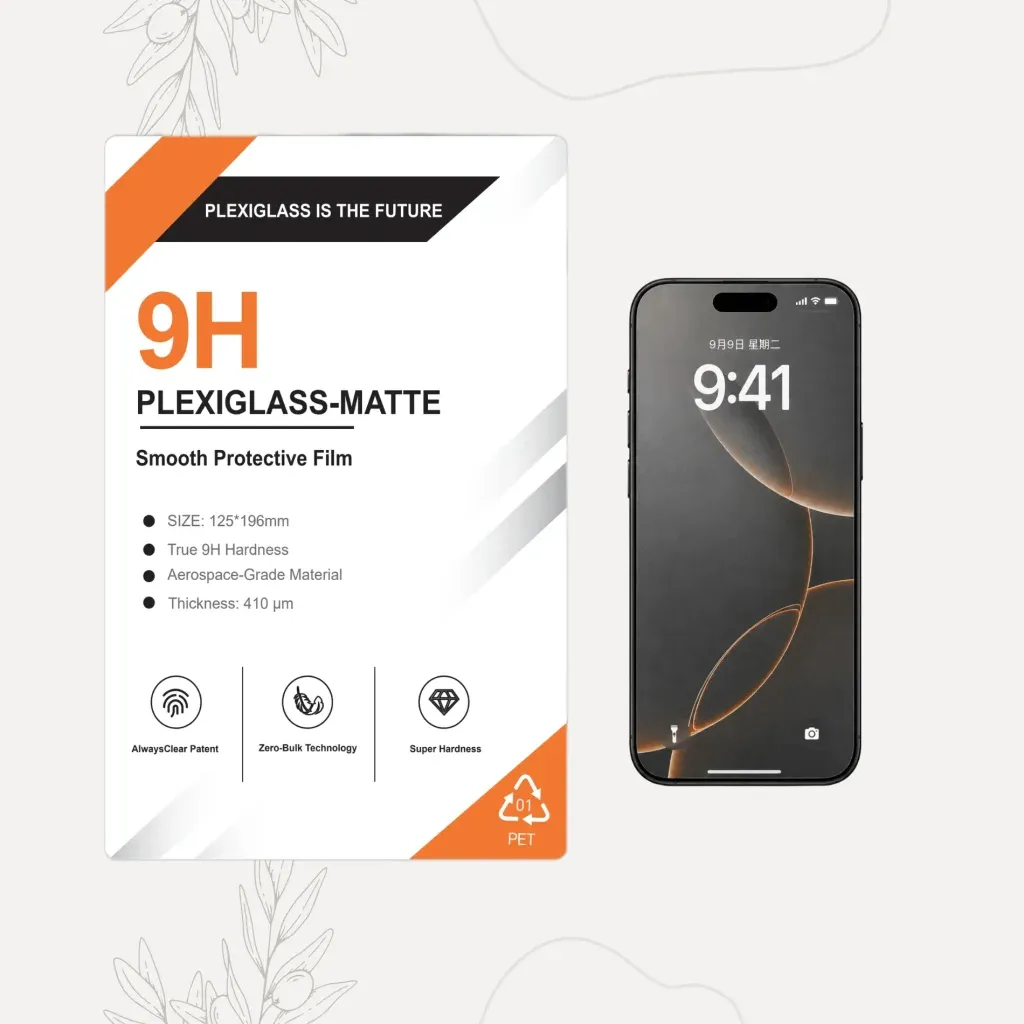
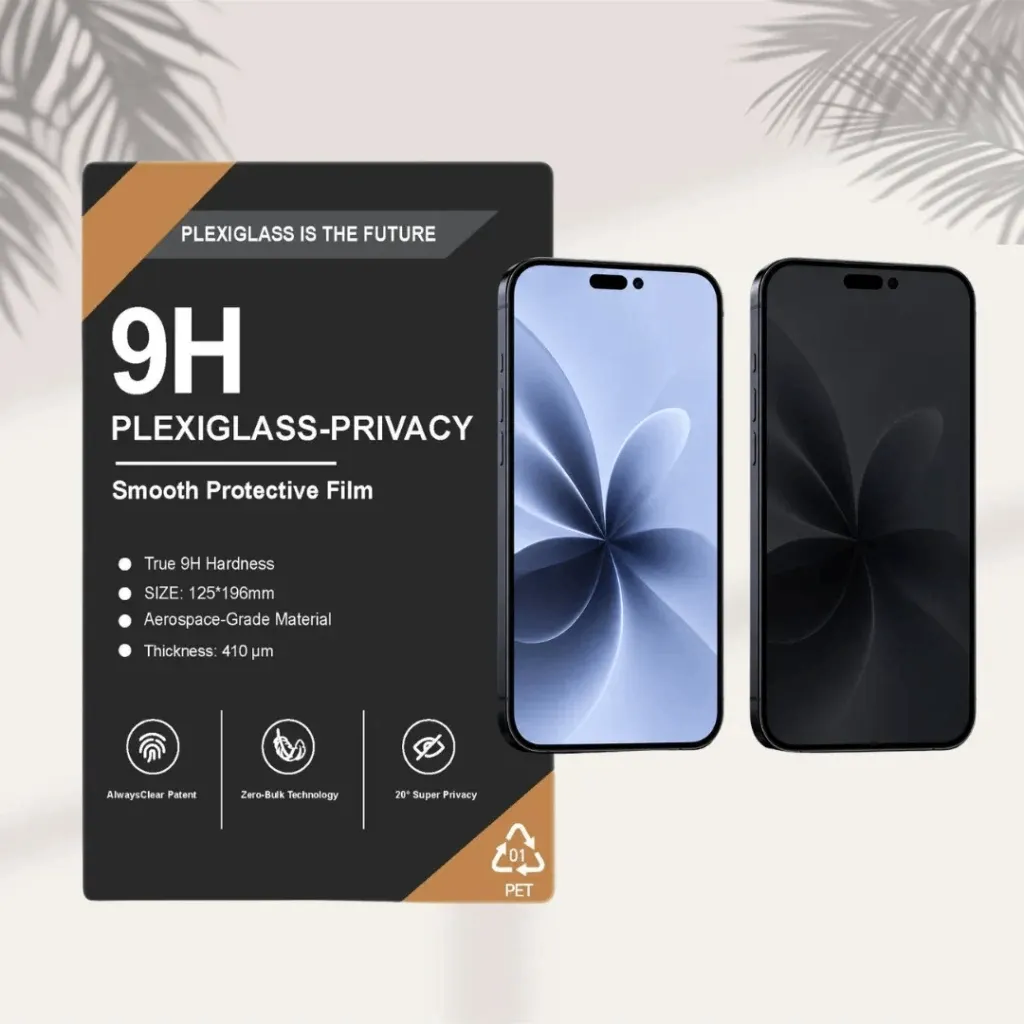
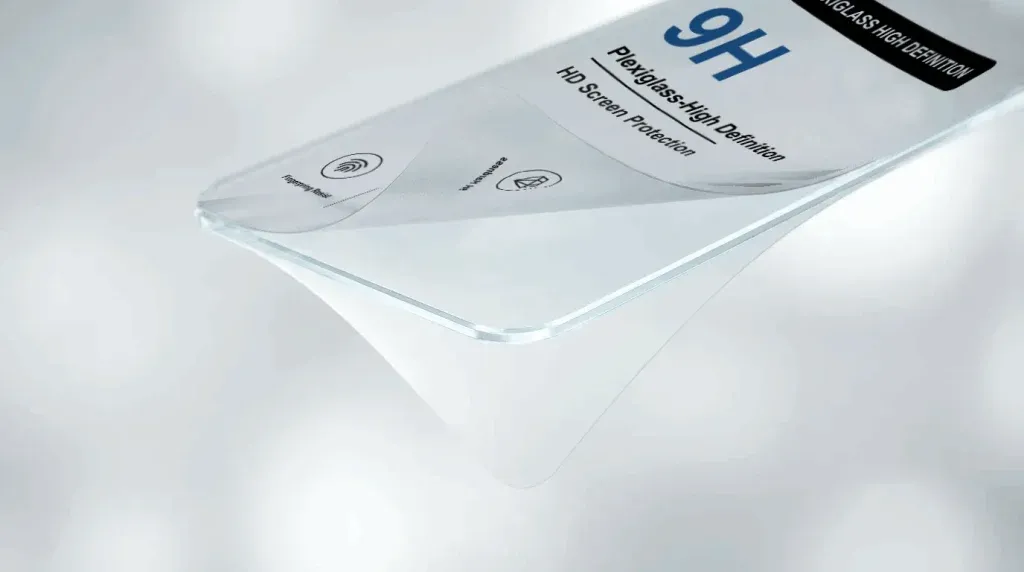
The second is the 9H Plexiglass series, focusing on shatter resistance, drop protection, and thin, durable design. This series uses composite plexiglass material, combining 9H pencil scratch hardness with super toughness. It solves the drawbacks of traditional tempered glass that’s easy to break or chip, with greatly improved impact resistance to effectively ensure safety during use. With high-precision cutting technology, the product fits thinly and lightly, eliminating case lift and edge gap issues. It’s also compatible with the brand’s Autocut Pro smart film cutting system, covering over 10,000 phone models and enabling custom production without inventory. This greatly reduces storage and inventory pressure for cross-border sellers, and increases the product’s profit margin.
Summary
Choosing a screen protector supplier isn’t just about comparing prices — it’s a comprehensive consideration of material technology, manufacturing precision, quality control systems and business models. Strictly following wholesale screen protector quality standards, avoiding the five major risks of poor glue, faked transmittance, inflated hardness claims, insufficient precision and missing quality inspection, and picking reliable manufacturers based on a professional screen protector OEM quality control system are the keys to ensuring product quality and protecting brand reputation. As an experienced custom mobile accessories factory and high-quality anti-fingerprint oleophobic coating supplier, Yizhen Technology provides global customers with integrated OEM/ODM custom and smart film cutting solutions with years of technical accumulation, standardized production systems and differentiated product advantages. It helps sellers capture the high-end market and achieve long-term profits.