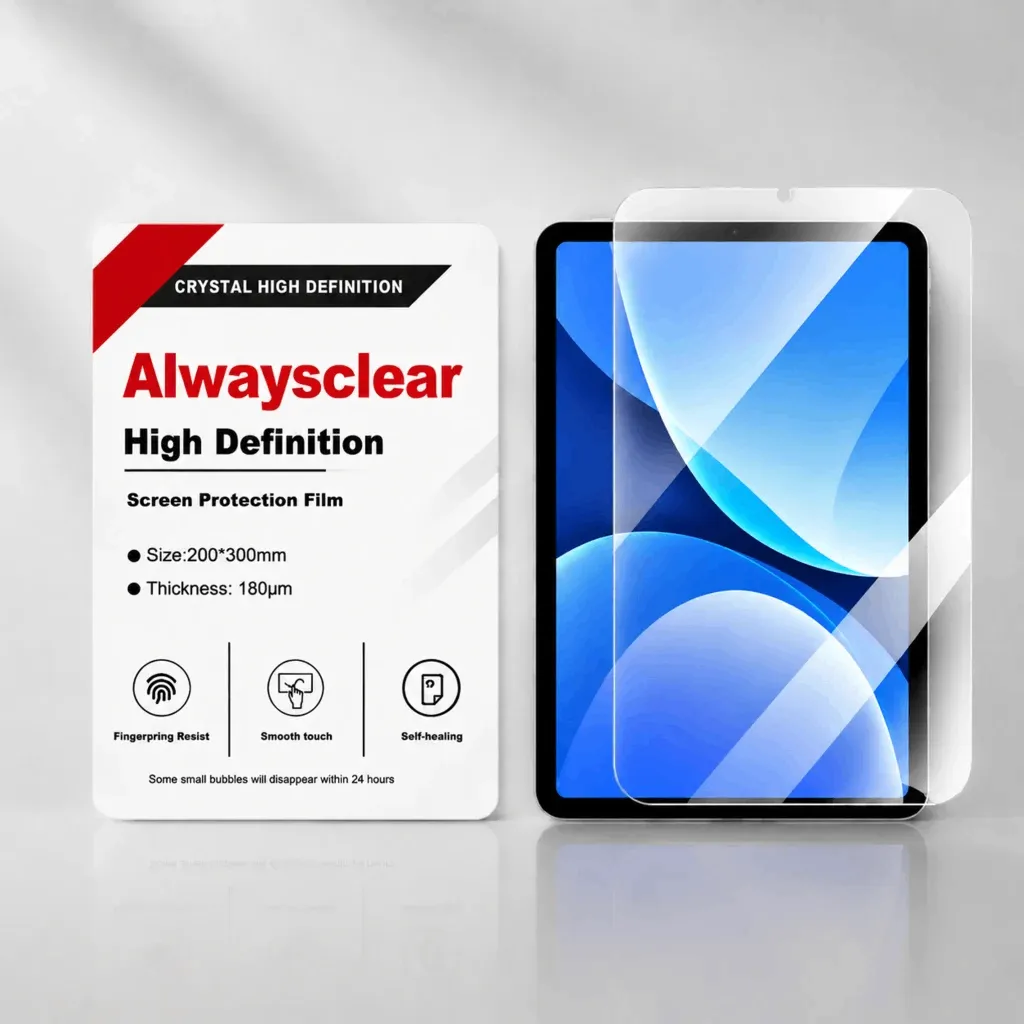
How flexible film, on-demand cutting, and smarter inventory planning can help tablet accessory distributors serve more devices with less complexity.
| SEO title | Tablet Aftermarket Screen Protector Market: Why Distributors Are Switching to Roll-Form Hydrogel |
| Meta description | Discover why distributors are adopting roll-form hydrogel for tablets to simplify inventory, support on-demand cutting, and improve bulk screen protector supply. |
| Suggested URL slug | tablet-aftermarket-screen-protector-roll-form-hydrogel |
| Primary keywords | tablet aftermarket screen protector; roll-form hydrogel for tablets; bulk tablet screen protector supply |
Introduction
Tablets are used across a wider range of everyday settings than ever: classrooms, offices, retail counters, healthcare environments, field service, and homes. They are productivity tools, learning devices, point-of-sale terminals, and creative workspaces. As their role expands, so does the need to protect the large, frequently touched displays that make them useful.
For distributors, the opportunity is clear, but the operating challenge is changing. A customer may ask for protection for a mainstream 11-inch tablet one day and a less common business or education model the next. Retailers need dependable quality, practical pricing, and quick replenishment, while distributors must avoid tying too much cash up in slow-moving model-specific stock.
That is one reason roll-form hydrogel for tablets is receiving more attention in the tablet aftermarket screen protector category. Supplied in rolls and converted into device-specific protectors through a compatible cutting workflow, flexible film can help businesses cover a broader mix of models without stocking a separate pre-cut product for every screen size. The advantage is not simply the film itself; it is the combination of product choice, material handling, fulfillment, and inventory strategy.
This article explains what roll-form hydrogel is, why distributors are evaluating it, what to check before buying, and how to build a reliable bulk tablet screen protector supply program.
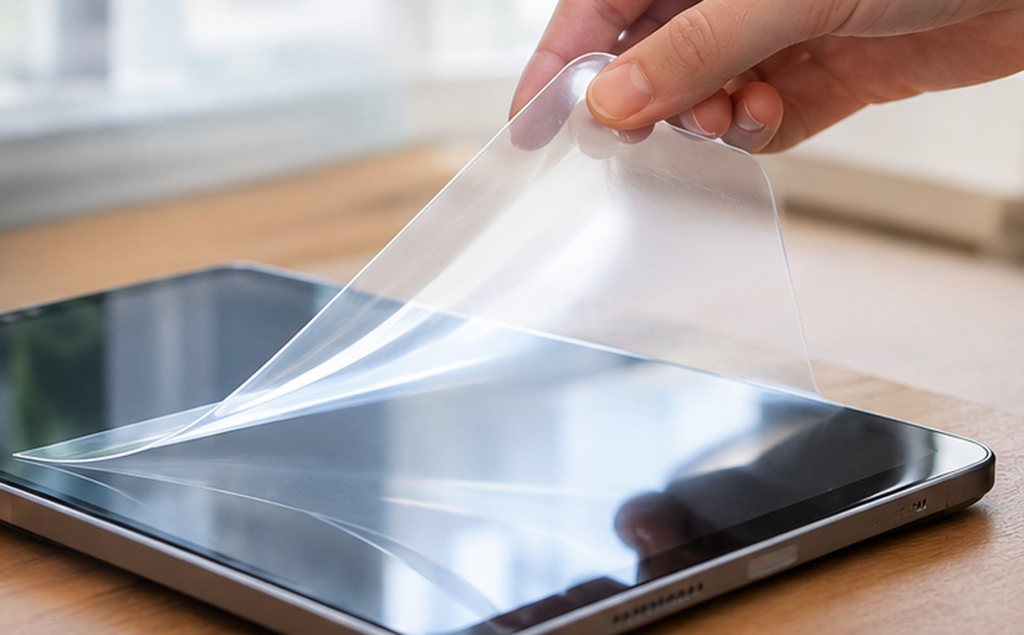
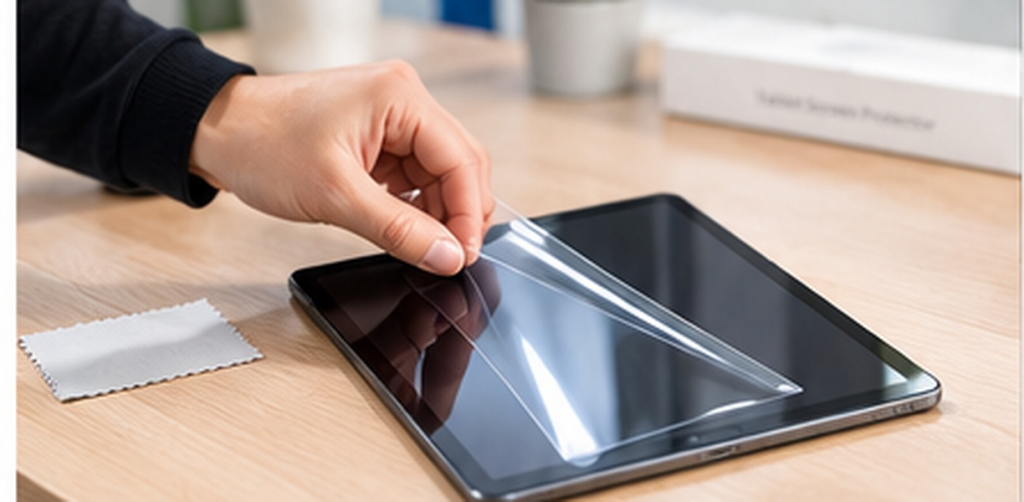
Flexible hydrogel film being applied to a tablet
1. The Tablet Aftermarket Is Becoming More Service-Driven
The aftermarket is more than a shelf of accessories. Business customers may need protectors for fleets of tablets, schools may refresh devices in batches, repair shops serve a changing mix of models, and online retailers need product listings that match the devices their customers actually own. In these environments, availability and accuracy matter as much as the unit price.
A conventional stocking model relies heavily on pre-cut protectors for individual devices. It can work well for high-volume models with stable demand. However, every additional device version can add another SKU, another forecast, and another chance of purchasing the wrong quantity. When a model sells more slowly than expected, remaining stock can occupy warehouse space and reduce working capital available for faster-moving items.
Distributors are therefore looking at product formats that help them respond to demand without expanding their catalog of finished protectors indefinitely. For compatible operations, roll-form material and on-demand cutting can become part of that solution. Rather than holding every shape in advance, a distributor can keep selected material formats in stock and convert them as orders arrive.
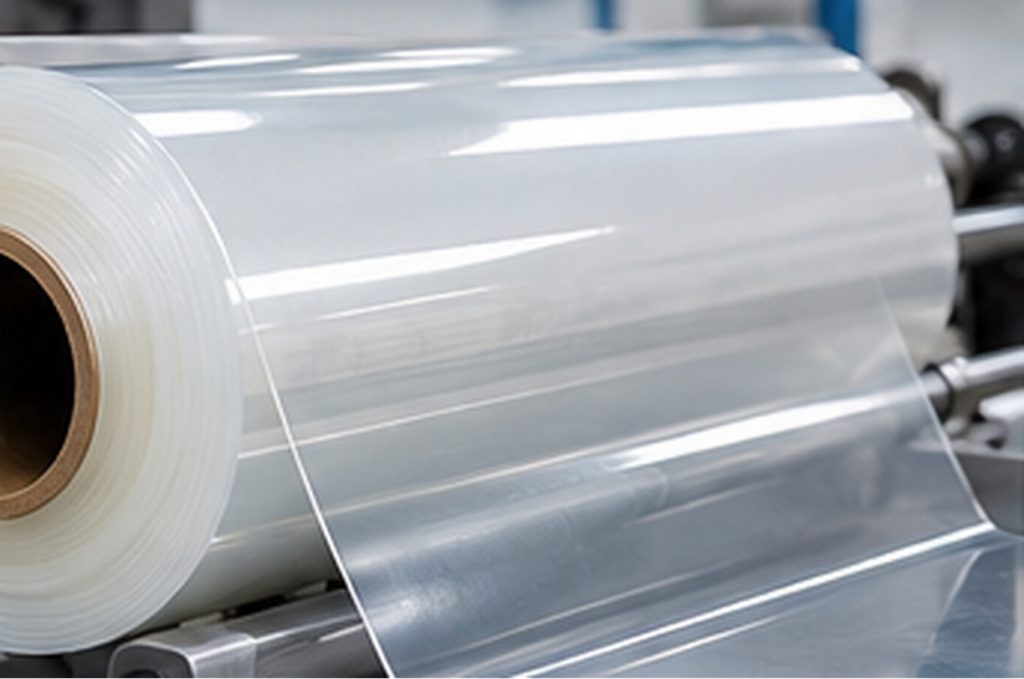
Roll-form hydrogel film material on a production line
2. What Is Roll-Form Hydrogel for Tablets?
Roll-form hydrogel is a flexible polymer-based screen-protection film supplied as a continuous roll rather than as a finished protector for one particular tablet. With suitable equipment, software templates, and a compatible film specification, the material can be cut into the outline needed for a target device. The term “hydrogel” is widely used in the screen-protector trade, but formulations and product constructions can differ, so buyers should confirm the exact material family and technical data with the supplier.
Compared with a rigid tempered-glass protector, flexible film can be easier to conform to certain screen shapes and may offer a thinner, softer feel. Some film constructions are designed to help minor surface marks recover over time, while different top coatings can target glare, fingerprints, or privacy. These are product-specific characteristics, not universal guarantees: performance depends on the formulation, surface treatment, installation, and test conditions.
For tablets, screen dimensions vary widely. A roll-based workflow can support multiple cut sizes from shared material inventory, but only when the roll width, usable area, cutting machine, and templates support each target device. Validate compatibility before committing.
The business case is therefore a system decision. Film quality, cutting accuracy, operator training, packaging, and replenishment all contribute to the result. A lower material price alone will not compensate for poor fit, inconsistent adhesive behavior, or avoidable installation returns.
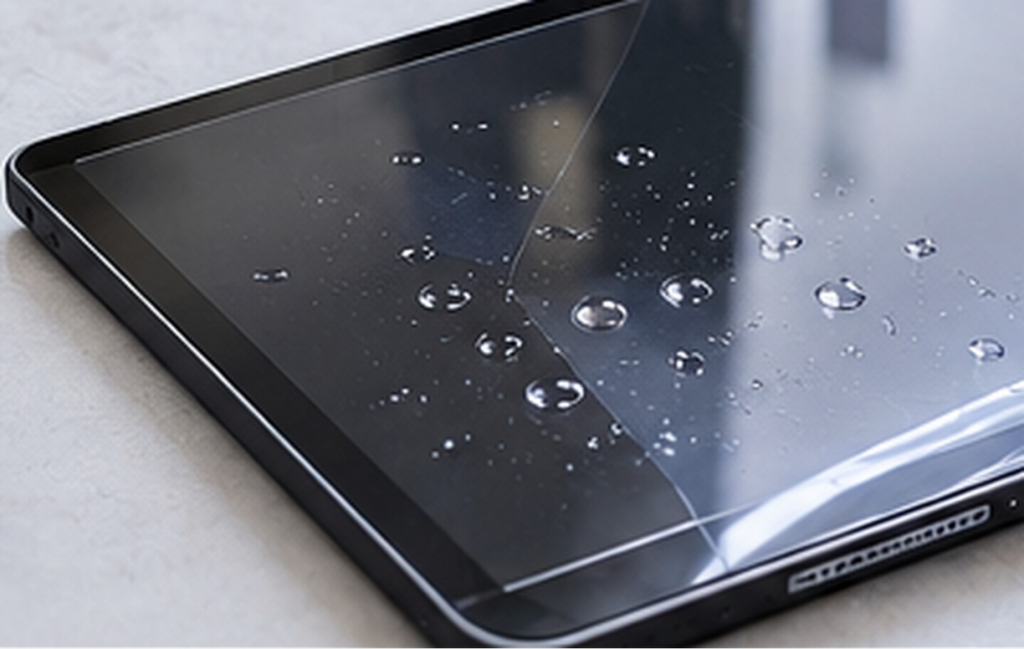
Tablet with a clear screen protector and stylus
3. Why Distributors Are Making the Switch
A more manageable inventory model
Model-by-model finished inventory can become difficult to forecast as the supported device list grows. Roll-form material can reduce the need to hold every cut shape as a separate finished SKU. For an operation with compatible cutting equipment, one or several selected film formats may support many tablet models.This approach can be especially useful for repair centers, regional distributors, and service counters that see unpredictable device combinations. Rather than write off obsolete pre-cut inventory, the business can hold shared material stock and cut protectors as needed. Savings depend on demand, yield, labor, equipment cost, and waste, so compare total operating cost—not material price alone.
Better response to less common models
Tablet model ranges change across consumer, education, and enterprise channels. Some models sell consistently; others appear in smaller batches or are used mainly by organizations. Roll-based cutting can help serve these smaller requests without requiring a large pre-purchase of finished stock for every variation.
For bulk customers, a school or business may provide a mixed device list. A distributor can verify templates and prepare the required sizes from shared material inventory, making mixed-model orders easier to fulfill.
A broader product menu from a controlled stock base
Distributors may want to offer more than a standard clear film. Depending on the supplier’s range and the cutting workflow, options may include clear HD finishes, matte finishes, privacy films, or other specialty coatings. Not every finish is available in every construction, and each option should be assessed for clarity, touch feel, viewing angle, stylus use, and installation requirements.
More opportunities for service and repeat business
A distributor can sell the protector itself, but can also support cutting, installation, private-label packaging, replenishment, and fleet projects. Retailers may value a supplier that can help them cover an unusual tablet model quickly. Institutional customers may value consistent specifications and simple repeat ordering across multiple device groups.
When the film performs consistently and the supply process is dependable, those services can strengthen long-term accounts. Roll-form hydrogel can give the business a flexible foundation for these services, provided lead times, documentation, and quality-issue handling are reliable.
4. Product Performance Still Comes First
Efficiency is only worthwhile when the finished protector meets customer expectations. Before moving volume to roll-form hydrogel, test each candidate material on the actual tablet types your customers use.
Optical clarity and touch response. Check readability, color appearance, touch input, and stylus behavior where relevant. A film that looks clear on a sample card may behave differently when applied to a large display, so assess it on-device under everyday lighting.
Fit and edge behavior. Confirm the cutting template, camera and sensor clearances, corner radius, and relationship between the protector and common tablet cases. Poorly designed dimensions can lead to lifting at the edge or interfere with a case. A perfect cut depends on the template and equipment settings as well as the material.
Adhesion and installation. Review the adhesive system, liner removal, repositioning window, and any recommended wet or dry application method. Ask for installation guidance and train operators before a larger rollout. Track bubbles, dust contamination, edge lifting, and rework during the trial.
Durability claims. Scratch resistance, self-healing behavior, abrasion performance, and impact response vary by construction. Do not assume that every hydrogel film has the same recovery time or provides the same protection. Ask suppliers for the relevant test method and results. A flexible film can complement a tablet’s protection strategy, but it should not be marketed as an automatic substitute for tempered glass in every high-impact use case.
These checks protect the reputation of a distributor’s tablet aftermarket screen protector range. A small pilot with clear acceptance criteria is usually less costly than fixing a quality problem after a large shipment.
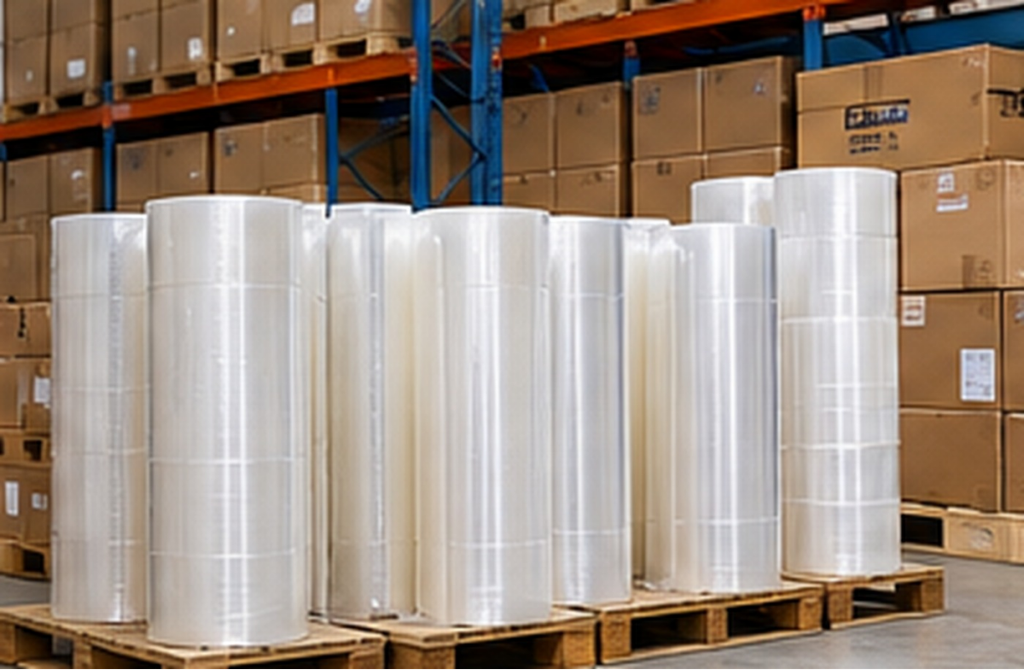
Rolls of screen protector material prepared for bulk supply
5. Building a Reliable Bulk Tablet Screen Protector Supply Program
A successful program depends on more than placing a large order. Before committing to bulk tablet screen protector supply, distributors should assess five areas.
Material specification and consistency
Request a written specification for the exact material being quoted. Confirm the material family, thickness range, roll width and length, liner construction, finish, adhesive behavior, recommended storage conditions, and compatibility with the intended cutting equipment. If you need more than one finish, treat each as a separate approved product until testing confirms otherwise.
Agree on a quality-control plan covering visual inspection, roll dimensions, sample cutting, adhesion, clarity, and batch traceability. Confirm how specification changes and quality concerns are handled; small material differences can affect cutting and installation.
Cutting and template compatibility
Share the cutting-machine model, software version, accepted roll dimensions, and a list of target tablets. Confirm whether the supplier can provide compatible templates or whether templates must be created or sourced separately. Test cuts from the beginning, middle, and end of a roll when practical, and verify that the finished shape matches the device without obstructing sensors or case edges.
Packaging and order configuration
Clarify whether the supply program includes raw rolls, cut protectors, retail kits, wipes, squeegees, instructions, or custom-branded packaging. Packaging expectations differ between B2B roll supply and ready-to-sell products. For private-label orders, approve artwork, labeling, barcodes, product descriptions, and language requirements before production.
Order quantities, lead times, and replenishment
Ask for the minimum order quantity, production lead time, sample process, repeat-order lead time, and shipping terms. A supplier’s headline capacity is less useful than a realistic replenishment plan that fits your sales cycle. Establish reorder points based on actual consumption and lead times, and avoid over-ordering a new material until the pilot confirms demand and quality.
Documentation and after-sales support
Confirm who handles technical questions, replacement claims, batch concerns, and product updates. Batch traceability and written acceptance checks help resolve issues clearly and preserve trust.
The best bulk tablet screen protector supply relationship is not necessarily the one with the lowest initial quote. It is the one that balances landed cost, quality consistency, communication, flexible order planning, and dependable support.
Technician applying flexible screen protection film to a tablet
6. How to Introduce Roll-Form Hydrogel Without Disrupting the Business
A staged rollout reduces risk and gives the sales team evidence it can use. The following sequence works for many distributors, although the details should be adapted to your channel and equipment.
- Map the demand. Review recent orders, customer requests, returns, and the tablet models that are difficult to stock. Identify where model-specific finished inventory creates the most friction.
- Choose a focused pilot. Select a small group of common and less common tablet sizes. Include the finish most often requested and a representative specialty option only if there is clear demand.
- Approve samples. Test clarity, touch response, fit, installation, edge adhesion, and any claims important to your customers. Record pass/fail criteria before comparing supplier samples.
- Validate the workflow. Make sure the roll fits the equipment, the template is correct, operators know the installation process, and packaging protects the film through storage and delivery.
- Train the sales channel. Give retailers and support teams a simple comparison guide that explains where flexible film is a good fit, what it does not promise, and which device and finish combinations are available.
- Review results before scaling. Track yield, rework, installation returns, delivery performance, stock turns, and contribution margin. Expand only when the pilot demonstrates a reliable process.
This method also helps keep product claims consistent. Sales staff should avoid describing all hydrogel films as “unbreakable” or promising that every minor scratch will disappear. Accurate expectations support fewer disputes and better repeat business.
7. Measuring the Business Case
Distributors should evaluate roll-form hydrogel using operational measures as well as product feedback. Useful indicators include:
- Inventory efficiency: number of finished SKUs avoided, stock turnover, and value of obsolete or slow-moving stock.
- Material yield: usable protectors per roll after accounting for spacing, rejected cuts, and setup waste.
- Fulfillment performance: time from order receipt to cut, pack, and dispatch; and the percentage of requests fulfilled on time.
- Quality: first-pass yield, installation rework, edge-lifting reports, returns, and complaints by material batch.
- Commercial results: gross contribution after labor and equipment costs, repeat-order rate, and new accounts served with less common tablet models.
Use a realistic cost model. Include the cost of the roll, cutting equipment amortization, blades or consumables, labor, rejected cuts, packaging, shipping, and after-sales support. Compare those costs with the full cost of buying, storing, and eventually discounting pre-cut products. The objective is to build the right mix, not to force every product into one format.
8. What Distributors Should Ask a Supplier
Before approving a new partner, ask practical questions that make the specification and service level clear:
- Which tablet sizes and cutting systems does the proposed roll format support?
- Can you supply samples and a written technical specification before the first volume order?
- What quality checks and batch identification are used during production?
- Which finishes are available, and how do they differ in viewing experience, touch feel, and intended use?
- What are the minimum order quantity, standard lead time, and repeat-order process?
- How are defects, specification changes, and customer claims handled?
- Can the supplier support neutral packaging, private label, or other channel-specific requirements?
Clear supplier answers improve forecasting and customer support. Pause a rollout until key points are confirmed in writing.
Frequently Asked Questions
Is roll-form hydrogel suitable for every tablet?
Not automatically. Suitability depends on the tablet dimensions, screen shape, cutting system, template availability, material specification, and user needs. Test representative models before making a broad compatibility claim.
Is hydrogel always better than tempered glass?
No. Flexible film and tempered glass have different characteristics. Film may be useful where flexibility, thinness, or custom cutting matter, while tempered glass may be preferred for a glass-like feel or particular impact-protection expectations. The best choice depends on product testing and the customer’s priorities.
Can roll-form hydrogel reduce inventory complexity?
It can, when compatible equipment and templates allow the distributor to cut protectors as orders arrive. A shared material stock may reduce the number of finished model-specific SKUs, but businesses should account for cutting labor, material yield, and equipment costs.
What should buyers test before placing a bulk order?
Check clarity, touch and stylus response, fit, edge adhesion, installation behavior, compatibility with cases, batch consistency, and any finish-specific claims. Confirm roll dimensions and cutting-machine compatibility as well.
What matters most in bulk tablet screen protector supply?
Consistent material, clear specifications, dependable lead times, suitable packaging, traceable quality control, and responsive support are usually more valuable than a low unit quote alone.
Conclusion: A Smarter Supply Strategy for a Changing Market
The tablet aftermarket rewards distributors that offer reliable protection and adapt to changing device lists. Roll-form hydrogel for tablets gives compatible businesses flexible material inventory, on-demand cutting potential, and a way to serve more models without holding every finished shape in advance.
The switch should be guided by evidence rather than hype. Choose materials that match the target use case, verify templates and machine compatibility, test product performance, and compare total operating costs. Then scale the program around the models and finishes that customers actually reorder.
For distributors planning their next tablet aftermarket screen protector range, a carefully managed roll-based program can support a more adaptable product mix. Pair it with a dependable bulk tablet screen protector supply partner, clear specifications, and practical quality controls, and the result can be a stronger service proposition for retailers, repair networks, and institutional buyers alike.
Looking to expand your tablet protection range? Request technical specifications, sample rolls, finish options, and a clear replenishment plan before your next bulk order.